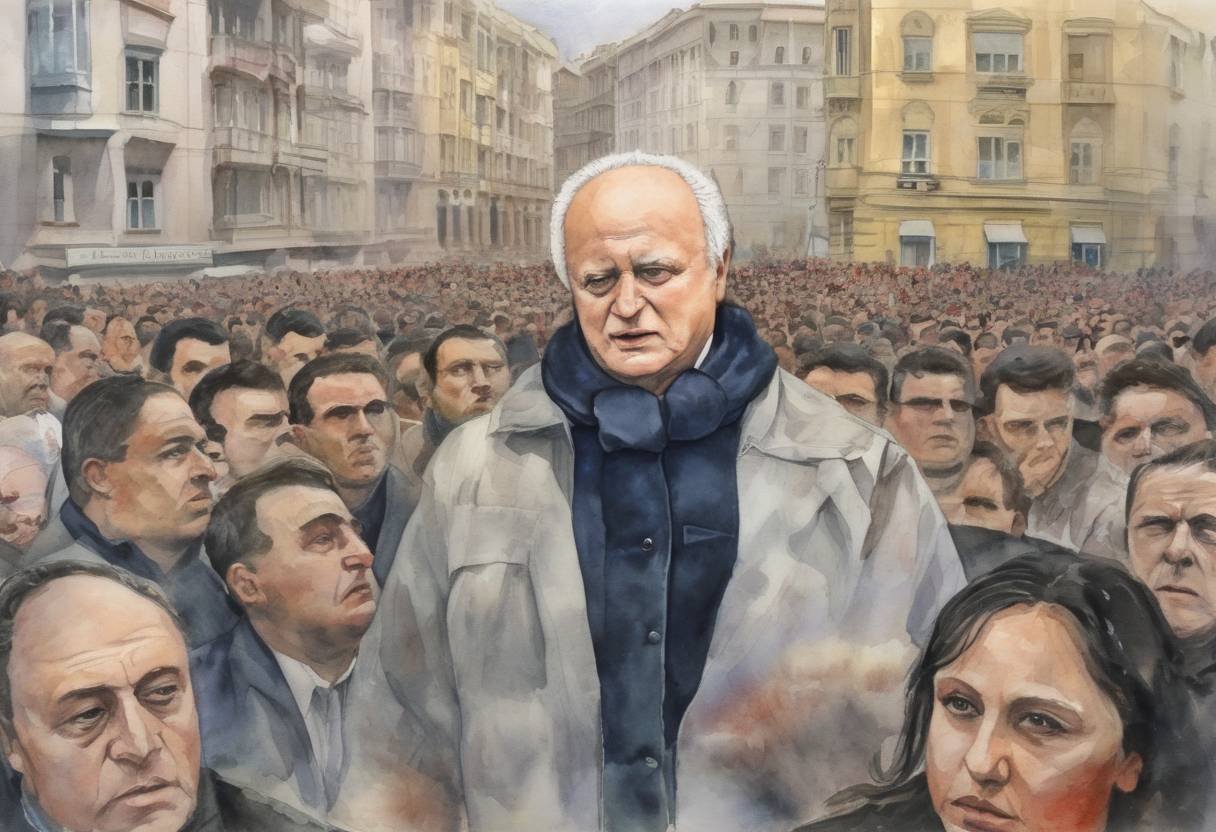
Eduard Shevardnadze’s Resignation and the Rose Revolution
On November 23, 2003, Eduard Shevardnadze, the President of Georgia, resigned from his position following the Rose Revolution, a peaceful protest movement that emerged in response to allegations of electoral fraud. This event marked a significant turning point in Georgian politics and had broader implications for the post-Soviet region.
Background
Eduard Shevardnadze, a former Soviet Foreign Minister, became the head of state in Georgia in 1992, following the country’s turbulent post-Soviet transition. He was initially seen as a stabilizing figure, but over time, his administration faced criticism for corruption, economic stagnation, and authoritarian tendencies.
The immediate catalyst for the Rose Revolution was the parliamentary elections held on November 2, 2003. Reports of widespread electoral fraud and manipulation led to public outrage. International observers, including the Organization for Security and Co-operation in Europe (OSCE), criticized the elections for failing to meet democratic standards.
The Rose Revolution
The Rose Revolution was characterized by its peaceful nature and the significant role played by civil society and opposition leaders. Key figures included Mikheil Saakashvili, Nino Burjanadze, and Zurab Zhvania, who mobilized public support against Shevardnadze’s government.
Protests began shortly after the disputed elections, with demonstrators gathering in Tbilisi, the capital of Georgia. The movement was named the “Rose Revolution” after protesters carried roses as a symbol of non-violence.
On November 22, 2003, during the opening session of the newly elected parliament, Saakashvili led a group of protesters into the parliamentary chamber, interrupting Shevardnadze’s speech and demanding his resignation. This bold move intensified the pressure on Shevardnadze.
Resignation and Aftermath
Facing mounting pressure and the risk of escalating unrest, Eduard Shevardnadze resigned on November 23, 2003. His resignation was a pivotal moment in the peaceful transition of power in Georgia.
Following Shevardnadze’s departure, an interim government was established, and new presidential elections were scheduled. Mikheil Saakashvili won the presidency in January 2004 with a significant majority, ushering in a new era of reform and closer ties with the West.
Broader Significance
The Rose Revolution had a profound impact on Georgia and the wider region. It demonstrated the power of peaceful protest and civil society in effecting political change. The revolution also inspired similar movements in other post-Soviet states, contributing to a wave of “color revolutions” that sought to challenge entrenched regimes through non-violent means.
In conclusion, Eduard Shevardnadze’s resignation on November 23, 2003, was a key moment in Georgia’s democratic development, highlighting the importance of electoral integrity and the potential for peaceful protest to bring about political transformation.