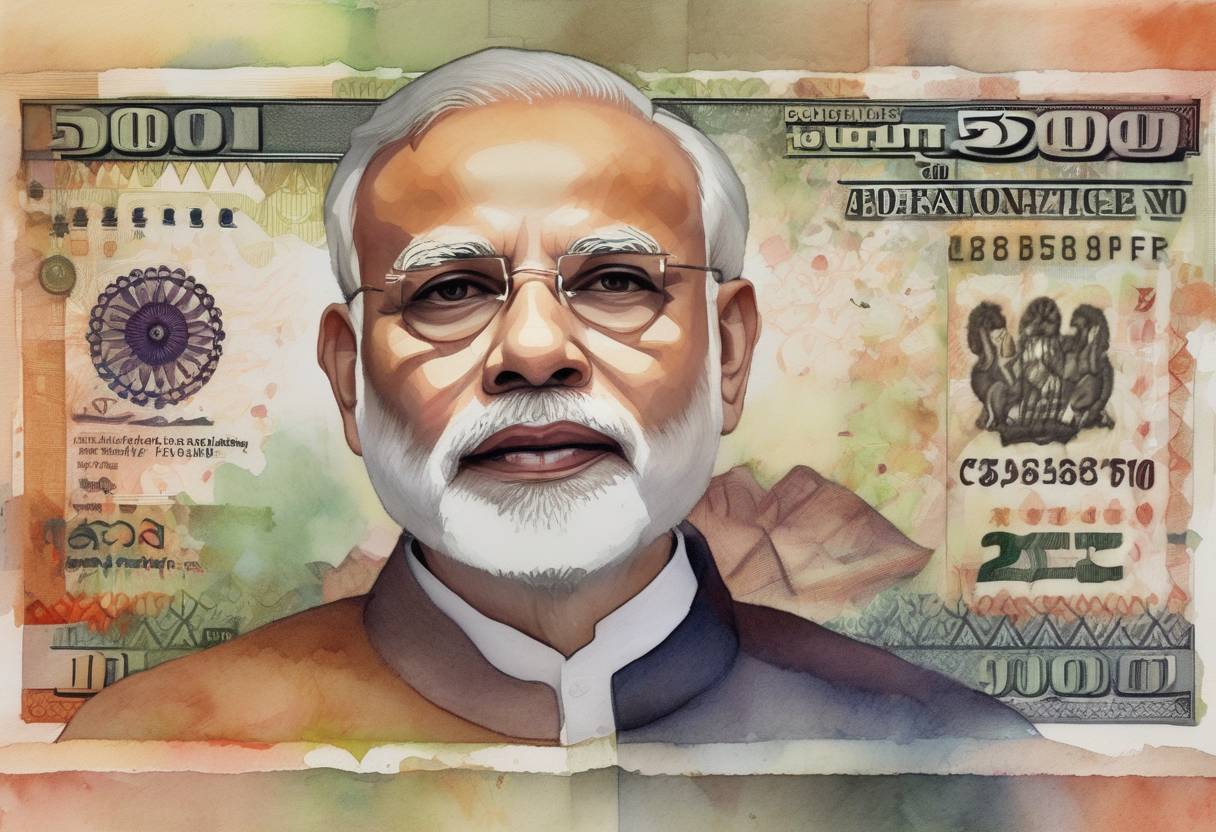
Demonetization Announcement in India - November 8, 2016
On November 8, 2016, India’s Prime Minister Narendra Modi made a surprise announcement that would have far-reaching implications for the country’s economy and its citizens. In a televised address to the nation, he declared the demonetization of ₹500 and ₹1,000 banknotes, effectively rendering 86% of the currency in circulation invalid overnight. This bold move was part of a broader strategy to combat black money, counterfeit currency, and corruption.
Context and Background
Black Money and Corruption: India had long struggled with issues of black money—undeclared income on which taxes are not paid—and corruption. These issues were seen as significant impediments to economic growth and social equity.
Counterfeit Currency: The circulation of counterfeit currency was another pressing concern, with implications for national security and economic stability.
Key Details of the Announcement
Immediate Impact: The demonetization took effect at midnight on November 8, 2016. The ₹500 and ₹1,000 notes ceased to be legal tender, except for a few essential services, such as hospitals and transportation, for a limited period.
Exchange and Deposit: Citizens were given until December 30, 2016, to deposit the demonetized notes into their bank accounts or exchange them for new ₹500 and ₹2,000 notes at banks and post offices, subject to certain limits.
Withdrawal Limits: To manage the transition, the government imposed limits on cash withdrawals from ATMs and banks, leading to long queues and cash shortages.
Consequences and Aftermath
Economic Disruption: The sudden withdrawal of high-denomination notes led to significant disruptions in daily life and economic activities, particularly affecting small businesses and the informal sector, which relied heavily on cash transactions.
Digital Payments Surge: The demonetization drive accelerated the adoption of digital payment methods and financial inclusion initiatives, as people sought alternatives to cash transactions.
Criticism and Support: The move was met with mixed reactions. Supporters praised it as a bold step towards a cleaner economy, while critics argued it was poorly planned and executed, causing unnecessary hardship for millions.
Long-term Impact: The long-term effects of demonetization on black money and corruption remain debated. While it did lead to a temporary increase in tax compliance and digital transactions, its impact on curbing illicit wealth is less clear.
Broader Historical Significance
Demonetization in India was one of the largest currency reforms in history, affecting over a billion people. It highlighted the challenges of implementing large-scale economic reforms in a diverse and populous nation. The event remains a significant case study in policy-making, illustrating both the potential and pitfalls of sudden economic interventions.
Overall, the demonetization of 2016 is a pivotal moment in India’s economic history, reflecting the complexities of governance and the ongoing struggle against financial malpractices.