The Jamestown Massacre of March 22, 1622
1622 · Jamestown, Colony of Virginia
The Jamestown massacre took place, where Algonquian warriors killed 347 English settlers, a third of the colony's population, in and around Jamestown, Virginia.
July 30, 1619
The first representative assembly in America, the House of Burgesses, convened for the first time in Jamestown, Virginia, laying the foundation for self-government in the American colonies.
Jamestown, Colony of Virginia | House of Burgesses
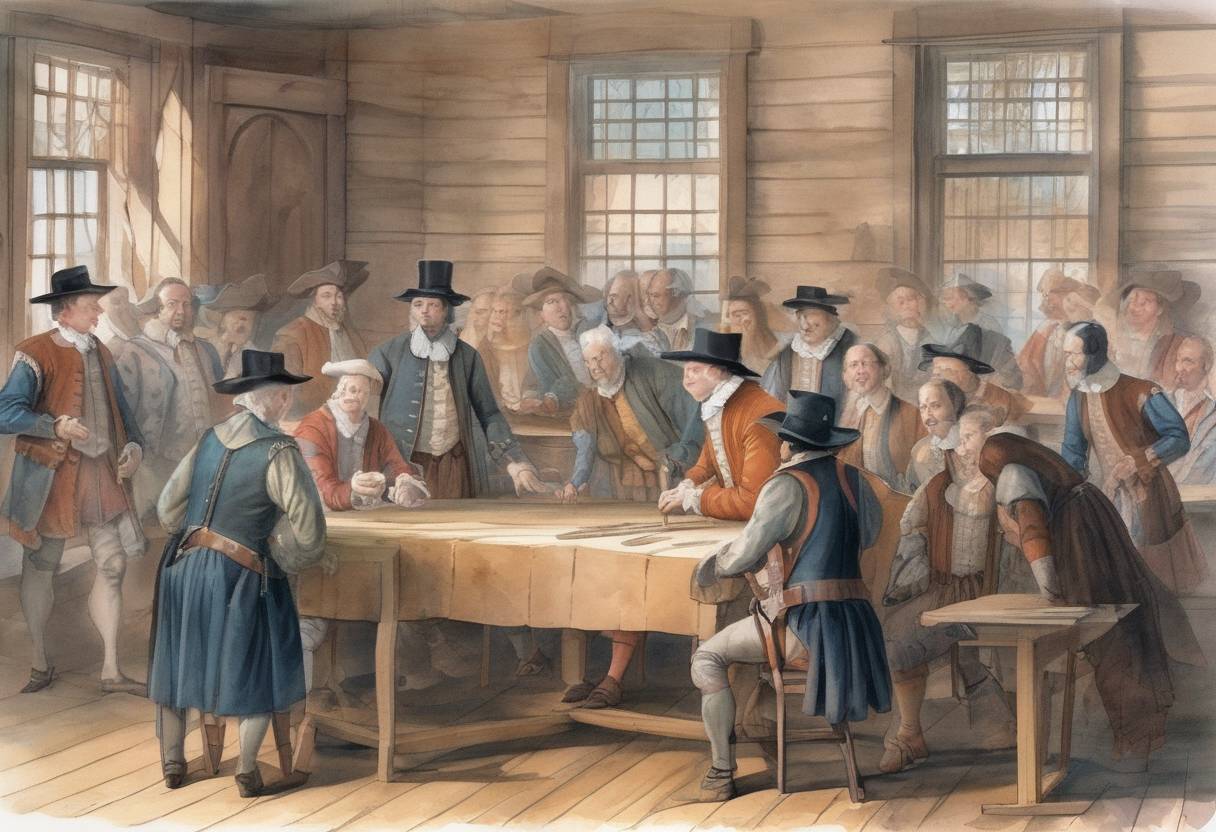
On July 30, 1619, the House of Burgesses convened for the first time in Jamestown, Virginia, marking a pivotal moment in the history of governance in the American colonies. This assembly was the first representative legislative body in what would become the United States, laying the groundwork for self-government and democratic principles in the New World.
The establishment of the House of Burgesses was a response to the need for more localized governance in the Virginia Colony. The Virginia Company of London, which had established the colony in 1607, recognized the necessity of creating a more structured and representative form of government to manage the colony’s affairs and attract more settlers.
Charter of 1618: The Virginia Company issued the “Great Charter” in 1618, which allowed for the creation of a General Assembly. This charter aimed to provide settlers with a voice in their governance and to encourage investment and settlement by offering more autonomy.
Governor George Yeardley: Appointed in 1618, Governor Yeardley played a crucial role in implementing the new governance structure. He called for the election of representatives to form the House of Burgesses.
The inaugural meeting of the House of Burgesses took place in the choir of the Jamestown Church. The assembly comprised 22 representatives, known as burgesses, elected by the colony’s inhabitants. These representatives were chosen from various settlements, reflecting the colony’s growing population and geographic spread.
During its initial session, the House of Burgesses addressed several critical issues:
The convening of the House of Burgesses was a landmark event in colonial America, setting a precedent for representative government. It demonstrated the settlers’ desire for self-governance and laid the foundation for democratic institutions in the future United States.
In summary, the first meeting of the House of Burgesses on July 30, 1619, was a seminal event in American history, marking the beginning of representative government in the colonies and setting a course toward the democratic ideals that would shape the nation.
Source: en.wikipedia.org