The Departure of the Susan Constant, Godspeed, and Discovery: December 19, 1606
1606 · London, England
The Susan Constant, the Godspeed, and the Discovery set sail from England to establish the Jamestown Colony in Virginia.
December 18, 1622
The English ship Anne and Little James set sail from London to join the Plymouth Colony in America.
London, England | Plymouth Colony
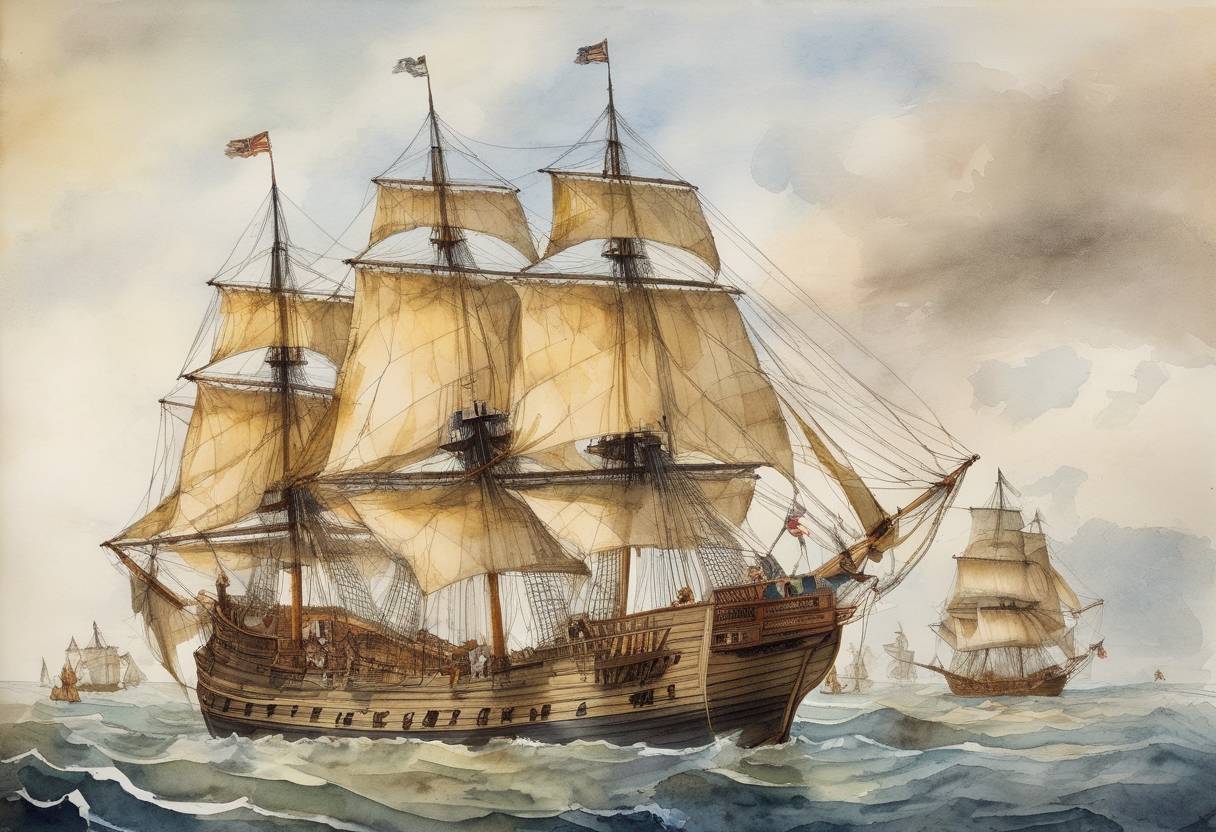
On December 18, 1622, two English ships, the Anne and the Little James, set sail from London, embarking on a significant journey to join the fledgling Plymouth Colony in America. This voyage was part of the broader effort to support and expand the early English settlements in the New World.
The Plymouth Colony, established in 1620 by the Pilgrims aboard the Mayflower, was one of the earliest successful English settlements in North America. By 1622, the colony was still in its infancy and faced numerous challenges, including harsh winters, food shortages, and the need for more settlers to sustain and grow the community.
To address these challenges, the Merchant Adventurers, a group of investors who financed the colony, organized additional voyages to bring more settlers and supplies. The Anne and the Little James were part of this effort, intended to bolster the colony’s population and resources.
Anne: A larger ship, the Anne was tasked with carrying a significant number of passengers, including families and individuals who were joining the colony. It was equipped with supplies necessary for the survival and development of the settlement.
Little James: A smaller pinnace, the Little James was designed for coastal navigation and was intended to remain with the colony for fishing and trade purposes. It carried fewer passengers but was crucial for the colony’s economic activities.
The journey across the Atlantic was perilous, marked by unpredictable weather and the constant threat of disease. Despite these challenges, the Anne and the Little James successfully navigated the treacherous waters, arriving at Plymouth in the summer of 1623.
Upon their arrival, the new settlers brought by the Anne and the Little James were warmly welcomed by the existing colonists. The influx of people and supplies significantly strengthened the Plymouth Colony, helping to ensure its survival and eventual prosperity.
The arrival of these ships marked a turning point for the colony, as it transitioned from a struggling settlement to a more stable and sustainable community. The additional settlers contributed to the colony’s labor force, allowing for expanded agriculture and trade.
The successful voyage of the Anne and the Little James underscored the importance of continued support and investment in the New World colonies. It demonstrated the viability of transatlantic voyages and the potential for English expansion in North America.
This event also highlighted the collaborative efforts between investors and settlers, which were crucial for the survival and growth of early American colonies. The Plymouth Colony would go on to play a significant role in the history of the United States, serving as a foundation for future settlements and the development of New England.
In summary, the departure of the Anne and the Little James on December 18, 1622, was a pivotal moment in the history of the Plymouth Colony, contributing to its endurance and success in the New World.
Source: en.wikipedia.org