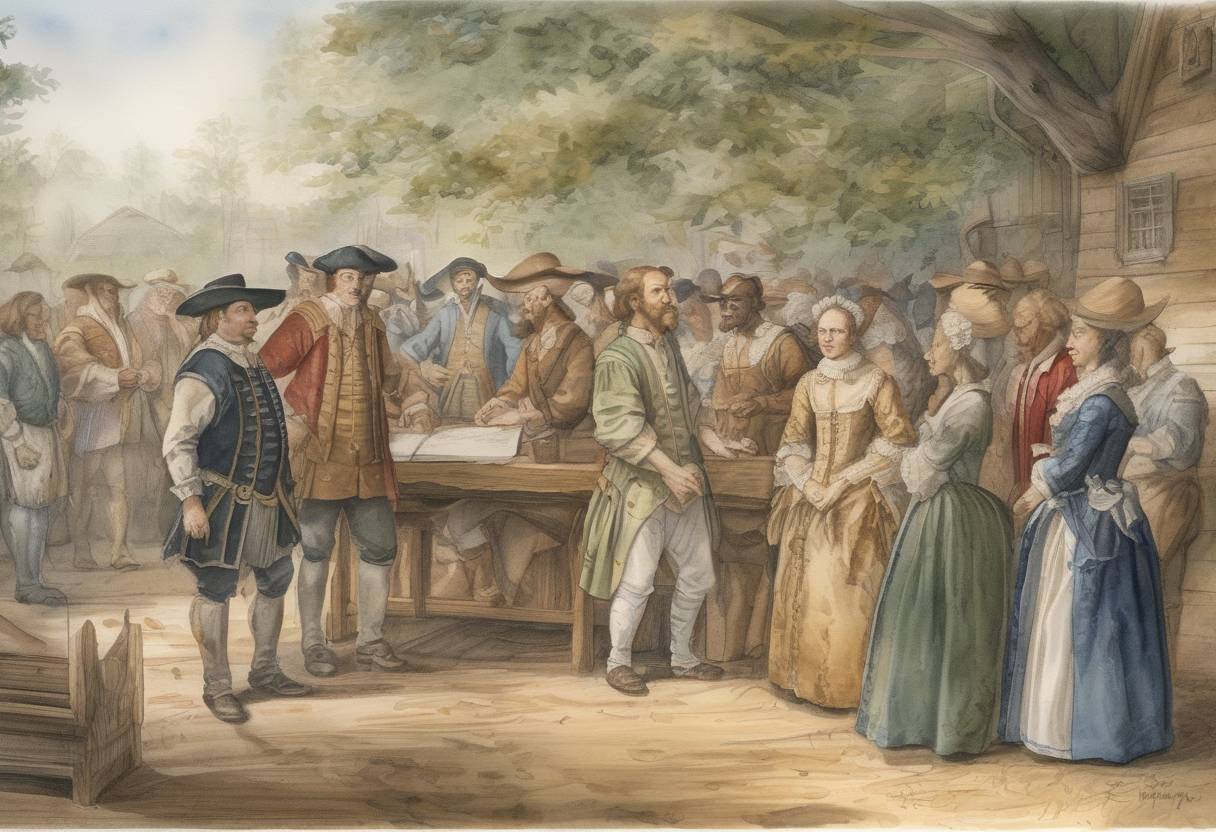
John Smith Elected Council President of Jamestown, Virginia - September 10, 1608
On September 10, 1608, John Smith was elected as the council president of Jamestown, Virginia, marking a pivotal moment in the history of the first permanent English settlement in America. This event was crucial in the survival and eventual success of the Jamestown colony, which had been established in 1607 by the Virginia Company of London.
Context and Background
Founding of Jamestown: Jamestown was founded on May 14, 1607, by a group of approximately 104 English settlers. The settlement was named in honor of King James I of England. It was the first permanent English settlement in North America, intended to establish a foothold for England in the New World and to seek economic opportunities, particularly through the search for gold and other resources.
Early Struggles: The early years of Jamestown were fraught with difficulties, including hostile relations with Indigenous peoples, disease, famine, and internal strife among the settlers. The “Starving Time” during the winter of 1609-1610 was particularly devastating, with only 60 of the original 500 settlers surviving.
John Smith’s Leadership
Election as Council President: John Smith, a soldier and explorer, was elected as the council president of Jamestown on September 10, 1608. His election came at a time when the colony was in dire need of strong leadership to address its numerous challenges.
Contributions and Reforms: Smith implemented a policy of strict discipline and emphasized the importance of agriculture and trade with the Powhatan Confederacy, the local Indigenous group. His famous policy, “He who does not work, shall not eat,” was instrumental in instilling a sense of responsibility and work ethic among the settlers.
Relations with Indigenous Peoples: Smith’s interactions with the Powhatan Confederacy, led by Chief Powhatan, were complex. He managed to establish a tenuous peace and trade relationship, which was crucial for the colony’s survival. The legendary story of Pocahontas, Powhatan’s daughter, allegedly saving Smith’s life, though often romanticized, highlights the intricate dynamics between the settlers and the Indigenous peoples.
Aftermath and Significance
Smith’s Departure: In 1609, Smith was injured in a gunpowder explosion and returned to England for treatment. His departure marked the beginning of the “Starving Time,” a period of severe hardship for the colony.
Legacy: Despite the challenges, Smith’s leadership laid the groundwork for the eventual stabilization and growth of Jamestown. His writings and maps also provided valuable information about the Virginia region and its Indigenous peoples.
Historical Impact: The survival of Jamestown under Smith’s leadership was a critical step in the establishment of English presence in North America. It set the stage for future colonial endeavors and the eventual expansion of English influence in the New World.
John Smith’s election as council president was a turning point for Jamestown, demonstrating the importance of effective leadership in the face of adversity and contributing to the broader narrative of early American colonial history.