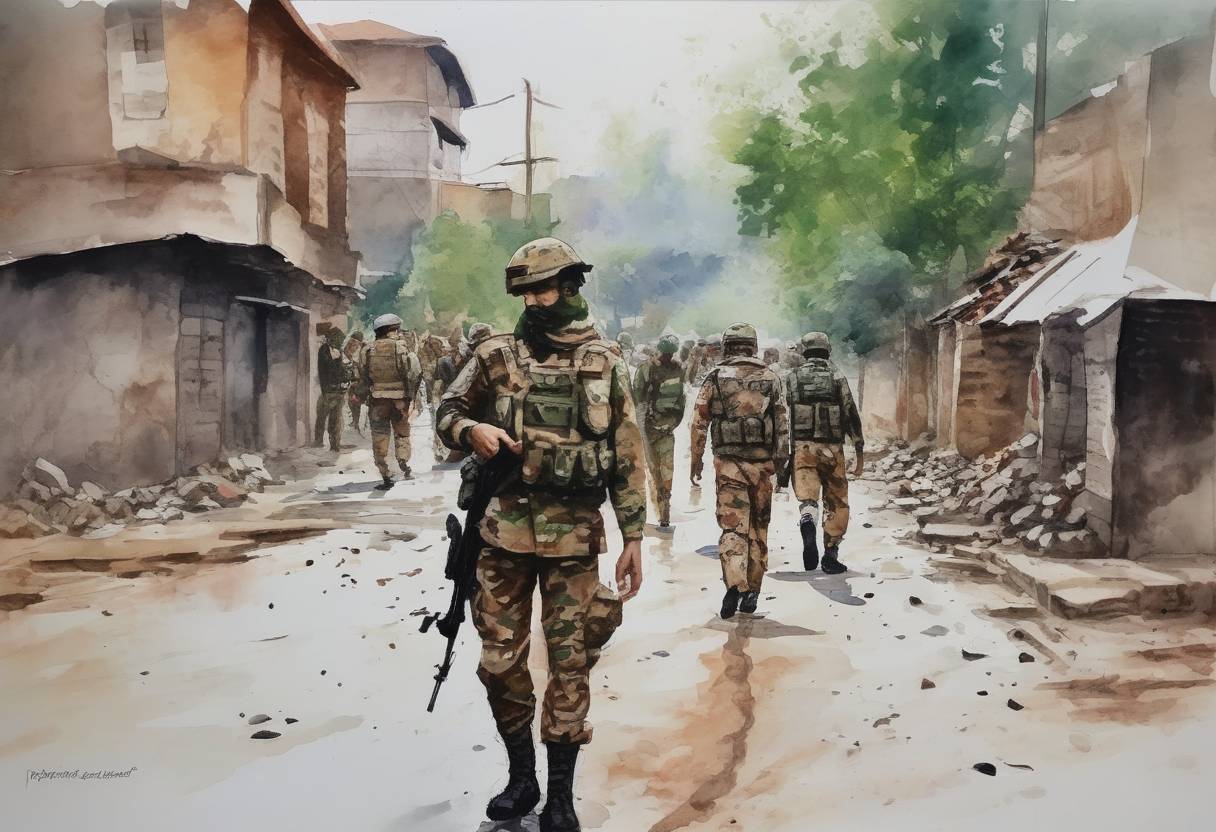
Pulwama Attack: February 14, 2019
On February 14, 2019, a devastating suicide bombing occurred in the Pulwama district of Jammu and Kashmir, India. This tragic event resulted in the deaths of 40 personnel from the Indian Central Reserve Police Force (CRPF) and significantly escalated tensions between India and Pakistan.
Context and Background
- Location: The attack took place on the Jammu-Srinagar National Highway in the Lethpora area of the Pulwama district.
- Target: A convoy of 78 vehicles carrying over 2,500 CRPF personnel was targeted. The personnel were returning from leave and traveling to Srinagar.
The Attack
- Method: The attack was carried out by a suicide bomber who drove a vehicle laden with explosives into one of the buses in the convoy.
- Casualties: The explosion resulted in the death of 40 CRPF personnel and injured many others, marking it as one of the deadliest attacks on Indian security forces in the region.
Perpetrators
- Claim of Responsibility: The Pakistan-based militant group Jaish-e-Mohammed (JeM) claimed responsibility for the attack. The suicide bomber was identified as Adil Ahmad Dar, a local resident of the Pulwama district.
- India’s Response: The attack led to widespread condemnation across India, with calls for strong action against the perpetrators. The Indian government accused Pakistan of supporting and harboring terrorist groups like JeM.
- Diplomatic Actions: India withdrew the Most Favored Nation (MFN) status accorded to Pakistan and initiated a diplomatic campaign to isolate Pakistan internationally.
Escalation of Tensions
- Balakot Airstrike: In response to the Pulwama attack, on February 26, 2019, the Indian Air Force conducted airstrikes on a JeM training camp in Balakot, Pakistan. This marked the first time since the 1971 Indo-Pakistani war that airstrikes were conducted across the Line of Control (LoC).
- Pakistan’s Retaliation: On February 27, 2019, Pakistan conducted airstrikes in Jammu and Kashmir and captured an Indian pilot, Wing Commander Abhinandan Varthaman, after his aircraft was shot down. The pilot was later released as a gesture of peace.
Broader Implications
- International Reactions: The international community expressed concern over the escalating tensions between the two nuclear-armed neighbors and urged both countries to exercise restraint.
- Impact on Indo-Pak Relations: The Pulwama attack and subsequent military actions further strained the already tense relations between India and Pakistan, impacting diplomatic and economic engagements.
The Pulwama attack remains a significant event in the history of Indo-Pakistani relations, highlighting the persistent challenges of terrorism and regional security in South Asia.