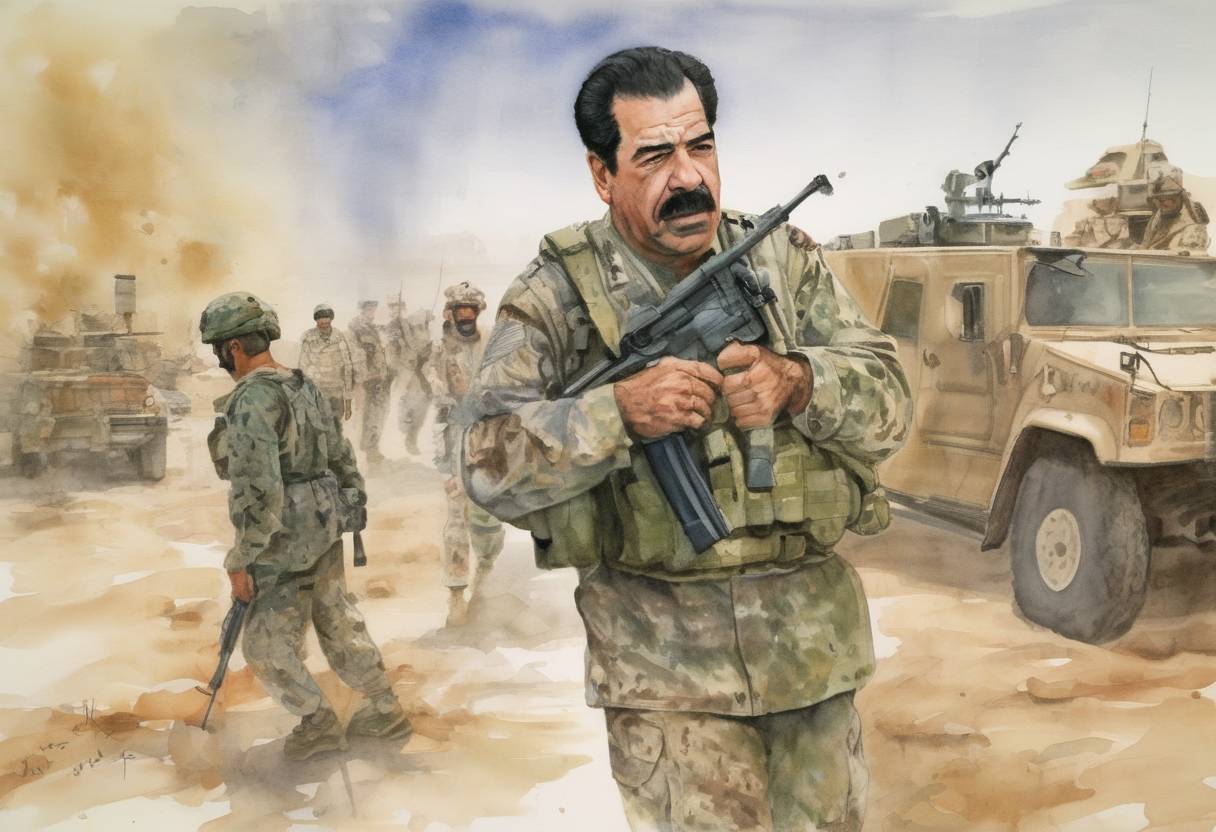
Capture of Saddam Hussein: Operation Red Dawn
On December 13, 2003, former Iraqi President Saddam Hussein was captured by U.S. forces during Operation Red Dawn. This significant event took place near his hometown of Tikrit, Iraq, marking a pivotal moment in the Iraq War and the broader context of post-9⁄11 geopolitics.
Background
Saddam Hussein, who had ruled Iraq since 1979, was ousted from power following the U.S.-led invasion of Iraq in March 2003. The invasion was part of the broader War on Terror initiated by the United States after the September 11, 2001, terrorist attacks. The U.S. government, under President George W. Bush, justified the invasion by alleging that Iraq possessed weapons of mass destruction (WMDs) and had links to terrorist organizations, claims that were later discredited.
Following the fall of Baghdad in April 2003, Saddam went into hiding, and his whereabouts became a significant concern for coalition forces. His capture was seen as crucial to stabilizing Iraq and dismantling the remnants of his regime.
Operation Red Dawn
Operation Red Dawn was meticulously planned by U.S. military forces, specifically the 4th Infantry Division and Task Force 121, a special operations unit. The operation was named after the 1984 film “Red Dawn” and consisted of two main objectives, codenamed “Wolverine 1” and “Wolverine 2,” targeting two locations near the town of ad-Dawr, southeast of Tikrit.
Execution
- Intelligence Gathering: The operation was based on intelligence gathered from various sources, including informants and surveillance, which suggested Saddam was hiding in the area.
- The Raid: On the night of December 13, 2003, U.S. forces launched the raid. They discovered Saddam hiding in a small, underground “spider hole” on a farm. He was armed but did not resist capture.
- Capture: Saddam was found disheveled and in poor health. He was immediately taken into custody and transported to a secure location.
Aftermath
- Trial and Execution: Following his capture, Saddam Hussein was held by U.S. forces and later handed over to the Iraqi interim government. He was tried for crimes against humanity, including the 1982 Dujail massacre. In November 2006, he was found guilty and sentenced to death. Saddam was executed by hanging on December 30, 2006.
- Impact on Iraq: The capture of Saddam Hussein was a significant psychological victory for coalition forces and the new Iraqi government. However, it did not lead to an immediate end to the insurgency in Iraq, which continued to escalate in the following years.
- Historical Significance: Saddam’s capture symbolized the end of an era in Iraq but also highlighted the complexities of rebuilding a nation deeply divided by sectarian violence and political instability.
Operation Red Dawn remains a notable example of military strategy and intelligence operations, reflecting the challenges and controversies of the Iraq War.