The Sabra and Shatila Massacre
1982 · Beirut, Lebanon
The Sabra and Shatila massacre began in Lebanon, where a large number of Palestinian refugees were killed.
November 18, 1978
The Jonestown Massacre occurred, where over 900 members of the Peoples Temple, led by Jim Jones, died in a mass murder-suicide in Guyana.
Jonestown, Guyana | Peoples Temple
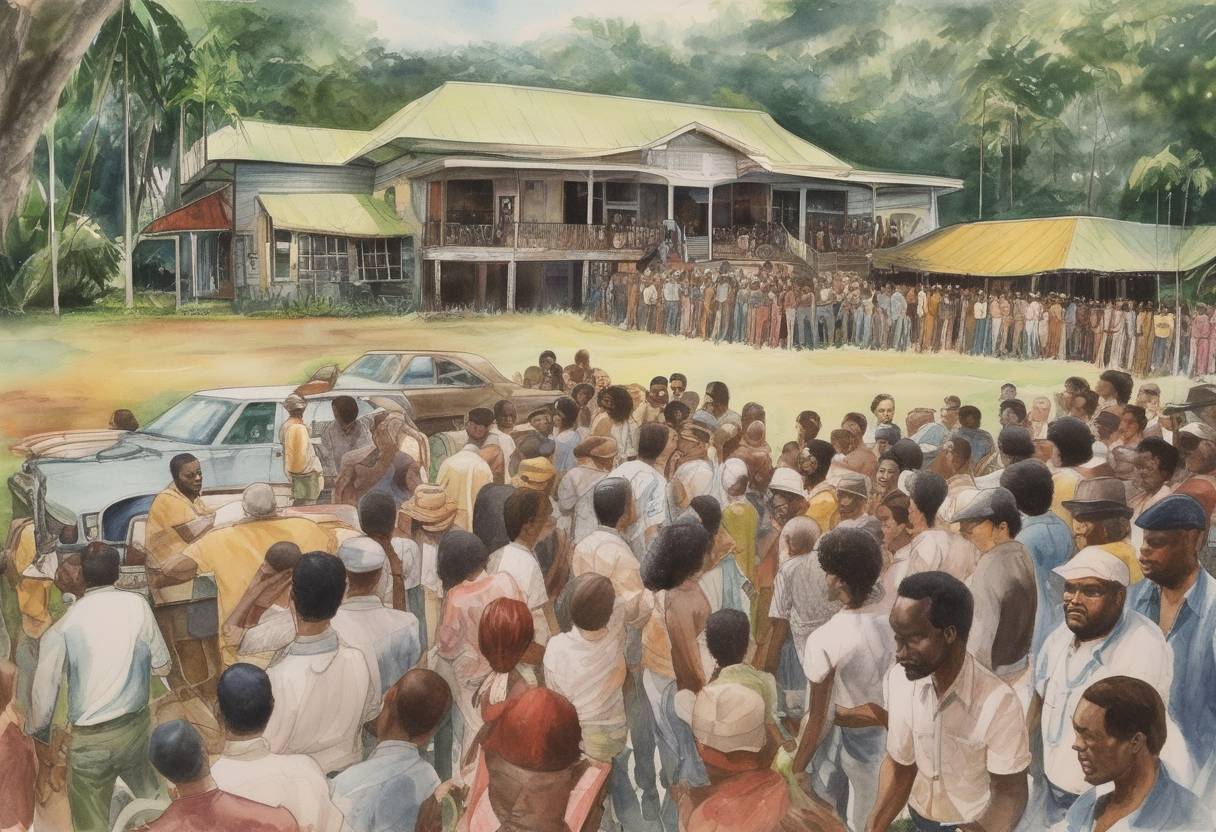
On November 18, 1978, a tragic event unfolded in the remote jungle of Guyana, known as the Jonestown Massacre. This incident resulted in the deaths of over 900 members of the Peoples Temple, a religious cult led by Jim Jones. It remains one of the most devastating mass murder-suicides in modern history.
The Peoples Temple was founded in the 1950s by Jim Jones, a charismatic preacher who advocated for racial integration and social justice. Initially based in Indiana, the group moved to California in the 1960s, where it gained a significant following. Jones’s teachings combined elements of Christianity with socialist ideals, attracting a diverse congregation.
In the mid-1970s, facing increasing scrutiny from the media and government authorities in the United States, Jones relocated his followers to Guyana, South America. There, they established an agricultural commune known as Jonestown, which was intended to be a utopian society free from the perceived oppression of the outside world.
By 1978, reports of human rights abuses and coercive practices within Jonestown began to surface. Concerned relatives and former members raised alarms about the conditions and the control Jones exerted over his followers. This prompted U.S. Congressman Leo Ryan to visit Jonestown to investigate these claims.
On November 17, 1978, Congressman Ryan, accompanied by journalists and concerned relatives, arrived at Jonestown. Initially, the visit seemed cordial, but tensions quickly escalated. Several members expressed a desire to leave with Ryan, which angered Jones.
On November 18, as Ryan and his delegation prepared to depart from a nearby airstrip, they were ambushed by armed members of the Peoples Temple. Congressman Ryan and four others were killed in the attack.
Back at Jonestown, Jim Jones initiated what he termed a “revolutionary suicide.” He urged his followers to drink a concoction of Flavor Aid laced with cyanide and other poisons. Under immense pressure and fear, over 900 individuals, including children, perished in the mass suicide. Jones himself died from a gunshot wound, believed to be self-inflicted.
The Jonestown Massacre shocked the world and prompted widespread media coverage. It highlighted the dangers of cults and the potential for charismatic leaders to manipulate and control their followers. The tragedy also led to increased scrutiny of new religious movements and discussions about religious freedom and mental health.
In the years following the massacre, survivors and families of the victims have worked to preserve the memory of those who died and to educate the public about the warning signs of cultic behavior. The event remains a somber reminder of the potential for human tragedy when power is abused and critical thinking is suppressed.
Source: en.wikipedia.org