The First Battle of the Stronghold: January 17, 1873
1873 · Lava Beds National Monument, United States
A group of Modoc warriors defeated the United States Army in the First Battle of the Stronghold.
July 31, 1763
The Battle of Bloody Run took place during Pontiac's War, where British forces were ambushed by Native American warriors.
Detroit, United States | Native American Tribes
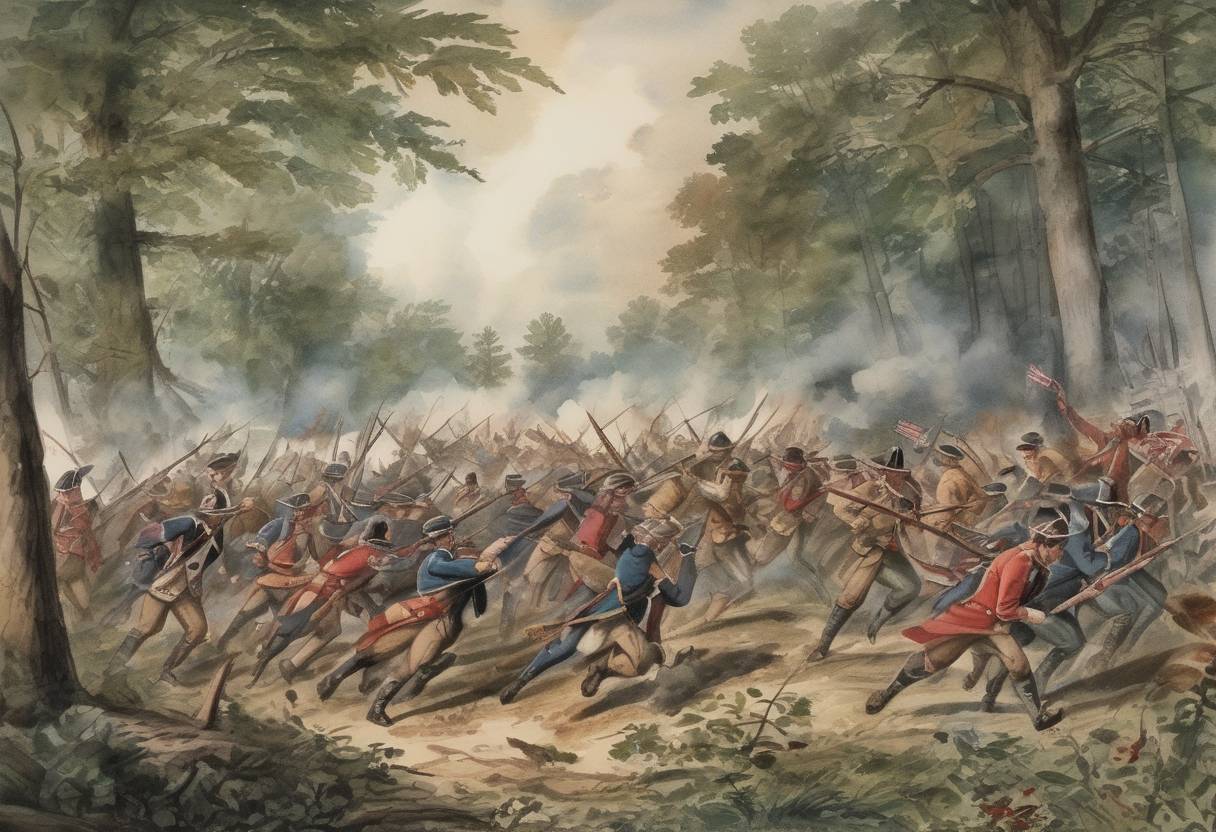
The Battle of Bloody Run was a significant engagement during Pontiac’s War, a conflict that arose in the aftermath of the French and Indian War. This battle took place on July 31, 1763, near what is now Detroit, Michigan. It was a part of a broader Native American resistance against British post-war policies and encroachments on their lands.
Pontiac’s War: This conflict was named after Pontiac, an Ottawa leader who played a crucial role in organizing a confederation of Native American tribes. The war was a response to British policies following their victory in the French and Indian War, particularly the British refusal to continue the French practice of gift-giving to Native tribes and the encroachment on Native lands.
Tensions Rise: The British, under the leadership of General Jeffrey Amherst, had taken control of former French forts and territories, leading to increased tensions with the Native American tribes who had been allied with the French. The Native Americans were dissatisfied with British policies and feared the loss of their lands and autonomy.
Location: The battle occurred near Fort Detroit, a strategic British stronghold in the Great Lakes region.
British Forces: Led by Captain James Dalyell, the British aimed to break the siege of Fort Detroit, which had been under attack by Pontiac’s forces since May 1763.
The Ambush: On the night of July 31, Dalyell led a force of about 250 soldiers in a surprise attack against Pontiac’s encampment. However, Pontiac had been forewarned of the British plans, and his warriors were prepared.
Outcome: The British forces were ambushed along the creek known as Parent’s Creek, which was later dubbed “Bloody Run” due to the bloodshed. The British suffered significant casualties, with around 20 soldiers killed, including Captain Dalyell, and many more wounded.
Strategic Impact: The battle was a tactical victory for Pontiac and his confederation, as it demonstrated their ability to effectively resist British military efforts. However, it did not lead to the immediate lifting of the siege on Fort Detroit.
Long-term Consequences: The broader conflict, Pontiac’s War, continued until 1766, when a peace agreement was reached. The war highlighted the need for the British to reconsider their policies towards Native Americans, leading to the Proclamation of 1763, which aimed to stabilize relations by limiting colonial expansion westward.
Legacy: The Battle of Bloody Run remains a symbol of Native American resistance and the complexities of colonial-Native American relations during the 18th century. It underscores the significant challenges faced by Native American tribes in defending their territories against European encroachment.
The Battle of Bloody Run is a poignant reminder of the turbulent period in North American history marked by conflict and negotiation between Native American tribes and European colonial powers.
Source: www.history.com