D-Day: The Normandy Invasion - June 6, 1944
1944 · Normandy, France
D-Day: Allied forces launched a massive invasion of Nazi-occupied France, landing on the beaches of Normandy.
December 28, 1943
Dwight D. Eisenhower was appointed Supreme Allied Commander in Europe during World War II.
Washington D.C., United States | Allied Forces
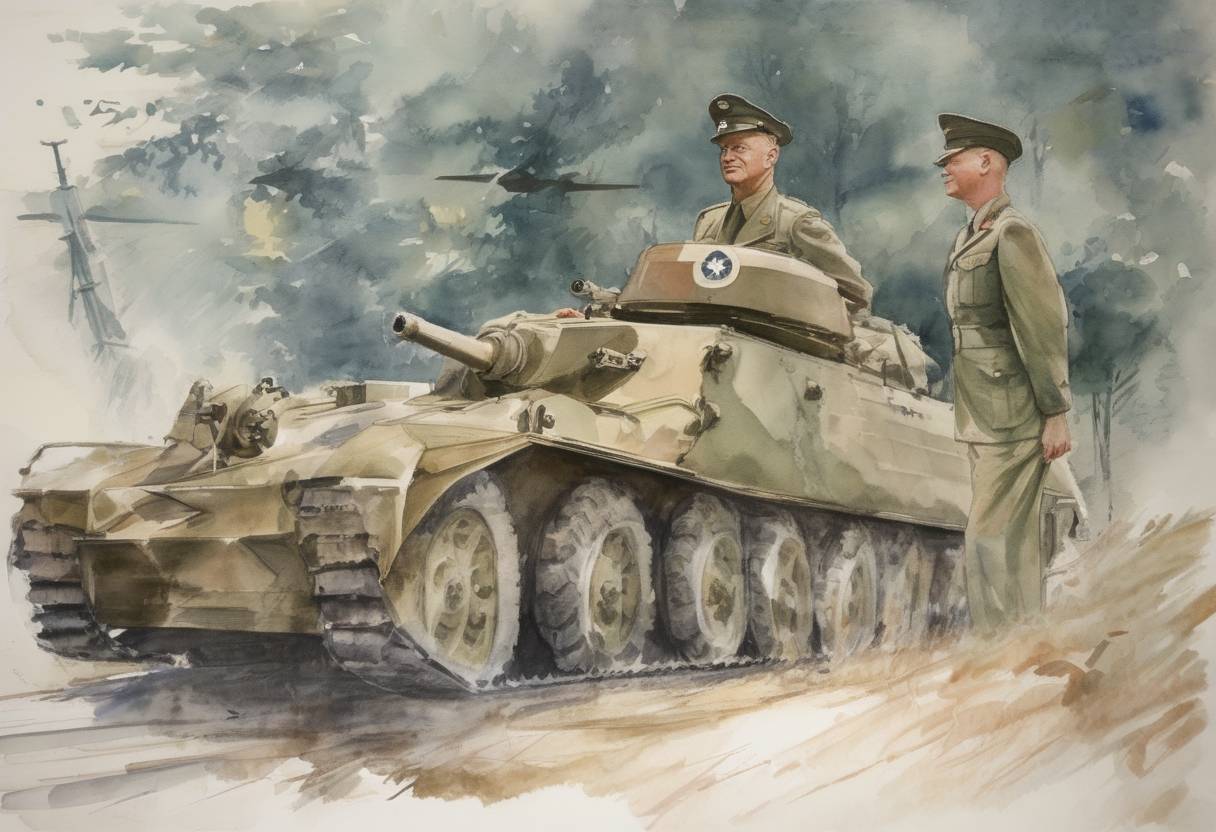
On December 28, 1943, General Dwight D. Eisenhower was appointed as the Supreme Allied Commander in Europe during World War II. This pivotal appointment marked a significant moment in the Allied efforts against the Axis powers, particularly in the European theater.
Background: By late 1943, the Allies were planning a major offensive to liberate Western Europe from Nazi occupation. The success of this operation required a unified command structure and a leader capable of coordinating the diverse Allied forces.
Eisenhower’s Credentials: Eisenhower had already proven his leadership abilities in North Africa and the Mediterranean. He successfully led Operation Torch, the Allied invasion of North Africa, and later oversaw the invasions of Sicily and Italy. His diplomatic skills and ability to work with leaders from different nations made him an ideal candidate for the role.
Tehran Conference: The decision to appoint Eisenhower was influenced by discussions at the Tehran Conference in late November and early December 1943. The conference, attended by Franklin D. Roosevelt, Winston Churchill, and Joseph Stalin, focused on the coordination of Allied military strategy against the Axis powers.
Unified Command: Eisenhower’s appointment was part of a broader strategy to ensure a cohesive and effective command structure for Operation Overlord, the planned invasion of Nazi-occupied France.
Operation Overlord: As Supreme Allied Commander, Eisenhower was responsible for planning and executing Operation Overlord, which culminated in the D-Day landings on June 6, 1944. This operation was crucial in establishing a Western front against Nazi Germany.
Leadership and Coordination: Eisenhower’s leadership was instrumental in maintaining unity among the Allied forces, which included troops from the United States, the United Kingdom, Canada, and other nations. His ability to manage complex military operations and navigate the political intricacies of an international coalition was vital to the success of the Allied campaign in Europe.
Victory in Europe: Eisenhower’s leadership contributed significantly to the eventual defeat of Nazi Germany. The successful execution of Operation Overlord and subsequent campaigns led to the liberation of Western Europe and the eventual surrender of Germany in May 1945.
Post-War Influence: After the war, Eisenhower’s reputation as a leader and strategist propelled him into a successful political career, culminating in his election as the 34th President of the United States in 1952.
Eisenhower’s appointment as Supreme Allied Commander in Europe was a decisive factor in the Allied victory in World War II, showcasing his exceptional military leadership and strategic acumen.
Source: www.history.com