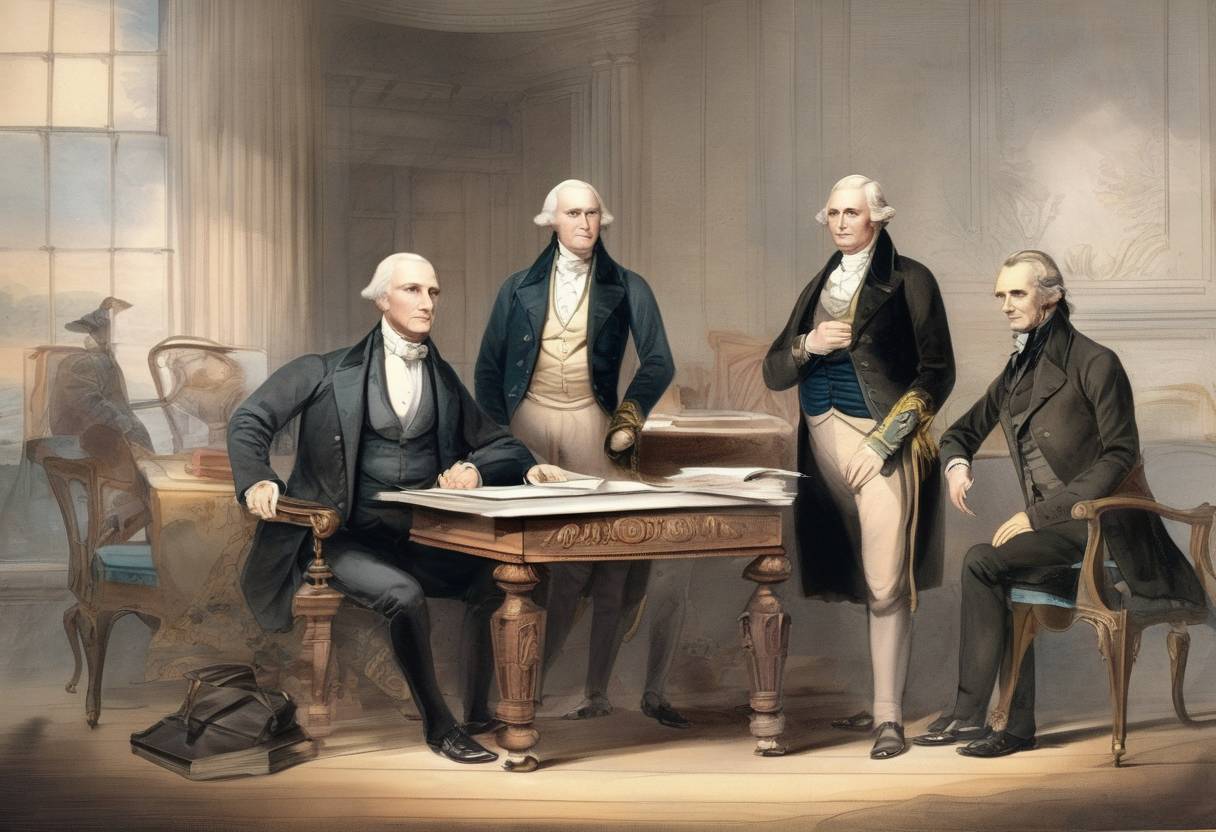
The Webster–Ashburton Treaty: August 9, 1842
On August 9, 1842, the United States and Great Britain signed the Webster–Ashburton Treaty, a significant diplomatic agreement that resolved several border disputes between the United States and British North America, which is present-day Canada. This treaty was a pivotal moment in U.S.-British relations, helping to ease tensions and establish clearer boundaries between the two nations.
Background
The early 19th century was marked by numerous territorial disputes between the United States and British North America. The Treaty of Paris (1783) and the Treaty of Ghent (1814) had left several ambiguities regarding the precise demarcation of the U.S.-Canada border. These ambiguities led to conflicts such as the Aroostook War (1838-1839), a non-violent confrontation over the boundary between the state of Maine and the British colony of New Brunswick.
- Daniel Webster: The U.S. Secretary of State, who played a crucial role in negotiating the treaty on behalf of the United States.
- Alexander Baring, 1st Baron Ashburton: A British diplomat representing the United Kingdom, who worked alongside Webster to reach a peaceful resolution.
Provisions of the Treaty
The Webster–Ashburton Treaty addressed several key issues:
Maine-New Brunswick Border: The treaty resolved the boundary dispute by dividing the contested territory between Maine and New Brunswick, with the U.S. receiving about 7,015 square miles and the British about 5,012 square miles.
Great Lakes and Lake Champlain: It clarified the border through the Great Lakes and Lake Champlain, ensuring that both nations had access to these important waterways.
Extradition: The treaty included provisions for the extradition of criminals, establishing a framework for legal cooperation between the two countries.
Suppression of the Slave Trade: Both nations agreed to cooperate in efforts to suppress the transatlantic slave trade, reflecting growing international opposition to slavery.
Significance and Aftermath
The Webster–Ashburton Treaty was significant for several reasons:
Peaceful Resolution: It demonstrated the ability of the United States and Great Britain to resolve disputes through diplomacy rather than conflict, setting a precedent for future negotiations.
Strengthened Relations: By resolving these border issues, the treaty helped to strengthen relations between the two nations, reducing the likelihood of future conflicts.
Territorial Clarity: The treaty provided clearer definitions of the U.S.-Canada border, which would remain largely unchanged in subsequent years.
The successful negotiation of the Webster–Ashburton Treaty marked a turning point in U.S.-British relations, paving the way for a more cooperative and peaceful coexistence between the two countries. It remains a notable example of 19th-century diplomacy and conflict resolution.