Gerald Ford Pardons Richard Nixon: September 8, 1974
1974 · Washington, D.C., United States
U.S. President Gerald Ford pardons former President Richard Nixon for any crimes he may have committed while in office.
January 4, 1974
President Richard Nixon refused to hand over materials subpoenaed by the Senate Watergate Committee.
Washington D.C., United States | United States Government
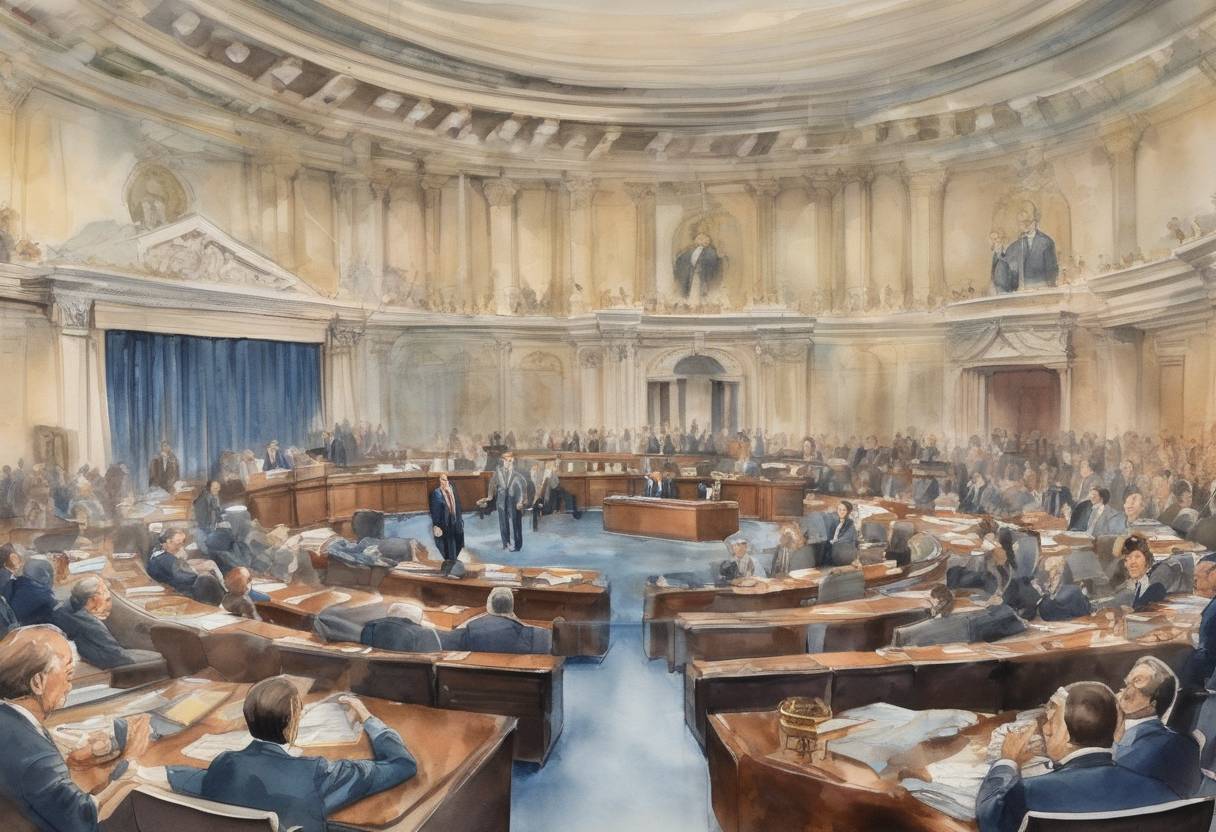
On January 4, 1974, President Richard Nixon made a significant decision in the unfolding Watergate scandal by refusing to comply with a subpoena issued by the Senate Watergate Committee. This committee was investigating the break-in at the Democratic National Committee headquarters at the Watergate office complex and the subsequent cover-up by members of Nixon’s administration.
The Watergate scandal began with the arrest of five men for breaking into the Democratic National Committee headquarters on June 17, 1972. As investigations progressed, it became apparent that the break-in was part of a larger campaign of political espionage and sabotage conducted on behalf of Nixon’s re-election committee.
In 1973, the Senate Watergate Committee was established to investigate the scandal. During the hearings, it was revealed that Nixon had a secret recording system in the Oval Office that captured conversations relevant to the investigation. The committee, seeking to uncover the truth, subpoenaed these tapes and other materials.
On January 4, 1974, Nixon formally refused to hand over the subpoenaed materials, citing executive privilege. He argued that the confidentiality of presidential communications was essential for national security and effective governance. Nixon’s refusal intensified the legal and political battle over the tapes, as it was seen as an obstruction to the investigation.
Nixon’s refusal to comply with the subpoena led to a series of legal challenges. The issue of executive privilege versus the need for evidence in a criminal investigation became a central theme in the ensuing legal battles. This culminated in the landmark Supreme Court case, United States v. Nixon, in July 1974. The Court unanimously ruled that Nixon had to release the tapes, rejecting his claims of absolute executive privilege.
The tapes, once released, provided undeniable evidence of Nixon’s involvement in the Watergate cover-up. Facing imminent impeachment, Nixon resigned from the presidency on August 8, 1974, becoming the first U.S. president to do so.
Nixon’s refusal to hand over the subpoenaed materials marked a pivotal moment in the Watergate scandal. It highlighted the tension between executive power and accountability, setting a precedent for the limits of presidential privilege. The scandal and Nixon’s subsequent resignation had a lasting impact on American politics, leading to increased skepticism of government officials and reforms aimed at increasing transparency and accountability in government.
The Watergate scandal remains a critical study in the balance of power within the U.S. government and the importance of the rule of law.
Source: www.history.com