Deposition of Henry VI and Ascension of Edward IV on March 4, 1461
1461 · London, England
During the Wars of the Roses, Henry VI was deposed by the Yorkists and replaced by Edward IV.
September 23, 1459
The Battle of Blore Heath, part of the Wars of the Roses, took place in England, resulting in a victory for the Yorkists.
Blore Heath, England | House of York
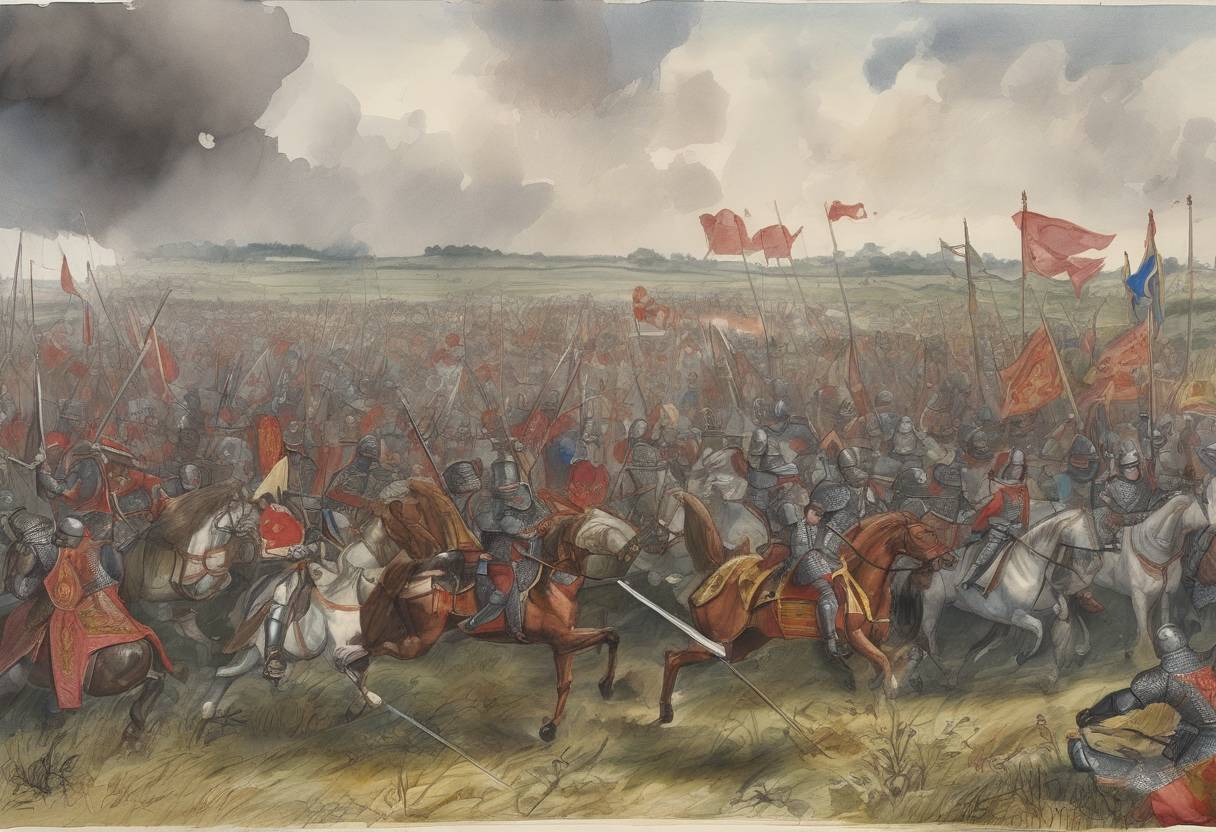
The Battle of Blore Heath was a significant early engagement in the Wars of the Roses, a series of dynastic conflicts that plagued England in the latter half of the 15th century. This battle, fought on September 23, 1459, marked a decisive victory for the Yorkist forces against the Lancastrians.
The Wars of the Roses were fought between two rival branches of the royal House of Plantagenet: the House of Lancaster, associated with a red rose, and the House of York, symbolized by a white rose. The conflict was rooted in complex issues of succession and power struggles following the weak rule of King Henry VI, a Lancastrian.
In 1459, tensions were escalating. The Yorkist leader, Richard, Duke of York, sought to challenge the Lancastrian hold on the throne. The Lancastrian forces, led by Queen Margaret of Anjou, were determined to suppress Yorkist ambitions.
Strategic Positioning: The Yorkists, numbering around 5,000, were outnumbered by the Lancastrians, who fielded approximately 10,000 troops. Salisbury chose a defensive position on a ridge, using the terrain to his advantage.
Lancastrian Attack: Baron Audley ordered a frontal assault across a brook, which proved challenging due to the marshy ground. The Yorkists, well-prepared, launched a devastating counterattack.
Yorkist Tactics: Salisbury’s forces utilized longbowmen effectively, inflicting heavy casualties on the advancing Lancastrians. The disciplined Yorkist infantry held firm against repeated assaults.
Death of Audley: During the battle, Baron Audley was killed, leading to a collapse in Lancastrian morale. His death was a turning point, causing disarray among his troops.
Yorkist Victory: The Yorkists capitalized on the confusion, routing the Lancastrians. The victory was decisive, with significant Lancastrian losses.
Immediate Consequences: The victory at Blore Heath bolstered Yorkist morale and demonstrated their military prowess. However, it did not immediately secure their position, as the conflict continued to ebb and flow.
Broader Impact: The battle was one of the early engagements that set the stage for further confrontations. It highlighted the volatility and shifting allegiances that characterized the Wars of the Roses.
Legacy: The Wars of the Roses would continue for several decades, ultimately leading to the rise of the Tudor dynasty. The Battle of Blore Heath remains a notable example of the tactical acumen and fierce combat that defined this tumultuous period in English history.
In summary, the Battle of Blore Heath was a pivotal moment in the early stages of the Wars of the Roses, showcasing the strategic capabilities of the Yorkist forces and setting the tone for the prolonged struggle for the English crown.
Source: en.wikipedia.org