Nostra Aetate: A Transformative Declaration
1965 · Vatican City, Vatican City
Pope Paul VI issues the declaration 'Nostra Aetate', transforming the Catholic Church's relations with non-Christian religions.
October 4, 1965
Pope Paul VI became the first pope to visit the United States, addressing the United Nations General Assembly in New York City.
New York City, United States | Catholic Church
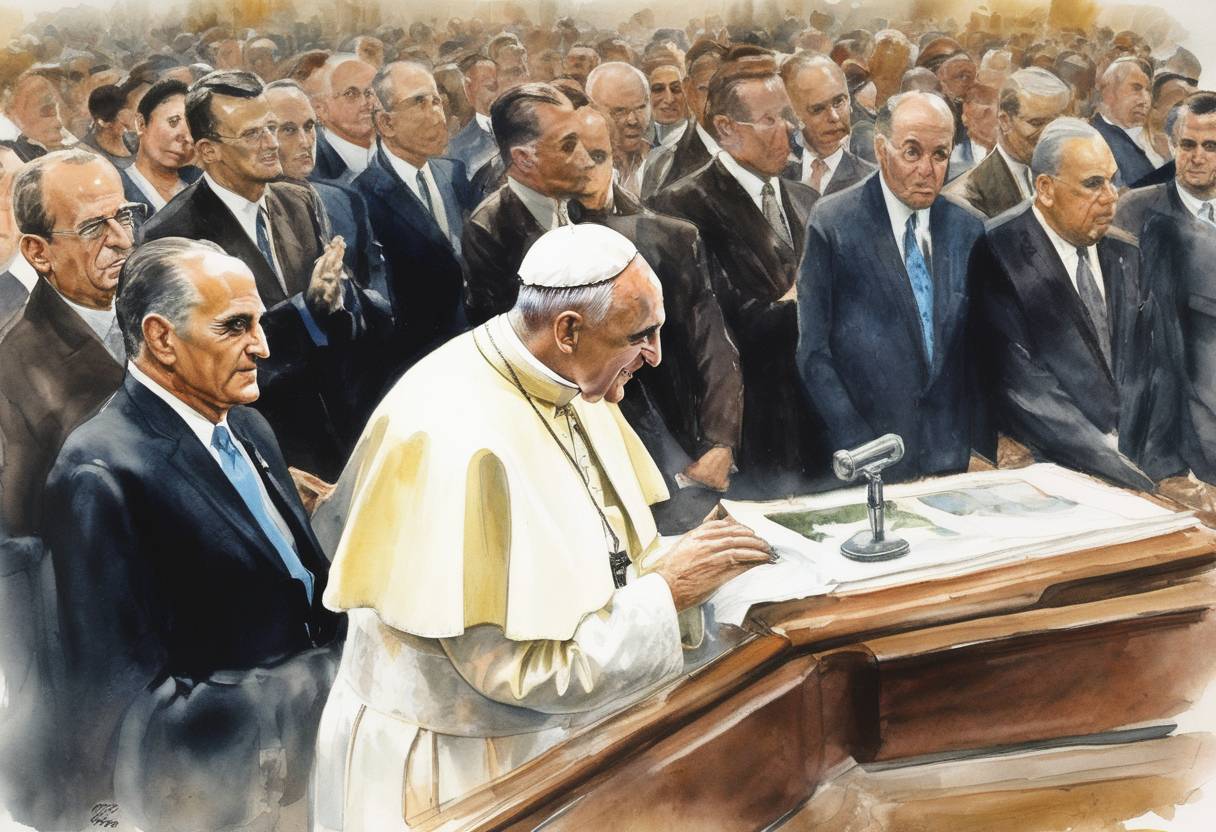
On October 4, 1965, Pope Paul VI made history by becoming the first reigning pope to visit the United States. This landmark event was marked by his address to the United Nations General Assembly in New York City, a significant moment in both religious and diplomatic history.
Pope Paul VI, born Giovanni Battista Montini, ascended to the papacy in 1963. His tenure was characterized by efforts to modernize the Catholic Church and promote peace and dialogue during a period marked by Cold War tensions and social upheaval. The Second Vatican Council, which he continued after the death of Pope John XXIII, was a pivotal part of his papacy, aiming to address relations between the Catholic Church and the modern world.
Pope Paul VI’s visit to the United Nations was a powerful symbol of peace and international cooperation. On October 4, 1965, he delivered a speech to the General Assembly, emphasizing themes of peace, disarmament, and human rights. His address was notable for its call for an end to war and a plea for nations to work together for the common good.
Pope Paul VI’s visit to the United States and his address to the United Nations had a lasting impact on both the Catholic Church and international relations. It marked a new era of papal diplomacy and engagement with global issues, reinforcing the Vatican’s role as a moral voice in international affairs.
Pope Paul VI’s historic visit remains a significant moment in the history of the papacy and international diplomacy, reflecting the Catholic Church’s commitment to peace and global engagement.
Source: en.wikipedia.org