1996 · East Moriches, United States
TWA Flight 800 exploded and crashed into the Atlantic Ocean near East Moriches, New York, killing all 230 people on board.
January 8, 1989
Kegworth air disaster: A British Midland Boeing 737 crashed on the M1 motorway in Leicestershire, England, killing 47 people.
Kegworth, United Kingdom | British Midland Airways
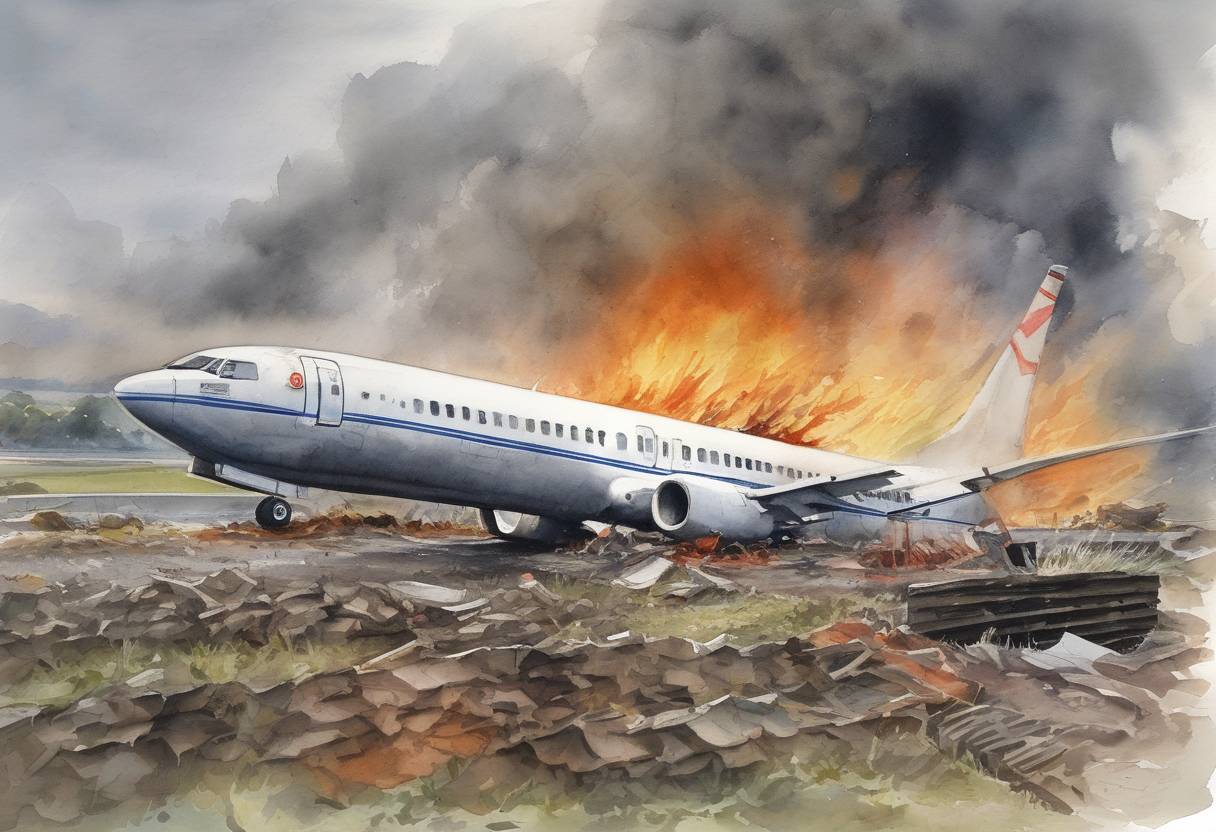
The Kegworth air disaster occurred on January 8, 1989, when British Midland Flight 92, a Boeing 737-400, crashed onto the M1 motorway near Kegworth, Leicestershire, England. The tragic accident resulted in the deaths of 47 people and injuries to 74 others. The flight was en route from London Heathrow Airport to Belfast International Airport.
Engine Malfunction: Shortly after takeoff, at approximately 28,300 feet, the aircraft experienced a malfunction in the left engine. The pilots misidentified the source of the problem and shut down the right engine, which was functioning correctly.
Descent and Crash: With the left engine still operating at reduced power and the right engine shut down, the aircraft struggled to maintain altitude. The crew attempted an emergency landing at East Midlands Airport. However, as the plane approached the runway, it lost power and crashed onto the embankment of the M1 motorway, just short of the airport.
The Kegworth air disaster underscored the critical importance of proper training and the need for clear, intuitive cockpit displays. It also highlighted the potential consequences of human error in aviation, leading to improvements that have contributed to the overall safety of air travel.
The disaster remains a poignant reminder of the complexities involved in aviation safety and the continuous efforts required to prevent similar tragedies in the future.
Source: en.wikipedia.org