Leopold I Inaugurated as the First King of the Belgians
1831 · Brussels, Belgium
Leopold I was inaugurated as the first King of the Belgians, marking the beginning of the Kingdom of Belgium.
July 20, 1831
The Belgian National Day is celebrated for the first time, marking the foundation of Belgium as an independent nation.
Brussels, Belgium | Belgian Government
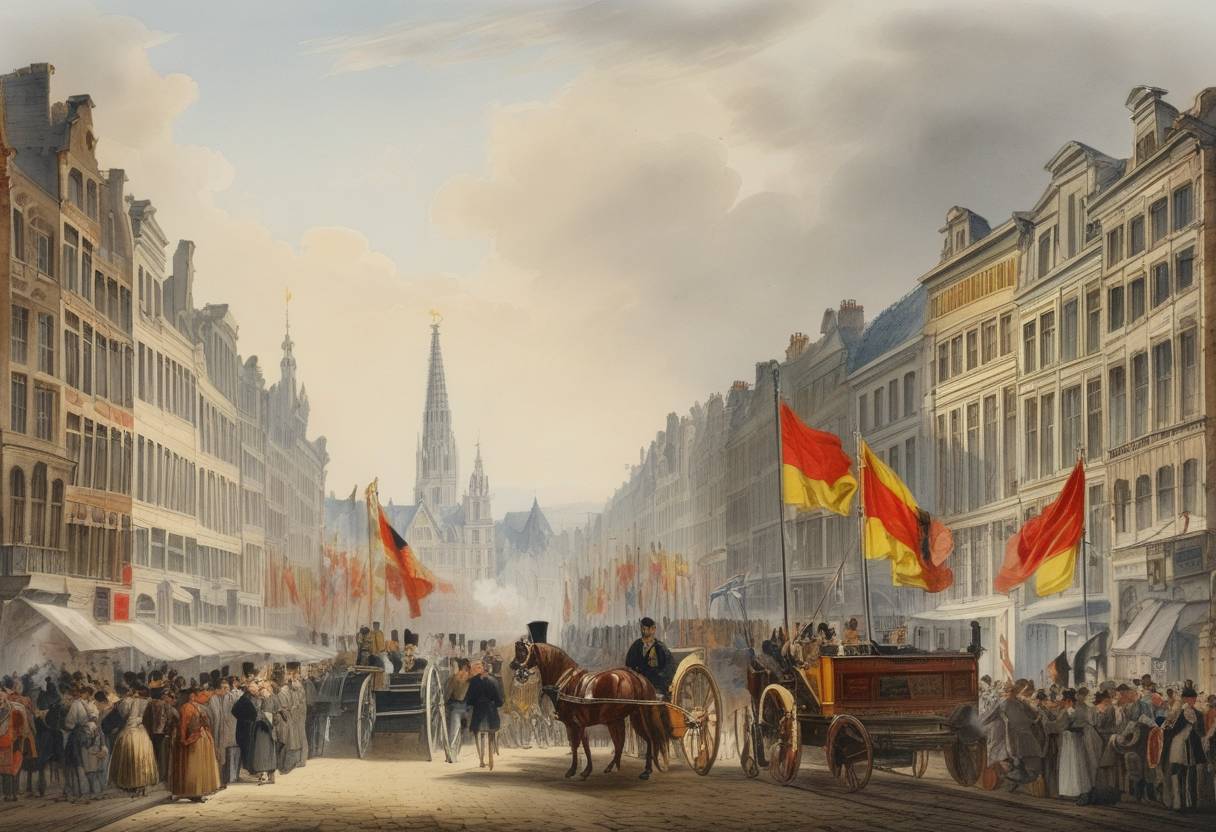
Belgian National Day, celebrated annually on July 21st, marks an important milestone in the history of Belgium, commemorating the founding of Belgium as an independent nation. This day highlights the pivotal events surrounding the Belgian Revolution and the selection of its first monarch, cementing Belgium’s place as a sovereign state in Europe.
Before becoming an independent nation, the region known today as Belgium was part of the United Kingdom of the Netherlands, created in 1815 after the fall of Napoleon Bonaparte. The regions in this union—comprising modern-day Belgium, the Netherlands, and Luxembourg—were culturally, linguistically, and economically disparate, leading to rising tensions. The southern provinces, predominantly Roman Catholic and French-speaking, felt marginalized under King William I’s predominantly Protestant and Dutch-speaking administration.
The demand for independence reached a boiling point in August 1830, ignited by socio-economic grievances and inspired by the wave of revolutionary movements across Europe. The Revolution began when a performance of the patriotic opera “La Muette de Portici” in Brussels spurred nationalist sentiments and widespread rebellion. The insurrection quickly spread, and by September 1830, Belgian rebels had taken Brussels.
On October 4, 1830, Belgian leaders declared independence. Following skirmishes and negotiations, a National Congress was formed, leading to the drafting of a new constitution. The nascent Belgian state sought recognition and support from European powers while establishing its governmental structure.
To solidify its claim to independence and assure stability, Belgium invited Leopold of Saxe-Coburg and Gotha to become its king. Leopold was inaugurated on July 21, 1831, marking the official establishment of Belgium as an independent constitutional monarchy. His oath of allegiance to the Belgian constitution on this day is why July 21st is celebrated as the National Day of Belgium.
Leopold I’s accession helped to stabilize the new nation and earned international recognition of Belgium’s independence. The Treaty of London, signed in 1839, formally recognized Belgium as a neutral and independent state, further solidifying its status among European nations. The creation of Belgium as a sovereign entity dramatically altered the political landscape in Europe, demonstrating the potential for nationalistic movements to successfully challenge established powers.
Belgian National Day serves as a reminder of the nation’s struggle for self-governance and unity, celebrating the enduring strength and resilience of its people.
Source: www.britannica.com