Abdication of Stanislaus I of Poland
1766 · Warsaw, Poland
The Stanislaus I of Poland abdicates his throne, paving the way for the election of the new king.
May 1, 1576
Stefan Batory is elected King of Poland, marking a significant moment in Polish history as he became a notable ruler who strengthened the Polish-Lithuanian Commonwealth.
Warsaw, Poland | Polish-Lithuanian Commonwealth
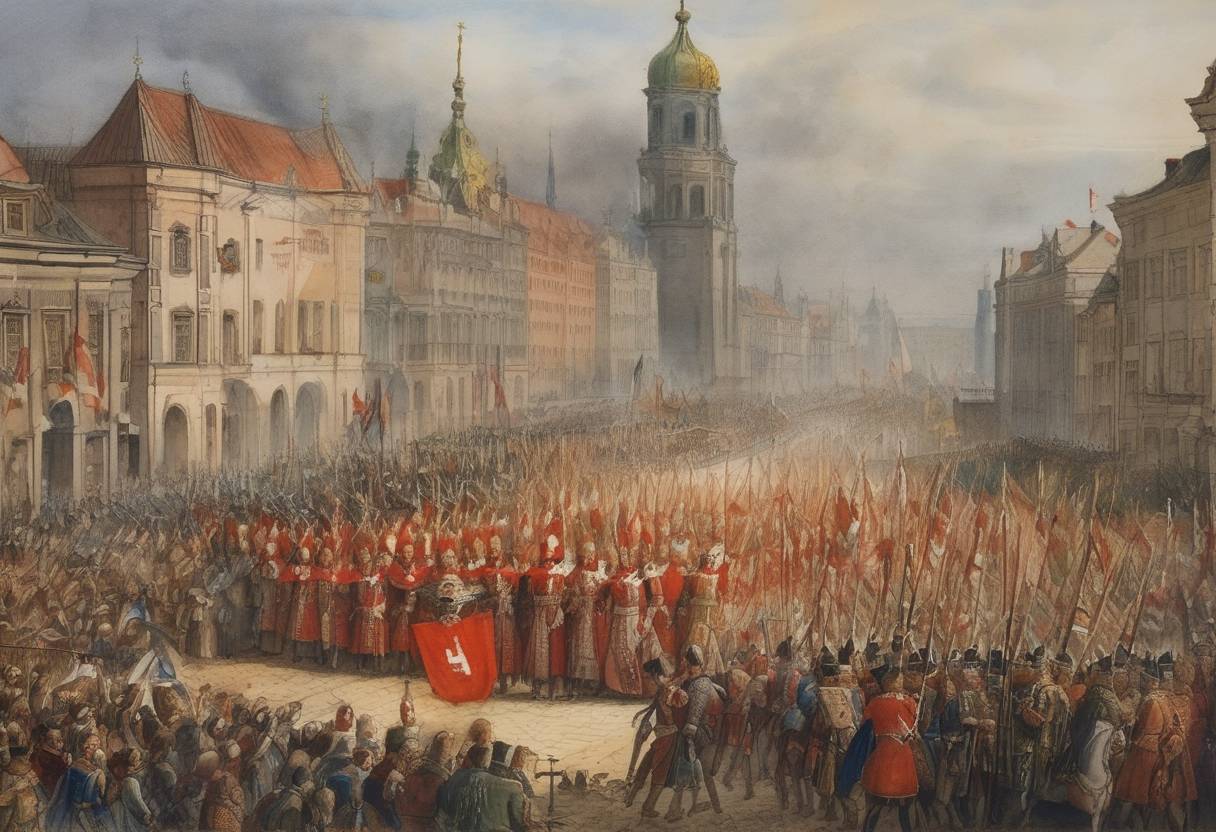
On May 1, 1576, Stefan Batory, the Prince of Transylvania, was elected the King of Poland and Grand Duke of Lithuania. This event marked the beginning of a significant reign that would strengthen the Polish-Lithuanian Commonwealth during a critical period in its history.
In the 16th century, the Polish-Lithuanian Commonwealth was a major political entity in Europe, formed through the Union of Lublin in 1569. The commonwealth faced internal and external challenges, including political fragmentation and threats from neighboring powers. Following the abdication of King Henry III of Poland, the throne was vacant, leading to a vigorous election process.
Batory’s election was a result of complex political maneuvering. Initially, there was a division among Polish nobles over whom to elect as king. Eventually, Batory was selected, largely thanks to the influence of prominent figures such as Jan Zamoyski, and his strategic marriage to Anna Jagiellon, the sister of the previous king, Sigismund II Augustus. His election came after a contentious period where Maximilian II of the House of Habsburg had also been elected by a rival faction but failed to secure his claim.
Stefan Batory’s reign, lasting until his death in 1586, is often characterized by his efforts to consolidate royal power and strengthen the commonwealth. Some of his notable achievements include:
Military Reforms: Batory reorganized the Polish army, instituting the well-disciplined and effective infantry units known as the “Piechota Wybraniecka.”
Wars Against Russia: His successful campaigns during the Livonian War against the Tsardom of Russia expanded the commonwealth’s influence and secured its northeastern regions. His victories at the sieges of Polotsk and Pskov were particularly significant.
Judicial and Administrative Changes: Batory introduced judicial reforms that modernized the legal system, which enhanced the efficiency of governance within the commonwealth.
Cultural Impact: Under Batory, the commonwealth experienced a cultural revival, fostering education and the arts. He was a patron of the University of Vilnius, which played a key role in cultural advancement.
Batory’s reign solidified the political and military standing of the Polish-Lithuanian Commonwealth in Europe. His successful military campaigns kept his eastern neighbors at bay and increased the commonwealth’s influence. Despite his relatively short reign, his legacy is remembered for the reforms that unified and strengthened the internal structures of the commonwealth, setting precedents for future rulers. Stefan Batory remains a celebrated figure in Polish history, often remembered for his leadership and strategic prowess that contributed significantly to the stability and prosperity of the region.
Source: en.wikipedia.org