Argentina Invades the Falkland Islands: Beginning of the Falklands War
1982 · Stanley, Falkland Islands
Argentina invades the Falkland Islands, beginning the Falklands War with the United Kingdom.
August 13, 1978
The Battle of Aishiya occurs, which is part of the larger conflict known as the Shaba II War, involving Zaire and a coalition of forces from Angola and Cuban exile soldiers.
Aishiya, Zaire | Zairian Government
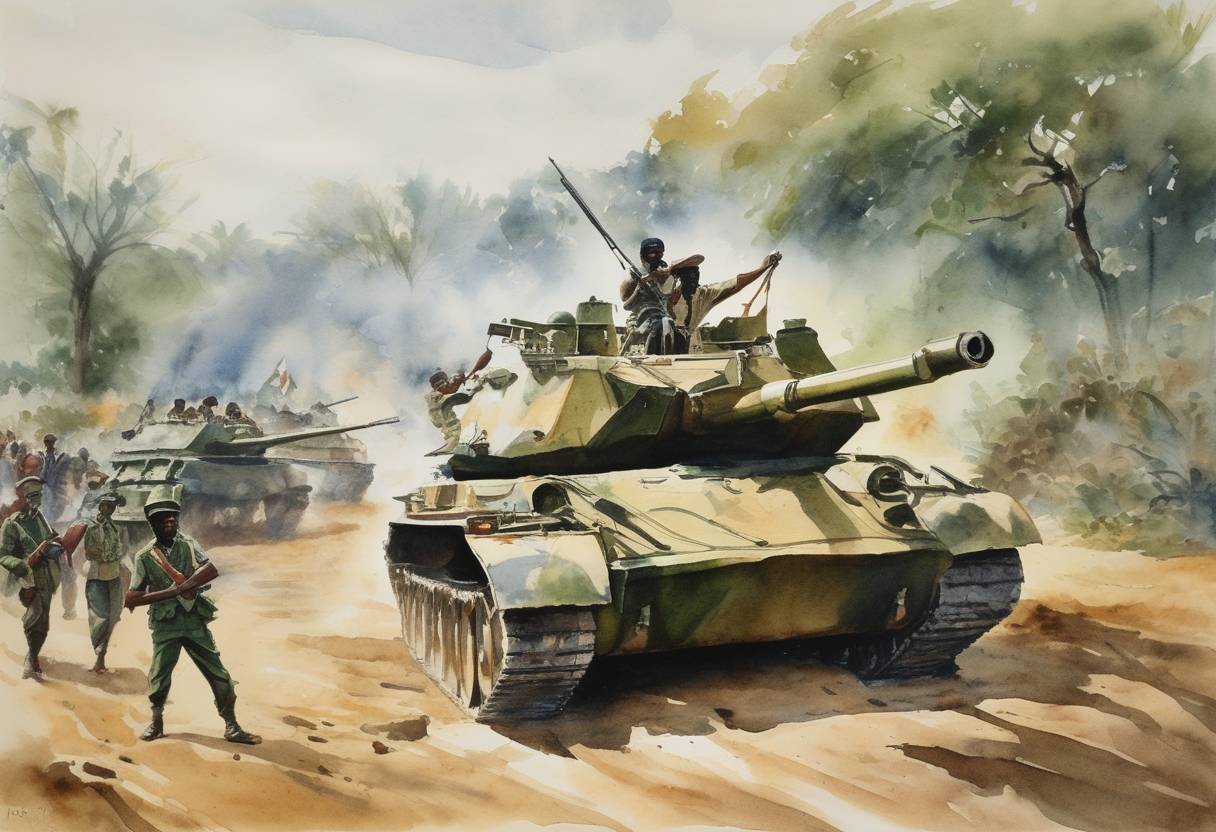
The Battle of Aishiya was a pivotal engagement on August 13, 1978, during the Shaba II conflict, which saw the Zairian government attempting to reclaim control over the Shaba Province from insurgent forces. This conflict was a continuation of unrest in the region, which earlier manifested during the Shaba I conflict in 1977.
Shaba Province, rich in mineral resources, became a flashpoint of conflict when the Front for the National Liberation of the Congo (FNLC), a group of exiled Katangese gendarmes supported by Angola, launched invasions. The FNLC sought to capitalize on local dissatisfaction and exploit weaknesses in Mobutu Sese Seko’s administration. Initial successes in 1977 had prompted regional instability, culminating in the Shaba II War.
Zairian Defense Measures: Recognizing the threat posed by the FNLC and facing logistical challenges, Zaire’s government called on international support. France and Belgium sent paratroopers and logistical aid respectively, while Morocco provided combat troops.
Angolan Involvement: Angola, with its own geopolitical interests, supported the FNLC, allowing it to launch incursions from its territory. Cuban exile soldiers also joined the Angolan-led FNLC, further complicating Zaire’s military efforts.
Battle Dynamics: The Battle of Aishiya became critical as Zairian forces aimed to cut off FNLC supply lines and reclaim territories quickly falling under rebel control. The combat involved intense ground fighting with both sides employing guerrilla tactics amid difficult terrain.
Zairian Victory: The coordinated effort by Zairian forces, bolstered by international aid and military support, eventually led to their victory at Aishiya. This engagement marked a turning point that enabled the reclamation of key strategic towns and territory within Shaba.
Restoration of Order: Following the battle and subsequent military actions, Zaire managed to suppress the FNLC threat and restore a semblance of order in Shaba. The government further strengthened its defenses in the region to prevent future incursions.
Regional Consequences: The Shaba II conflict underscored the volatile geopolitics of the region, marked by Cold War dynamics, external influences, and internal ethnic and political tensions. It highlighted the cross-border nature of regional conflicts and the reliance on international intervention for resolution.
The Battle of Aishiya, as part of the larger Shaba II conflict, illustrated the complexities facing post-colonial African states during the Cold War. It emphasized the influence of external powers in regional disputes and the challenges of maintaining sovereignty against both domestic insurgents and foreign interventions. This conflict also served as a testament to the intricate balance of power in Central Africa, involving not just local governments but also global superpowers and regional actors.
Source: www.britannica.com