Sinking of the SMS Dresden: March 14, 1915
1915 · off the coast of Chile, Chile
The British Royal Navy sinks the German cruiser SMS Dresden off the coast of Chile during World War I.
November 20, 1759
The Battle of Quiberon Bay, part of the Seven Years' War, was fought. The British Royal Navy, under Sir Edward Hawke, defeated the French fleet, ensuring British naval dominance.
Quiberon Bay, France | British Royal Navy
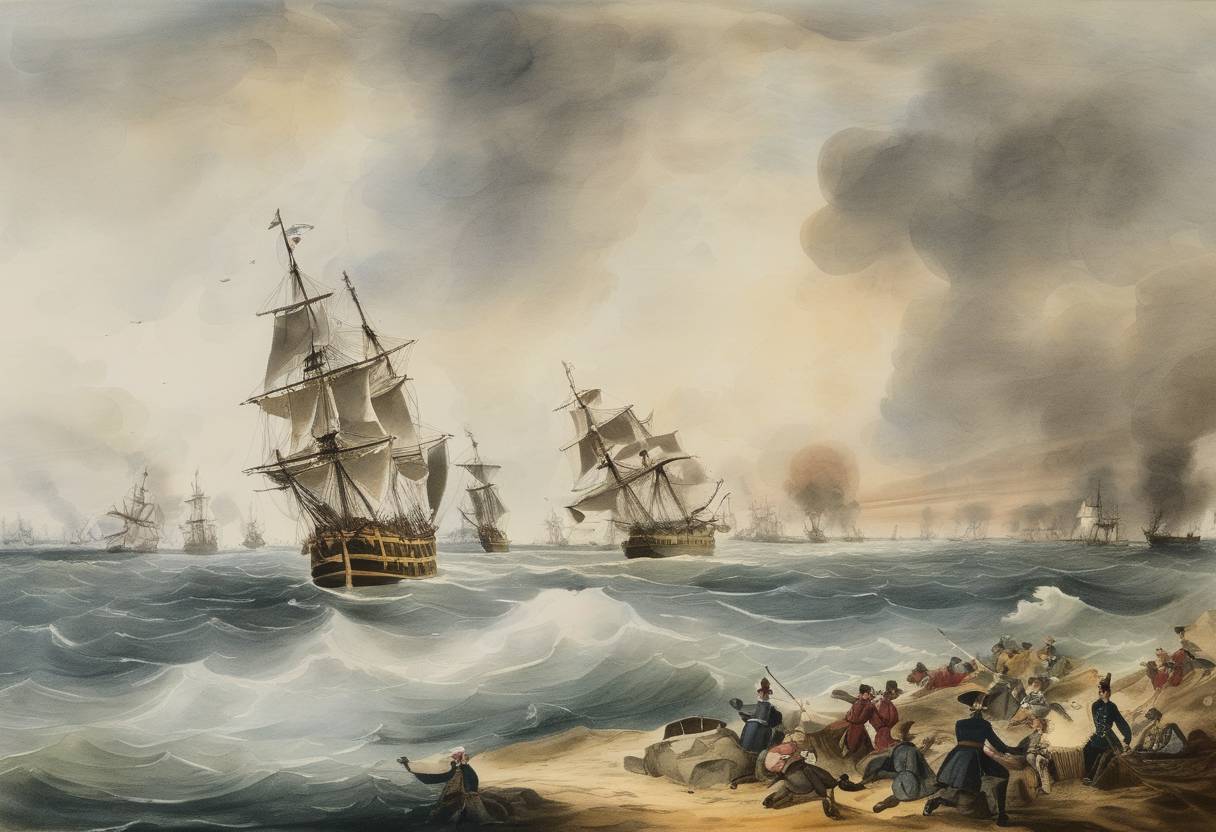
The Battle of Quiberon Bay was a pivotal naval engagement during the Seven Years’ War, which spanned from 1756 to 1763. By 1759, the conflict saw the global powers of Britain and France clashing for dominance across various theaters, including Europe, North America, and Asia. In this scenario, the British aimed to strike a decisive blow to French sea power, thereby ensuring their maritime dominance and stifling French plans for an invasion of Britain.
On November 20, 1759, the British Royal Navy, under the command of Admiral Sir Edward Hawke, confronted a substantial French fleet led by Marshal de Conflans. The encounter occurred in Quiberon Bay, located off the coast of Brittany in western France. The French fleet, numbering 21 ships of the line, sought sanctuary from worsening weather and hoped to evade the British blockade, aiming to regroup and launch an invasion.
Admiral Hawke’s fleet, consisting of 24 ships of the line, pursued the French into the bay despite poor weather conditions and the inherent navigational dangers posed by the rocky shoals and shallows. The decisiveness of Hawke’s tactics, combined with the experience and resolve of his crew, contributed to a thunderous engagement. In fierce combat under unforgiving weather, the British decisively defeated the French. Several French ships were destroyed or run aground, including the flagship “Soleil Royal.”
The British victory at Quiberon Bay had profound implications. It effectively ended French hopes of invading Britain, securing British control of the English Channel. The triumph also cemented British naval superiority, which would endure throughout the remainder of the war. The battle underscored the importance of naval power in the conflict and was part of what became known as Britain’s “Annus Mirabilis” of 1759, a year marked by numerous British military successes.
In the longer term, the battle set the stage for British global maritime dominance that would persist well into the 19th century. It also weakened France’s ability to support its colonies and influence continental alliances, reshaping the strategic landscape of Europe and the wider world in Britain’s favor.
Source: en.wikipedia.org