Charlemagne Arrives in Rome - November 23, 800
800 · Rome, Italy
Charlemagne arrives in Rome at the invitation of Pope Leo III, setting the stage for his coronation as Emperor of the Romans on Christmas Day of the same year.
April 25, 0799
Pope Leo III celebrated his public re-entry into Rome after being driven out by opponents, marking a critical point in his papacy and subsequent alliance with Charlemagne.
Rome, Italy | Papacy
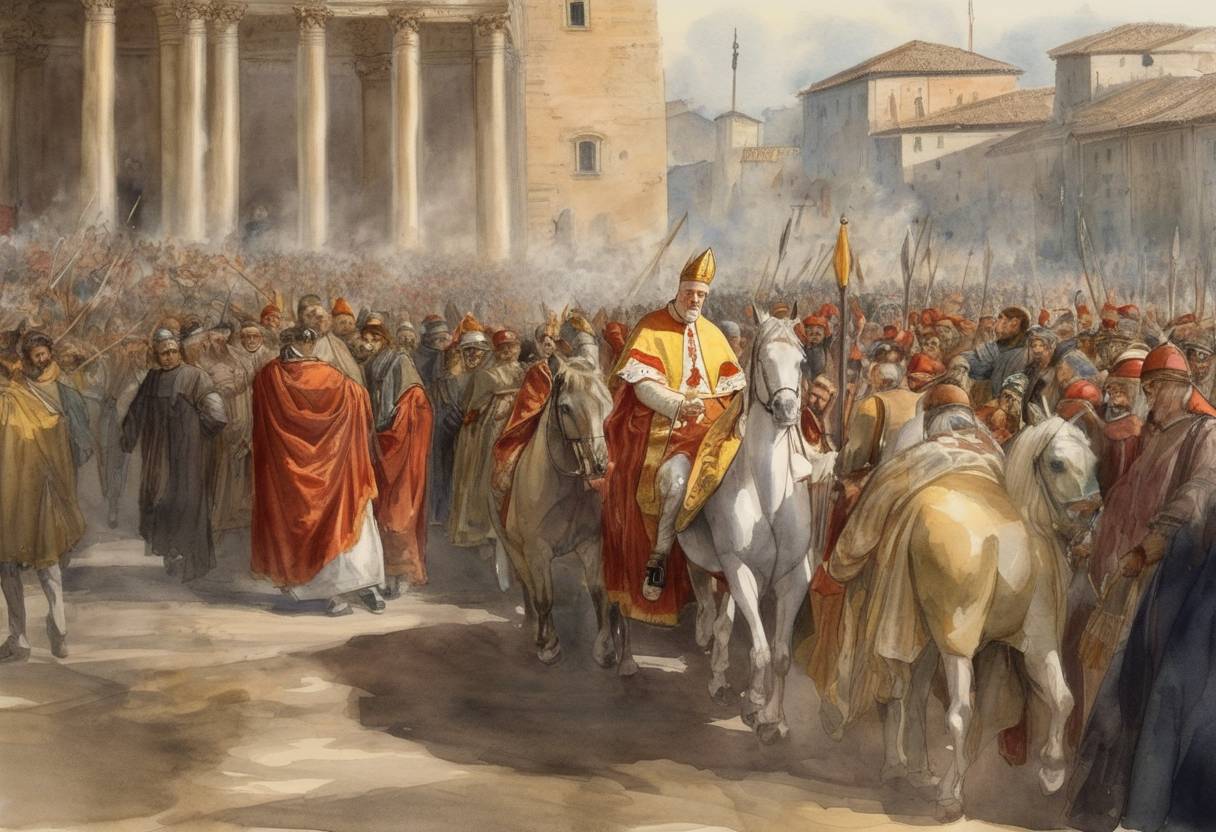
On April 25, 799, Pope Leo III made a significant public re-entry into Rome, marking a pivotal moment in his pontificate and his evolving relationship with Charlemagne, the King of the Franks. This event came after Pope Leo was forcibly removed from the city by a faction of Roman aristocrats opposed to his authority.
Leo III had assumed the papacy in 795 following the death of Pope Adrian I. From the outset, Leo faced considerable opposition from Roman nobility who favored maintaining the traditional influence of the local aristocracy. The animosity against Leo was partly fueled by accusations of moral impropriety and rumors of misconduct, which his enemies used to rally support against him.
On April 25, 799, during a religious procession honoring the feast of Saint Mark, Leo was attacked and kidnapped by his adversaries. They attempted to blind him and cut off his tongue in an effort to unseat him from power, based on the contemporary belief that a disfigured person was unfit for papal duties. However, Leo managed to escape the gruesome fate they intended for him due to the swift intervention of his supporters.
Following his escape, Leo III sought refuge in the Frankish kingdom, appealing to Charlemagne for protection. His appeal was strategic, as Charlemagne had already established his reputation as the protector of Christianity and was looking to strengthen his influence in Italy.
Upon Leo’s return to Rome on April 25, 799, he was welcomed back by a sizeable contingent of clergy and laypeople, signaling a momentary victory over his opponents. This event not only solidified his position as pope but also set the stage for an important alliance with Charlemagne.
The return to Rome and the backing of Charlemagne were critical in reinstating Leo’s authority. This alliance was strengthened in 800, when Pope Leo III crowned Charlemagne as “Emperor of the Romans” in a celebrated ceremony on Christmas Day. This event marked the revival of the Roman Empire in the West and established the foundation for what would become known as the Carolingian Renaissance.
The events of April 25, 799, underscored the political and ecclesiastical complexities of the era, with the papacy navigating between local power struggles and broader alliances with emerging European powers. Leo III’s re-entry into Rome exemplified the interplay between religious and secular forces, a dynamic that would shape the medieval European landscape for centuries.
Source: en.wikipedia.org