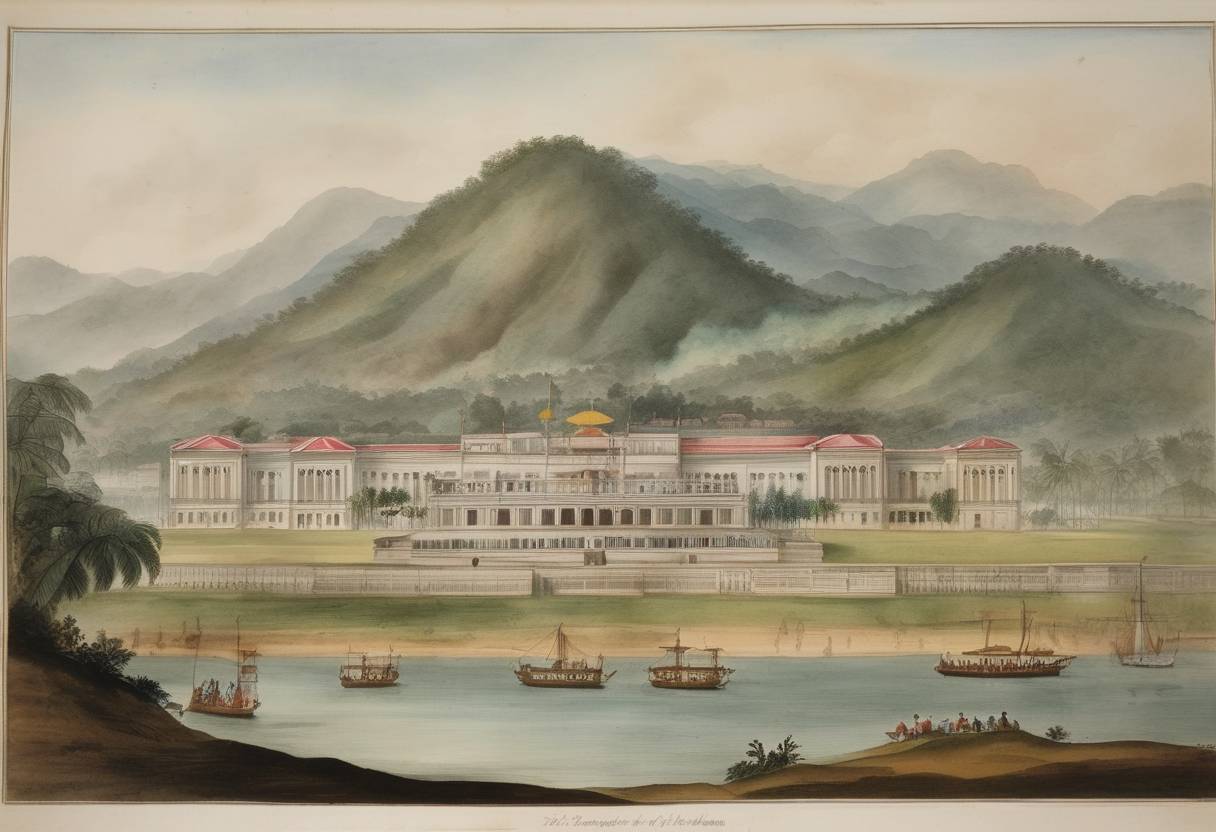
Transfer of Sovereignty of Penang to the British Crown
On February 1, 1820, the sovereignty of Prince of Wales Island, now known as Penang in Malaysia, officially transferred from the British East India Company to the British Crown. This significant political change marked a pivotal moment in the region’s colonial history.
Background
Originally acquired by the British East India Company through an agreement with the Sultan of Kedah in 1786, Penang was intended to serve as a strategic trading port and military outpost to counter Dutch dominance in the region. The island was initially named Prince of Wales Island, in honor of the then heir to the British throne.
The transfer to the Crown in 1820 was part of a broader movement during this period, where several territories previously under the administration of the East India Company were gradually brought under direct Crown control. This transition was driven by the need for stronger governance structures and direct oversight due to various administrative difficulties and the geopolitical importance of these colonies.
Significance
The transfer of Penang’s sovereignty marked the beginning of its evolution into a more directly governed colony, paving the way for future economic and infrastructural development. As a Crown colony, Penang benefited from improved administration and increased investment, enhancing its role as a vital hub for trade and commerce in the Strait of Malacca.
Aftermath
Following the transfer, Penang continued to grow in strategic importance. It later became part of the Straits Settlements along with Malacca and Singapore in 1826, which were collectively governed by the British Crown. This move helped solidify British influence in Southeast Asia, shaping the region’s colonial landscape significantly in the years to come.
The transfer of sovereignty of Penang illustrates the era’s imperial dynamics and the strategic decisions by colonial powers to expand and maintain their global influence.