The Burning of The Globe Theatre - June 29, 1613
1613 · London, England
The Globe Theatre in London, associated with William Shakespeare, burned down after a cannon shot during a performance of Henry VIII ignited the thatched roof.
November 1, 1611
Shakespeare's play 'The Tempest' was performed for the first recorded time at Whitehall Palace in London.
London, England | Court of King James I
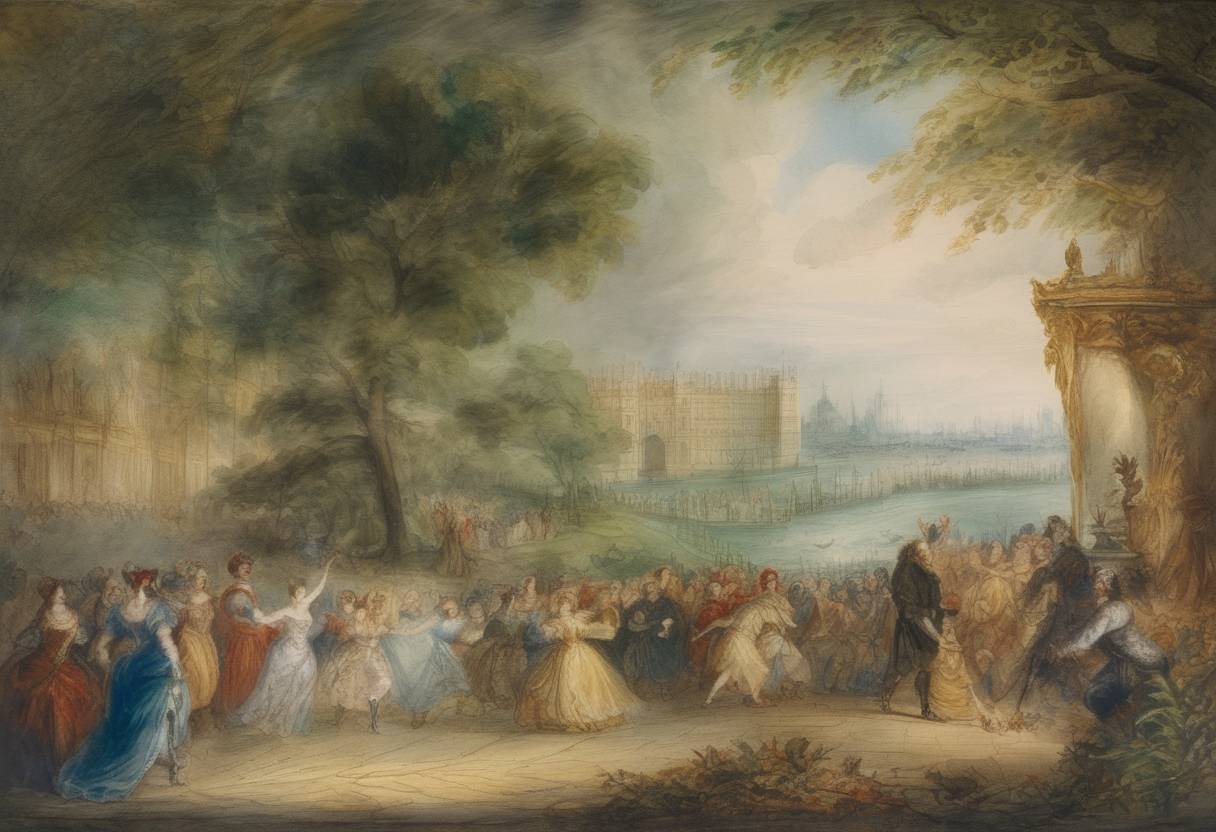
On November 1, 1611, William Shakespeare’s play “The Tempest” was performed for the first recorded time at Whitehall Palace in London. It is known to have been part of the entertainment for the King’s Day celebrations, which were held to honor King James I’s succession to the English throne.
“The Tempest” is often considered one of Shakespeare’s greatest works and is believed to be one of the last plays he wrote alone. Set on a remote island, it encompasses themes of magic, betrayal, revenge, and forgiveness. The performance at Whitehall Palace was likely part of the Masque tradition regaled by King James I’s court, known for its elaborate stage effects and themes revolving around the human condition and natural order.
Whitehall Palace was a principal residence of the English monarchs and a significant cultural venue. Hosting “The Tempest” during such an important celebration highlights the play’s immediate appeal and Shakespeare’s esteemed position within the Jacobean court.
“The Tempest” features compelling characters such as Prospero, the rightful Duke of Milan and a powerful magician; his daughter Miranda; the spirit Ariel; and the creature Caliban. The narrative focuses on Prospero’s quest to restore his daughter to her rightful place using illusion and manipulation, intertwining with deeper themes such as reconciliation, the art of the theater, and the complexity of the human experience.
The first recorded performance helped cement “The Tempest” as a celebrated dramatization of moral and philosophical queries, reflective of the period’s colonial and social dynamics. Its legacy has endured over the centuries, influencing literature, theater, and even music and film, serving as a focal point for discussions on authority, power, and the unknown frontier.
Shakespeare’s creative influence, vividly epitomized by “The Tempest,” continues to resonate in modern narratives, illustrating timeless human concerns and the enduring power of storytelling.
Source: www.shakespeare.org.uk