August 15, 2013: Egyptian Military Declares State of Emergency
2013 · Cairo, Egypt
The Egyptian military declared a state of emergency following violent clashes between security forces and supporters of ousted President Mohamed Morsi.
June 30, 2012
Mohamed Morsi becomes President of Egypt, following the country's first democratic elections after the 2011 revolution.
Cairo, Egypt | Muslim Brotherhood
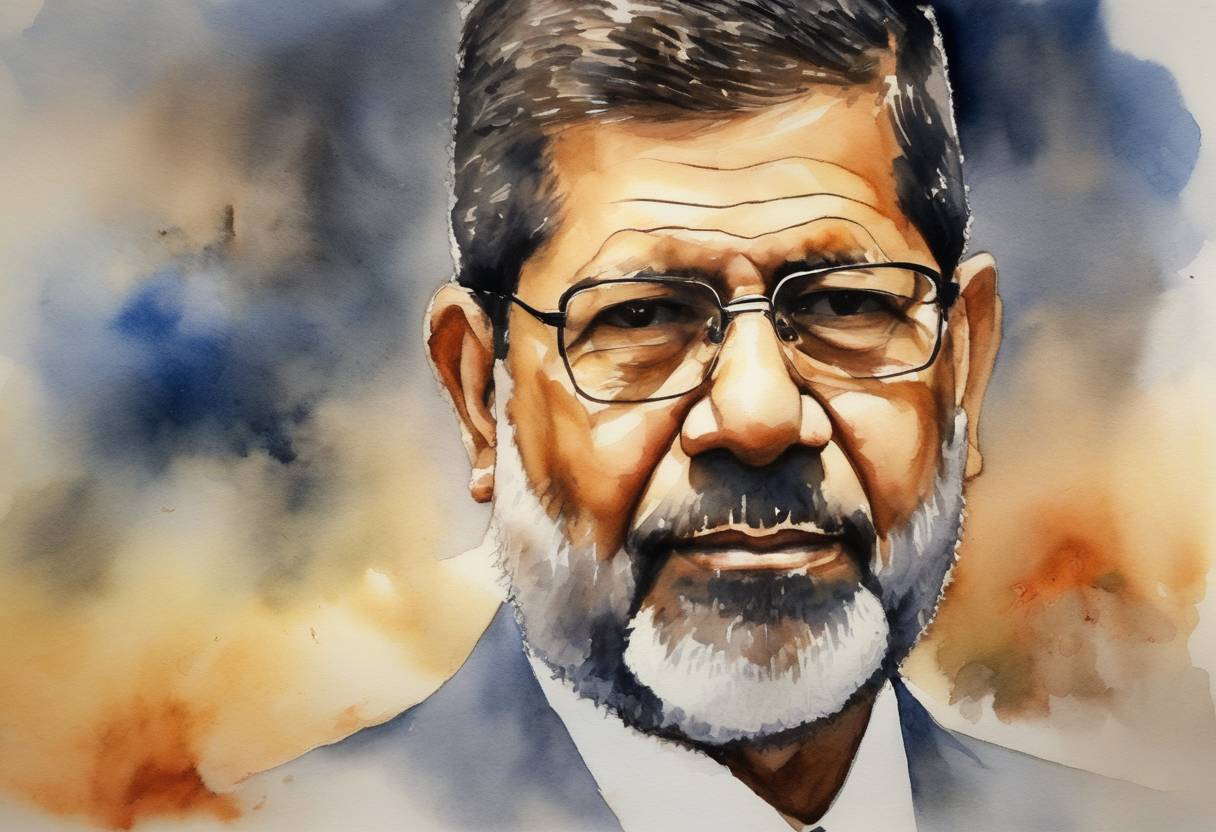
The 2011 Egyptian Revolution was part of the broader Arab Spring, a wave of protests and uprisings across the Middle East and North Africa. The revolution led to the resignation of President Hosni Mubarak after nearly 30 years of rule. This created a political vacuum and opened the path for democratic reforms in Egypt, including the establishment of new political parties and the organization of democratic elections.
Following Mubarak’s ousting, the Supreme Council of the Armed Forces (SCAF) took power, promising to facilitate a transition to civilian rule. In 2012, Egypt held its first multi-candidate presidential elections. The elections represented a significant milestone, as they were seen as the first free and fair elections in the country’s modern history.
The presidential race had multiple candidates, but it ultimately came down to Mohamed Morsi, representing the Muslim Brotherhood’s Freedom and Justice Party, and Ahmed Shafik, the last prime minister under Mubarak.
On June 30, 2012, Mohamed Morsi was officially inaugurated as Egypt’s President, becoming the first democratically elected leader in the nation’s history. His victory marked a pivotal shift in Egyptian politics, as Morsi was not only the first civilian president but also the first to come from an Islamist background.
His inauguration took place in the backdrop of significant national divisions and challenges, given the complex political landscape post-revolution. Morsi faced the immense task of uniting a nation with varying ideological, cultural, and religious perspectives while navigating the deep economic and social challenges that had been left unaddressed for decades.
Morsi’s presidency was seen as a critical test for the balance of power between Islamists and secularists in the new Egypt. His tenure, however, was fraught with controversy and challenges. Political tensions increased as his administration struggled with issues related to the judiciary, military, and civil unrest. Morsi’s leadership style and decision-making were often criticized by both domestic and international observers.
His presidency lasted until July 3, 2013, when he was overthrown by the military following widespread protests against his rule. This event underscored the volatility and fragility of Egypt’s fledgling democracy and led to a period of military-backed government, illustrating the ongoing complexities of post-revolutionary Egypt.
Morsi’s rise to power and subsequent removal were pivotal moments that highlighted the challenges of transitioning from authoritarian rule to democratic governance, setting a precedent for political developments in the region.
Source: en.wikipedia.org