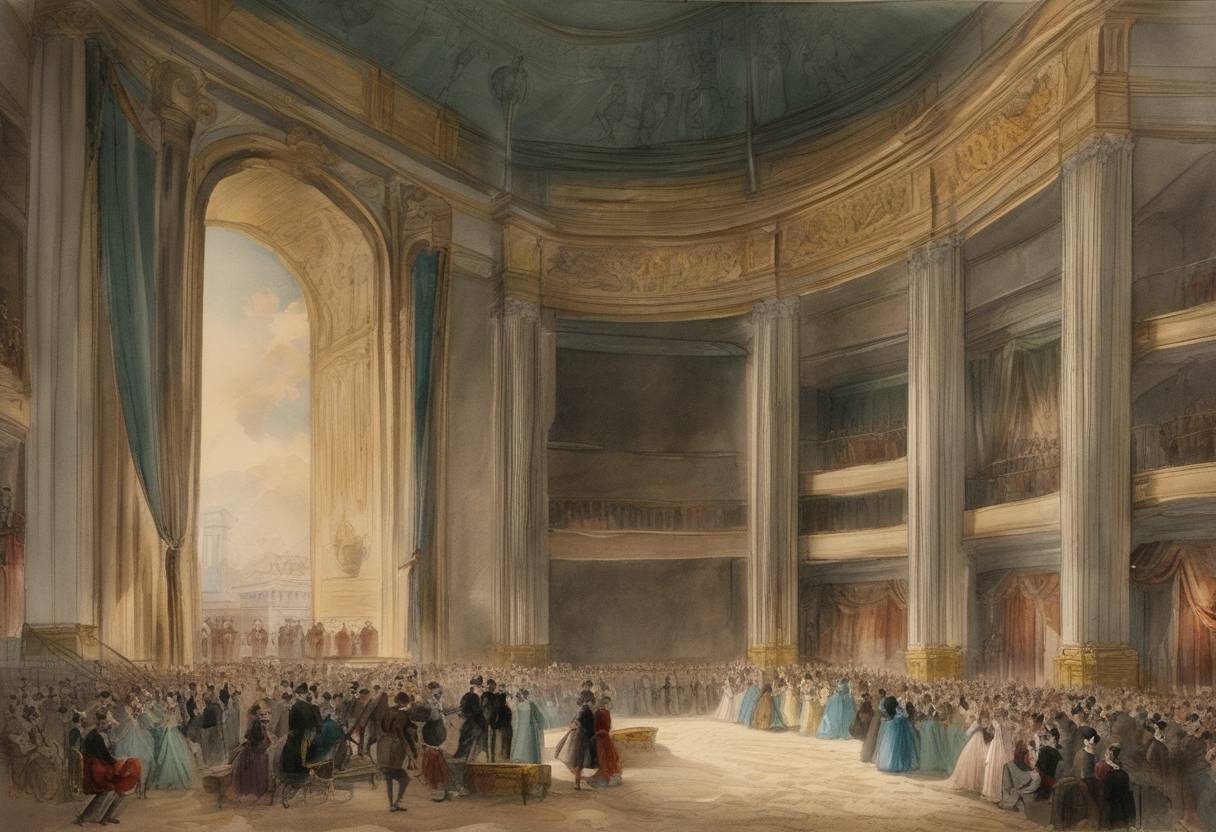
The Premiere of Giuseppe Verdi’s “La Battaglia di Legnano”
Date and Location
The opera “La Battaglia di Legnano,” composed by renowned Italian composer Giuseppe Verdi, premiered on January 27, 1849, at the Teatro Argentina in Rome. The performance on March 11, 1850, might relate to a subsequent staging but the premiere occurred earlier.
Historical Context
The opera was written during a period of significant political upheaval in Italy. The mid-19th century was marked by the Italian unification movement, often referred to as the Risorgimento. This movement sought to consolidate various states of the Italian peninsula into a single unified nation-state.
The Opera’s Themes
“La Battaglia di Legnano” is imbued with themes of patriotism and national unity, resonating deeply with the sentiments of the Italian public at the time. The opera’s narrative is set against the backdrop of the historic Battle of Legnano in 1176, where the Lombard League achieved a decisive victory over the Holy Roman Emperor Frederick Barbarossa.
Reception and Significance
Upon its premiere, the opera was well received by audiences who found its nationalist themes compelling and reflective of contemporary aspirations for a united Italy. Verdi himself was an ardent supporter of Italian unification, and his work often showcased his political leanings, earning him the status of a cultural hero among Italian patriots.
Legacy
While “La Battaglia di Legnano” is not as frequently performed today as some of Verdi’s other masterpieces, it remains an important work in understanding the connection between art and politics during the Italian Risorgimento. The opera is emblematic of how Verdi used his compositions to influence public opinion and inspire national pride.
In the broader context of Verdi’s career, “La Battaglia di Legnano” represents a phase where his music transcended entertainment, contributing to the larger socio-political movements of his time.