Establishment of Marietta, Ohio - April 7, 1788
1788 · Marietta, United States
American pioneers establish the town of Marietta, Ohio, the first permanent settlement of the new United States in the Northwest Territory.
July 13, 1787
The United States Congress enacted the Northwest Ordinance, establishing governance for the Northwest Territory and paving the way for the expansion and settlement of what would become the Midwest United States.
New York, United States | Congress of the Confederation
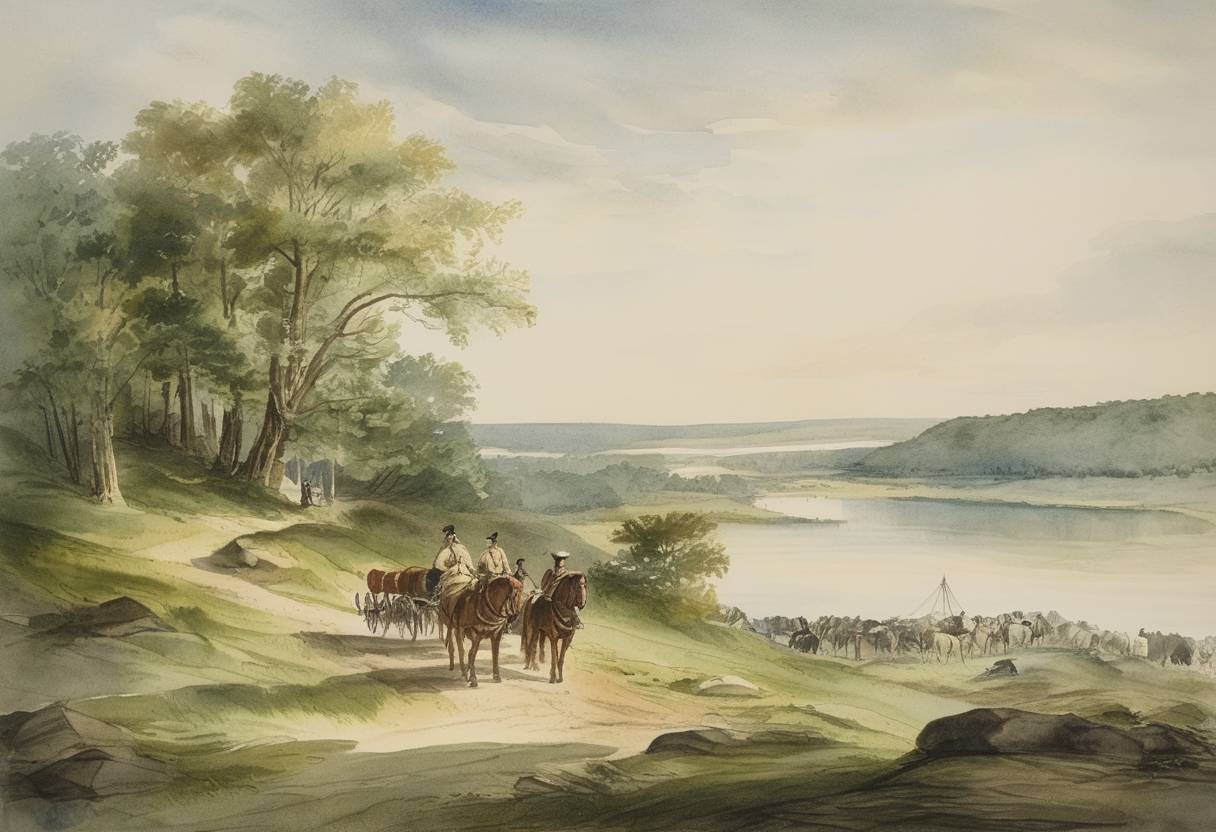
The Northwest Ordinance, passed by the United States Congress on July 13, 1787, was a pivotal legislative act that structured governance for the Northwest Territory, an expansive frontier region that would eventually evolve into the American Midwest. This territory encompassed land that today includes the states of Ohio, Indiana, Illinois, Michigan, Wisconsin, and a part of Minnesota. The ordinance was seminal in shaping the nation’s approach to territorial expansion and governance.
In the aftermath of the American Revolutionary War and the Treaty of Paris (1783), the United States acquired significant new territories. However, there was no coherent policy or framework for governing these lands. The Articles of Confederation government, recognizing the strategic and economic importance of orderly westward expansion, sought to establish a structured method for integrating these lands.
Previously, under the Land Ordinance of 1785, the Congress had established systematic surveying and sale of land in the Western territories, but the Northwest Ordinance went further by laying the groundwork for governance.
Governance Structure: The ordinance established a structured framework for creating new states and a systematic process for them to join the Union on an equal footing with the original thirteen states. It delineated a three-stage evolutionary process for territories:
Civil Liberties: The ordinance promised key civil liberties, including freedoms of religion, right to trial by jury, habeas corpus protections, and due process rights.
Education and Slavery: It emphasized the importance of public education by mandating that a portion of land sales revenue be allocated to fund schools. Notably, the ordinance prohibited slavery within the territory, marking a significant early legislative action against the expansion of slavery in future states.
The Northwest Ordinance established a clear precedent for the future expansion of the United States, promoting orderly settlement and governance. Its successful application provided a model for the subsequent formation of new states from western territories, ensuring that by 1803, Ohio was admitted to the Union under this framework.
The prohibition of slavery in the Northwest Territory had lasting implications, contributing to the growing sectional tensions between free and slave states that culminated in the American Civil War. Additionally, the emphasis on education set a cultural expectation for the importance of learning in these new communities.
The Northwest Ordinance remains a cornerstone of American expansion policy, reflecting the ideological balancing act between state rights, federal oversight, and the expansionary aspirations of a nascent United States.
Source: www.archives.gov