Leonardo da Vinci's Death on May 2, 1519
1519 · Amboise, France
Leonardo da Vinci, the renowned Italian polymath, died in Amboise, France. He was known for his contributions to art, science, and engineering.
April 9, 1483
The birth of Rafael Sanzio, known as Raphael, an Italian painter and architect of the High Renaissance.
Urbino, Italy
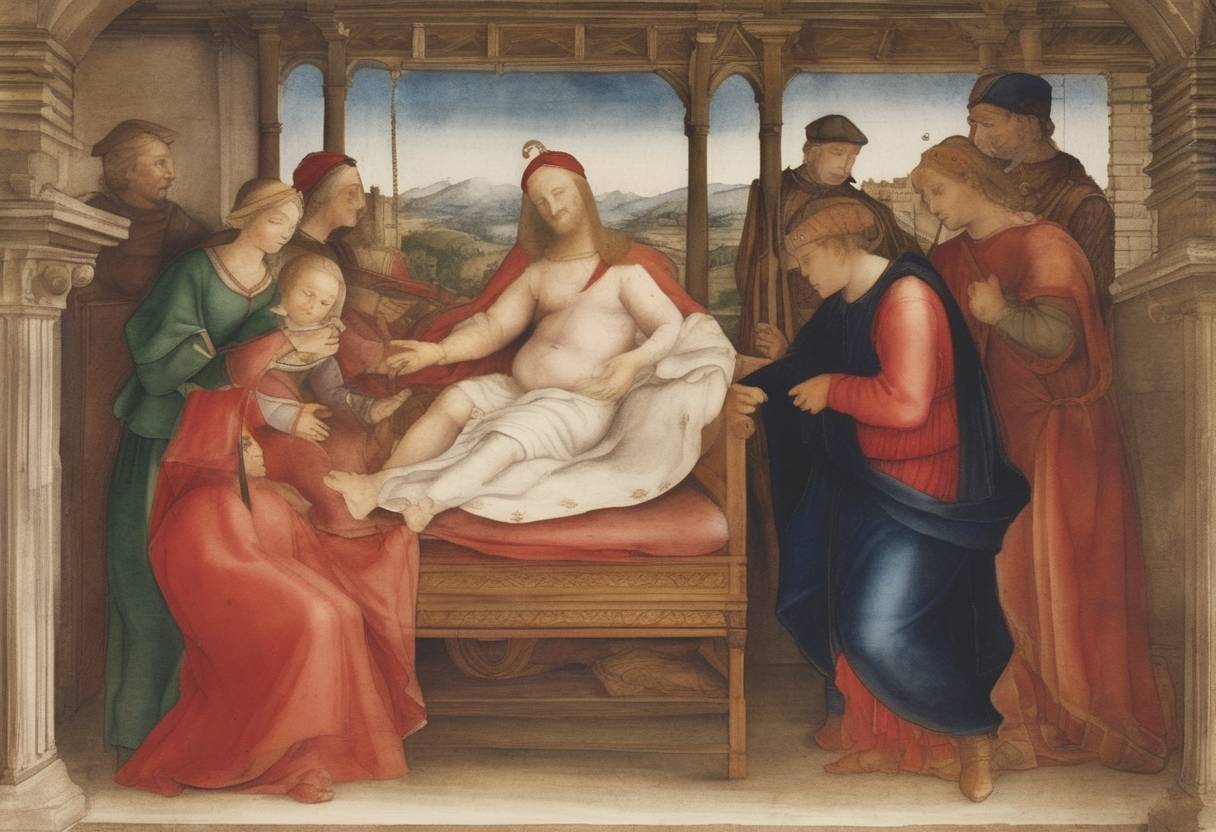
Date: April 6, 1483
Raffaello Sanzio da Urbino, commonly known as Raphael, was born on April 6, 1483, in the town of Urbino, Italy. This date has often been noted in historical records as his accepted birth date, and it is celebrated as such despite occasional references to April 7 due to differing historical calendars.
Urbino, a central Italian town, was a hub of artistic and intellectual activity during the Renaissance. Raphael was born into a family already well-integrated into this vibrant cultural environment. His father, Giovanni Santi, was a court painter to the Duke of Urbino and played a significant role in exposing Raphael to the arts from a young age.
Under his father’s guidance, Raphael displayed an early talent for painting, which laid the foundation for his future success. After the untimely death of his father when Raphael was 11, he continued to develop his skills and sought mentorship from other prominent artists of the time.
Raphael became one of the leading figures of the High Renaissance, celebrated for his clarity of form, brilliant composition, and visual achievement of the Neoplatonic ideal of human grandeur. His most famous works include frescoes such as “The School of Athens” in the Vatican and numerous other religious and architectural projects.
Throughout his short life, Raphael left an indelible mark on the art world. His work influenced generations of artists, contributing significantly to the course of Western art. Raphael’s legacy is evident in the countless imitations and studies of his work that followed.
Raphael’s birth on April 6, 1483, marks the beginning of a journey that would lead to his becoming a quintessential master of Renaissance art and architecture.
Source: en.wikipedia.org