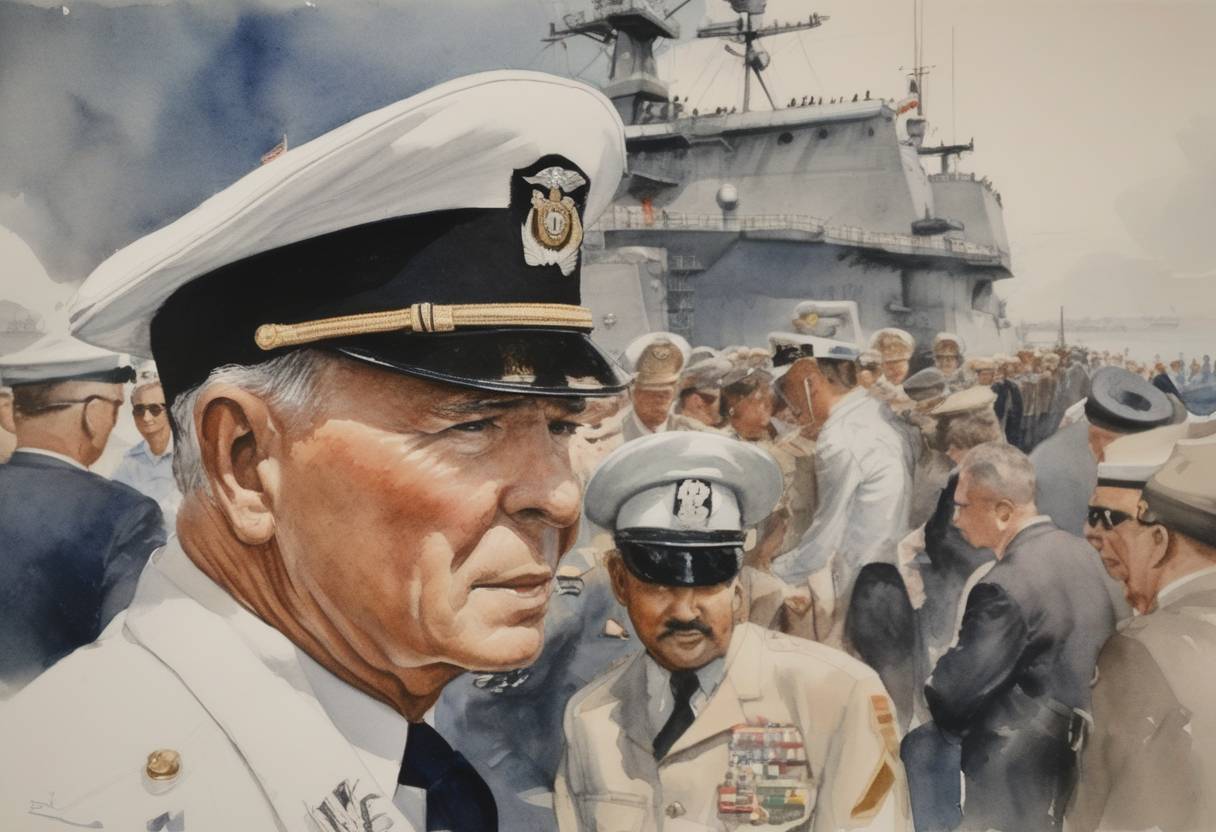
Colonel William P. Rogers and the USS Pueblo Incident
On November 26, 1968, Colonel William P. Rogers assumed command of the USS Pueblo, a United States Navy intelligence vessel. The USS Pueblo had been involved in a significant geopolitical incident earlier that year when it was captured by North Korean forces on January 23, 1968. This event marked a critical moment during the Cold War, illustrating the tensions between the United States and North Korea.
Context and Background
The USS Pueblo was an environmental research ship being used by the Naval Security Group for intelligence-gathering operations. Its mission included intercepting and collecting electronic communications from North Korea and the surrounding areas. On the day of its capture, the ship was located off the coast of North Korea in what the United States maintains were international waters.
The Capture
On January 23, 1968, the USS Pueblo was approached and attacked by North Korean naval forces. Despite attempts to evade capture, the Pueblo was boarded and its crew, led by Commander Lloyd M. Bucher, was detained. The incident resulted in the death of one crew member, with 82 others being taken as prisoners of war.
Command and Resolution
Following prolonged negotiations, the crew was released on December 23, 1968, after nearly 11 months in captivity. The return of the crew and the ship marked the end of an intense phase of negotiations, although the USS Pueblo itself remains in North Korean possession to this day.
Aftermath and Significance
Colonel Rogers’ command on November 26 indicated preparations and changes within the operational leadership post-incident. The capture of the USS Pueblo heightened tensions during an already volatile period of the Cold War, contributing to the strained relations between the United States and North Korea. The incident also underscored the complexities of naval intelligence operations and their geopolitical implications.
The legacy of the USS Pueblo echoes as a point of historical and diplomatic reflection, particularly in discussions surrounding U.S. and North Korean relations. Despite varied interpretations, the incident remains a poignant example of Cold War-era confrontations and the persistent challenges in resolving international conflicts.