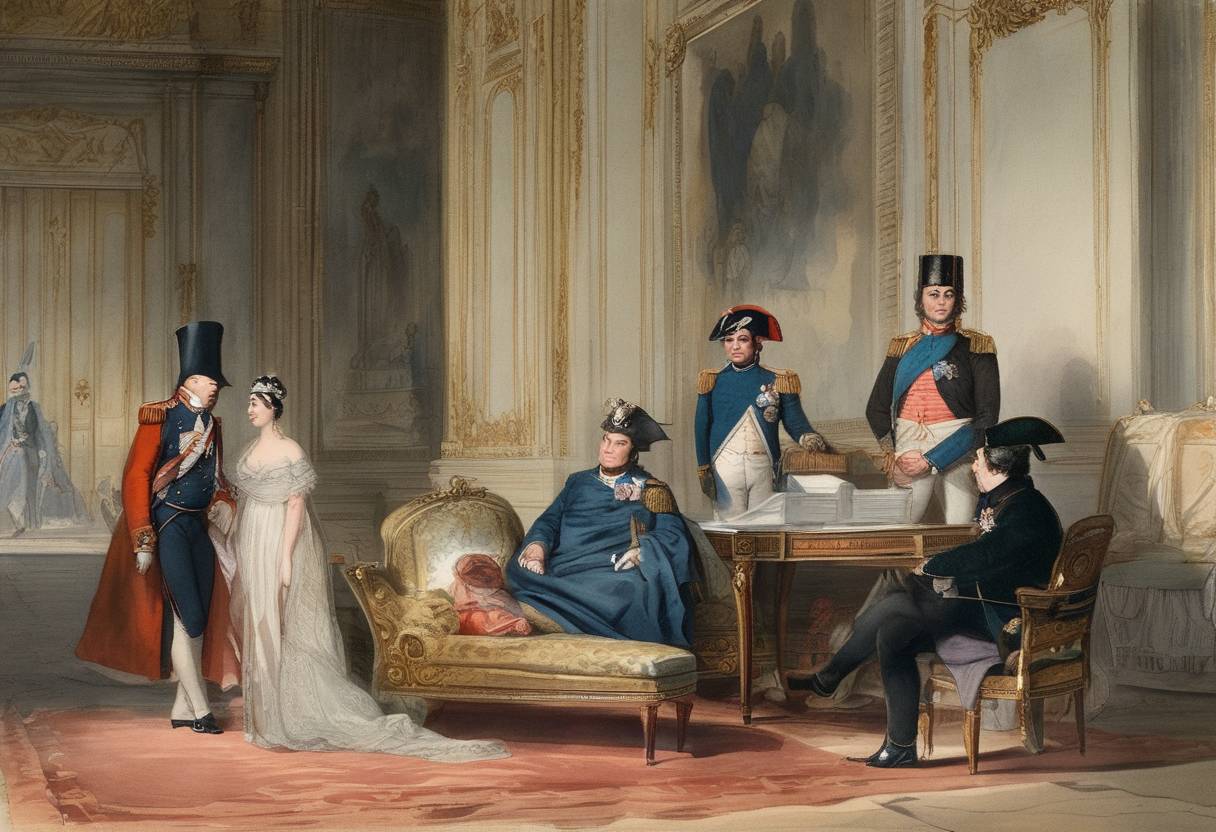
Napoleon Bonaparte Moves into the Tuileries Palace - February 19, 1800
On February 19, 1800, Napoleon Bonaparte, then First Consul of France, made a significant move by establishing his government in the Tuileries Palace in Paris. This occupation marked a pivotal moment during the transformative period following the French Revolution, symbolizing the consolidation of power under Napoleon and the French Consulate.
Background
Following the turmoil and upheaval of the French Revolution, France was left in a state of political instability. The revolution had dismantled the Ancien Régime and executed King Louis XVI, leading to years of unrest and the eventual rise of the Directory, a five-member committee that governed France from 1795 until 1799. However, the Directory struggled with corruption, inefficiency, and political infighting, which set the stage for a coup d’état on November 9, 1799 (18 Brumaire, according to the French revolutionary calendar), led by Napoleon Bonaparte.
Establishment of the Consulate
In the aftermath of the coup, the French Consulate was established, effectively dissolving the Directory. The new government structure included three consuls, with Napoleon as the First Consul, granting him significant power. This transition marked Napoleon’s emergence as a dominant political figure in France.
Significance of the Move
Moving into the Tuileries Palace on February 19, 1800, held deep symbolic and practical significance. As former residence of French royalty, the Tuileries represented the seat of executive power and governance in France. By relocating the Consulate’s headquarters there, Napoleon not only demonstrated a return to a stable, centralized authority but also claimed a sense of historical continuity and legitimacy for his rule.
The occupation signaled Napoleon’s intent to restore order, strengthen government operations, and stabilize France’s tumultuous political climate. It also laid the groundwork for the establishment of the Napoleonic Empire, with Napoleon eventually proclaiming himself Emperor of the French in 1804.
Impact
The relocation of the government into the Tuileries Palace was a crucial step in reasserting centralized power and setting the stage for the sweeping reforms that would follow under Napoleon’s leadership. These reforms included the codification of laws, educational advancements, and infrastructural improvements, which collectively solidified his control and marked the beginning of a renewed era of governance in France.
In conclusion, the move into the Tuileries Palace on February 19, 1800, was more than a mere change of address; it was a strategic and symbolic act that underscored Napoleon’s rise to power and the shaping of modern France’s governmental structure.