The Adoption of the 15th Amendment: March 30, 1870
1870 · Washington, D.C., United States
The 15th Amendment to the United States Constitution was formally adopted, granting African American men the right to vote.
June 4, 1919
The U.S. Congress passed the 19th Amendment to the Constitution, which guarantees women the right to vote. The amendment was subsequently sent to the states for ratification.
Washington, D.C., United States | United States Congress
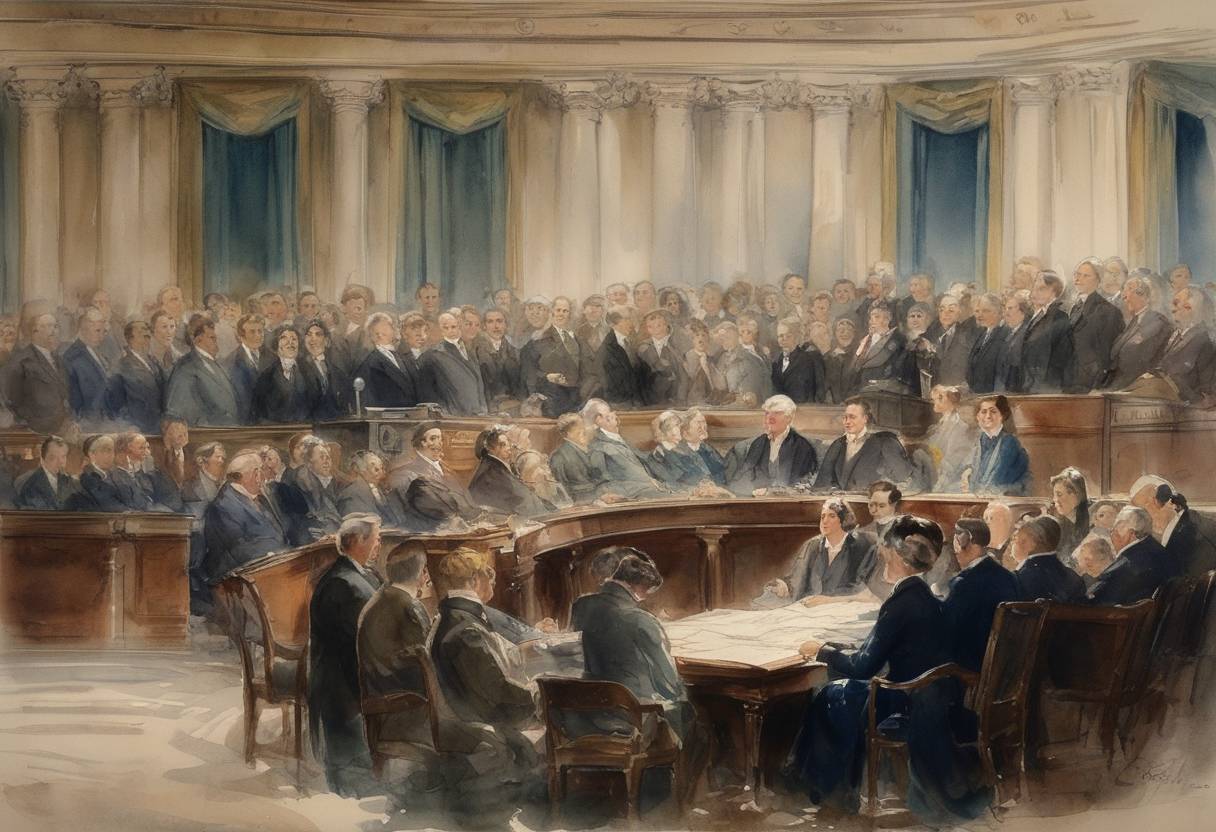
On June 4, 1919, a significant milestone in the women’s suffrage movement was achieved when the United States Congress passed the 19th Amendment to the Constitution. This amendment granted women the legal right to vote, marking a pivotal moment in the struggle for gender equality in the United States.
The push for women’s suffrage was a long-standing effort that gained momentum during the 19th and early 20th centuries. Although several states had granted women voting rights in local or state elections, there was no federal guarantee. The suffrage movement was characterized by decades of activism, including protests, marches, and advocacy led by organizations such as the National American Woman Suffrage Association (NAWSA) and key figures like Susan B. Anthony, Elizabeth Cady Stanton, and later leaders like Carrie Chapman Catt and Alice Paul.
On June 4, 1919, the United States Senate voted in favor of the 19th Amendment, following a similar approval by the House of Representatives earlier that year. The proposed amendment was concise in its language:
“The right of citizens of the United States to vote shall not be denied or abridged by the United States or by any State on account of sex.”
With its passage through Congress, the amendment’s next hurdle was ratification by at least three-fourths of the states, as required by the Constitution.
Following its approval by Congress, the 19th Amendment was sent to the states for ratification. This process encountered various degrees of support and opposition across different states. On August 18, 1920, Tennessee became the 36th state to ratify the amendment, providing the necessary approval to incorporate it into the Constitution.
The adoption of the 19th Amendment marked a monumental change in American society, enfranchising millions of women and significantly altering the electorate. It represented the culmination of years of dedication and activism by countless suffragists, laying a foundation for further gender equality advancements in the decades to follow.
The passage and ratification of the 19th Amendment were crucial steps in the long journey toward social and political equality in the United States. Its success encouraged further civil rights movements and remains a central achievement in American history, illustrating the power of persistent advocacy and reform.
Source: www.archives.gov