George Washington's Inauguration: April 30, 1789
1789 · New York City, United States
George Washington was inaugurated as the first President of the United States on the balcony of Federal Hall in New York City.
April 23, 1789
U.S. President-elect George Washington moved into his first presidential residence at 3 Cherry Street, New York City under the temporary capital. This house served as the nation's first executive mansion.
New York City, United States | U.S. Presidency
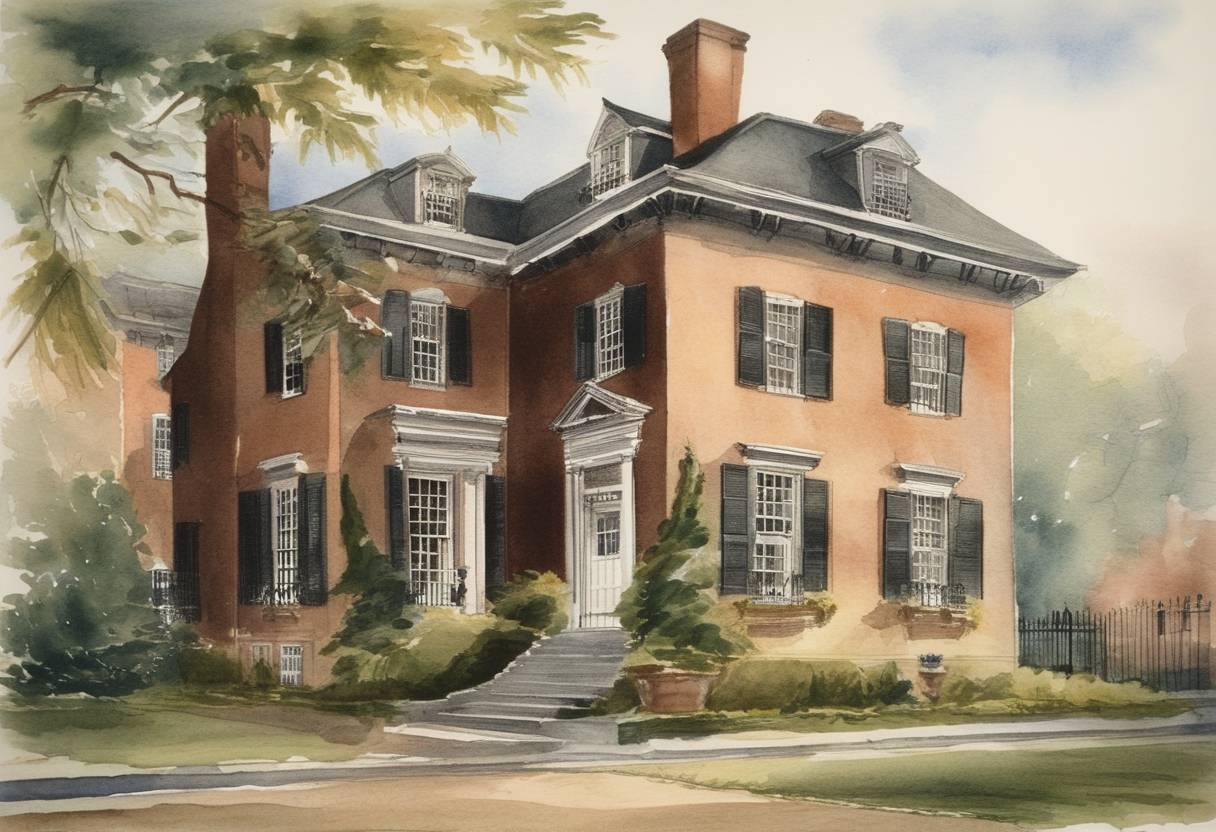
On April 23, 1789, George Washington, the first President-elect of the United States, moved into what became the nation’s initial executive mansion located at 3 Cherry Street, New York City. This event marked a significant moment in the history of the United States as it established a precedent for presidential residences.
Following his unanimous election as the first President of the United States under the new Constitution, George Washington embarked on his journey from Mount Vernon, Virginia, to the temporary capital of New York City. At this time, New York City served as the provisional center of the federal government, as the newly formed United States was still in the process of solidifying its governance structures.
The house at 3 Cherry Street in New York City, which Washington occupied, was rented by the new federal government. The residence was a modest three-story building owned by Samuel Osgood, who served as the first Postmaster General of the United States. Although it was not a grand construction, the Cherry Street residence sufficed for the new president’s needs and served as the first official residence for the head of the executive branch.
Washington’s move into the Cherry Street residence was part of the broader preparations for his inauguration, scheduled for April 30, 1789. The residence not only accommodated Washington but also served as a location for meetings and discussions crucial for the nascent government’s decision-making processes.
This event was a foundational moment in the establishment of norms and traditions for the U.S. presidency. Although Washington only stayed at the Cherry Street residence until February 1790, when the capital moved to Philadelphia, it remains a notable piece of history as the first executive mansion.
Following Washington’s relocation to Philadelphia, the Cherry Street house reverted to private ownership and use. Despite its short tenure as an executive residence, the house is remembered as a symbol of the early days of the American presidency and the efforts to create a functioning government following the ratification of the Constitution.
This initial act of settling in and establishing a working presidency set a tone for future administrations and demonstrated Washington’s commitment to fulfilling his role with a sense of dignity and purpose.
Source: www.mountvernon.org