Rhode Island Renounces Allegiance to King George III
1776 · Providence, USA
Rhode Island became the first American colony to renounce allegiance to King George III, two months before the Declaration of Independence was adopted.
June 9, 1772
The British schooner Gaspee was burned by American patriots in an event that ramped up tensions leading to the American Revolution.
Narragansett Bay, Colonial America | Colonial Patriots
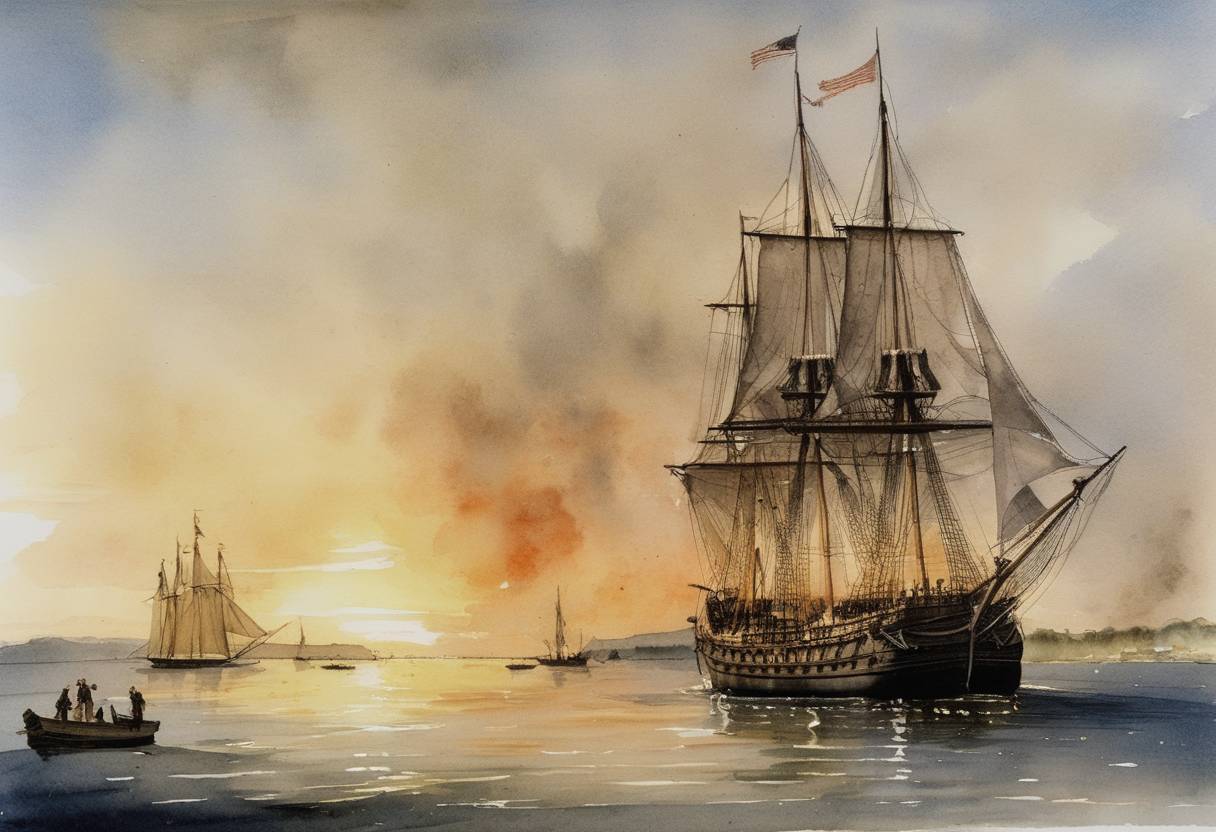
The burning of the British schooner Gaspee was a significant pre-revolutionary event that occurred on June 9, 1772, which contributed to escalating tensions between the American colonies and the British government. This incident took place off the coast of Rhode Island near the city of Providence.
The Gaspee was a British customs schooner tasked with enforcing the unpopular Navigation Acts in the American colonies, which were designed to tighten British control over colonial trade. The ship was commanded by Lieutenant William Dudingston, who was known for his aggressive enforcement tactics, including the inspection and seizure of colonial vessels to curb smuggling—a widespread practice among American merchants seeking to evade British taxes and trade restrictions.
On the evening of June 9, 1772, the Gaspee, while pursuing the packet ship Hannah up Narragansett Bay, ran aground near Namquid Point, in shallow waters at what is now known as Gaspee Point. Seizing the opportunity, local residents organized by John Brown, a prominent Providence merchant, decided to take action against the vessel.
Under the cover of night, a group of Providence residents, led by Abraham Whipple and John Brown, rowed out to the stranded schooner in a fleet of longboats. The attackers boarded the ship, overpowered the crew, and removed them to shore. Subsequently, they set the Gaspee on fire, resulting in its destruction.
The British government’s response was a fervent investigation, with a royal commission of inquiry established to bring the perpetrators to justice. Despite these efforts, no arrests were made, as the local population largely refused to cooperate with the investigation. This lack of legal action further emboldened colonial resistance to British authority.
The burning of the Gaspee marked a pivotal escalation in tensions between the colonies and the British Crown. It was a precursor to other significant confrontations, such as the Boston Tea Party in 1773. The incident demonstrated the growing unity and willingness among the colonists to resist British rule by force, contributing to the series of events that eventually led to the American Revolutionary War.
As a result, the Gaspee affair became a symbol of American protest against British encroachment on colonial autonomy and was a crucial step in the path towards the revolution for independence.
Source: www.britannica.com