The 2004 Summer Olympics Opening in Athens
2004 · Athens, Greece
The 2004 Summer Olympics officially opened in Athens, Greece, marking the return of the Games to their birthplace after 108 years.
April 15, 1896
The closing ceremony of the first modern Olympic Games took place in Athens, Greece, marking the end of the 1896 Summer Olympics.
Athens, Greece | International Olympic Committee
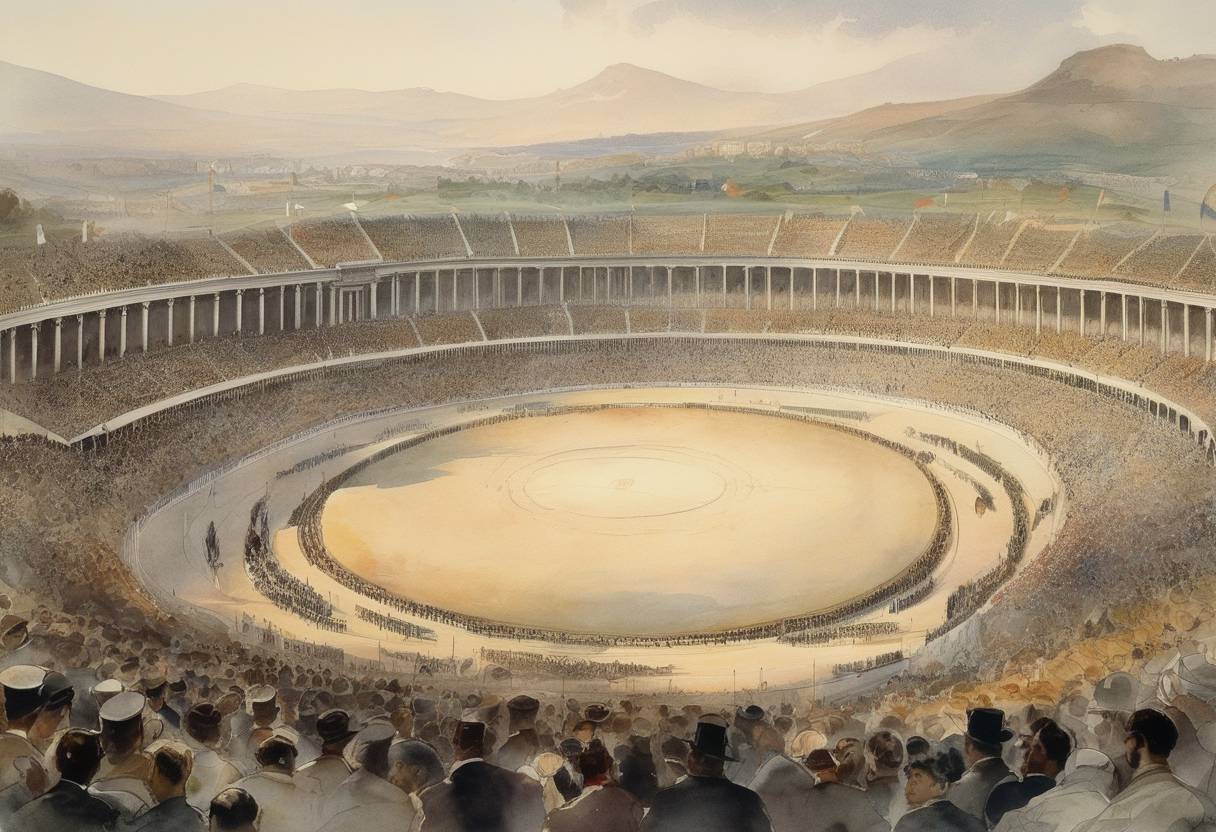
The closing ceremony of the first modern Olympic Games was held on April 15, 1896, in Athens, Greece. This event marked the conclusion of the 1896 Summer Olympics, also known as the Games of the I Olympiad. These games were pivotal in reviving the Olympic tradition, having last been held in ancient times in Olympia, Greece.
The modern Olympics were initiated largely due to the efforts of Pierre de Coubertin, a French educator and historian, who aimed to promote international understanding and peace through sports. The decision to hold the first modern Olympics in Athens served as a tribute to the event’s ancient origins.
Venue: The Panathenaic Stadium, an ancient stadium refurbished for the 1896 Games, hosted the closing ceremony. Located in Athens, it has historical significance as a venue for ancient games and a symbol of Greek sporting heritage.
Participants: The event brought together approximately 241 athletes from 14 countries who competed across various disciplines during the games. The athletes gathered for the closing ceremony, celebrating their contributions to the historic event.
Ceremony Details: The ceremony was attended by an enthusiastic audience, including Greek royalty and dignitaries, which highlighted the importance of the occasion. King George I of Greece played a prominent role in the event, representing the host nation. During the ceremony, medals were awarded to the winners, honoring their achievements and fostering athletic excellence and camaraderie among nations.
The 1896 Athens Games set the precedent for the modern Olympic movement, emphasizing amateur competition and international sportsmanship. The successful conclusion of the games in Athens reinforced the vision of de Coubertin and others who advocated for the Olympic revival. It also paved the way for future Olympic Games, with the next gathering planned for Paris in 1900.
The legacy of the 1896 Games lies in its foundational role in establishing enduring Olympic traditions, such as the Olympic hymn, which was composed for these games by Spyridon Samaras and Konstantinos Palamas, and the introduction of several modern sporting events.
By the end of the closing ceremony, it was clear that the Games had effectively sparked a renewed global interest in sports and competition, marking the beginning of the modern Olympic era.
Source: www.olympic.org