The Great Bhola Cyclone of November 9, 1970
1970 · Bhola, Bangladesh
The Great Bhola Cyclone ravages the area of the Bay of Bengal, killing an estimated 300,000 to 500,000 people in modern-day Bangladesh and West Bengal, India.
November 12, 1970
The Bhola cyclone, the deadliest tropical cyclone ever recorded, strikes the densely populated Ganges Delta region of then-East Pakistan (now Bangladesh), killing an estimated 300,000 to 500,000 people.
Dhaka, Bangladesh | none
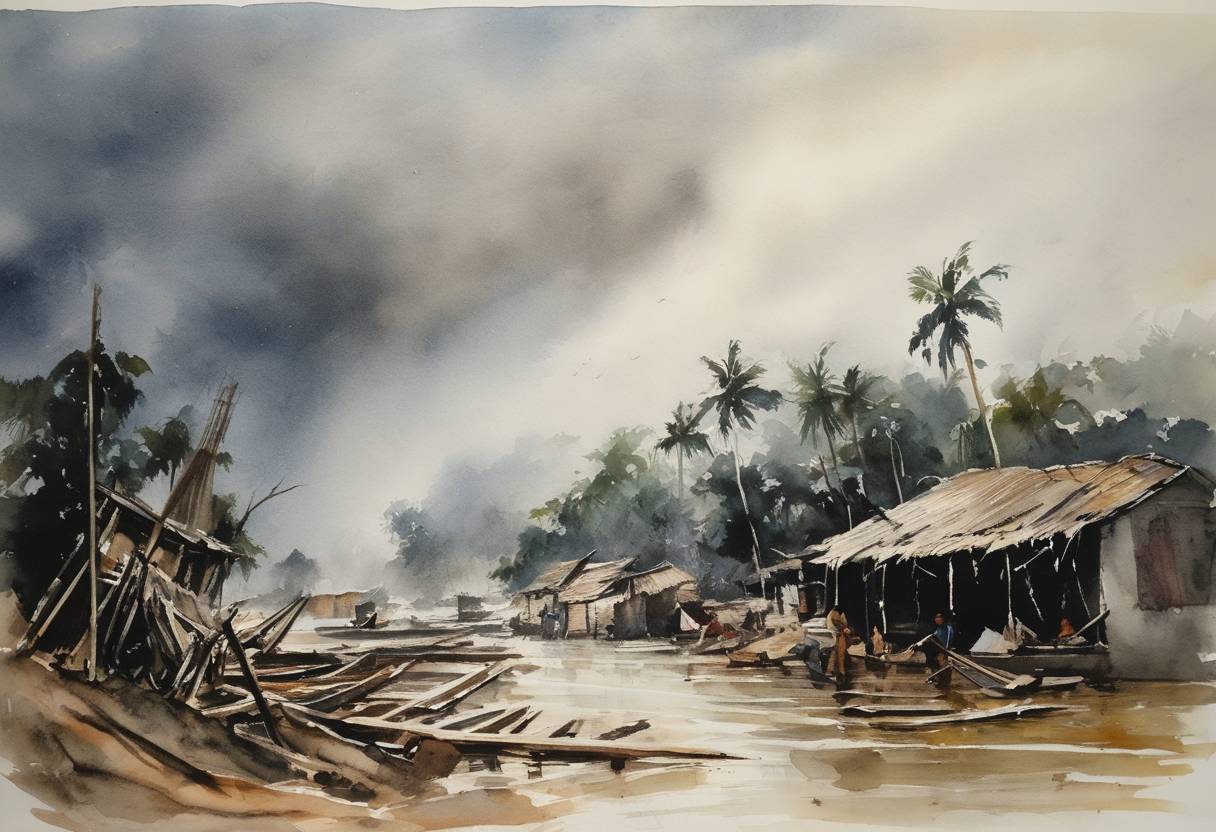
The Bhola Cyclone, one of the deadliest natural disasters in recorded history, struck the Ganges Delta region on November 12, 1970. At the time, the region was part of East Pakistan, which later became Bangladesh. This catastrophic event resulted in the devastating loss of an estimated 300,000 to 500,000 lives.
The late 1960s and early 1970s were a period of political tension and instability in East Pakistan due to the discontent with the central government’s policies based in West Pakistan. The region’s dense population and low-lying geography made it particularly vulnerable to natural disasters like cyclones and flooding.
On November 8, 1970, the tropical depression that would become the Bhola Cyclone formed over the Bay of Bengal. It gradually intensified as it moved northward, reaching its peak with sustained winds of up to 115 miles per hour (185 km/h) on November 12. The cyclone made landfall in East Pakistan’s coastal regions near the noon local time.
Political Repercussions: The inadequate response of the Pakistani government to the disaster fueled existing political tensions in East Pakistan. The perceived neglect significantly contributed to public discontent and played a role in the subsequent Bangladesh Liberation War, leading to the independence of Bangladesh in 1971.
Global Response: The international community, including nations and humanitarian organizations, launched significant relief efforts. The disaster highlighted the need for improved cyclone warning systems and infrastructure to better manage similar future events.
Legacy: The Bhola Cyclone remains a pivotal event in the history of Bangladesh. It underscored the vulnerability of coastal communities to climatic events and propelled initiatives towards improving disaster management strategies in the region. The disaster, in part, led to the establishment of more robust meteorological monitoring systems and enhanced evacuation plans.
In summary, the Bhola Cyclone not only marked a tragic chapter in terms of human loss but also served as a catalyst for significant socio-political changes within the region. Its legacy continues to influence disaster management policies and practices in South Asia.
Source: www.britannica.com