The Great Fire of St. Louis: May 17, 1849
1849 · St. Louis, United States
A large fire ravages St. Louis, Missouri, causing significant destruction and highlighting the burgeoning city's challenges with fire safety in its wooden structures.
September 4, 1839
The Great Fire of Mobile started, resulting in significant destruction within the city.
Mobile, United States
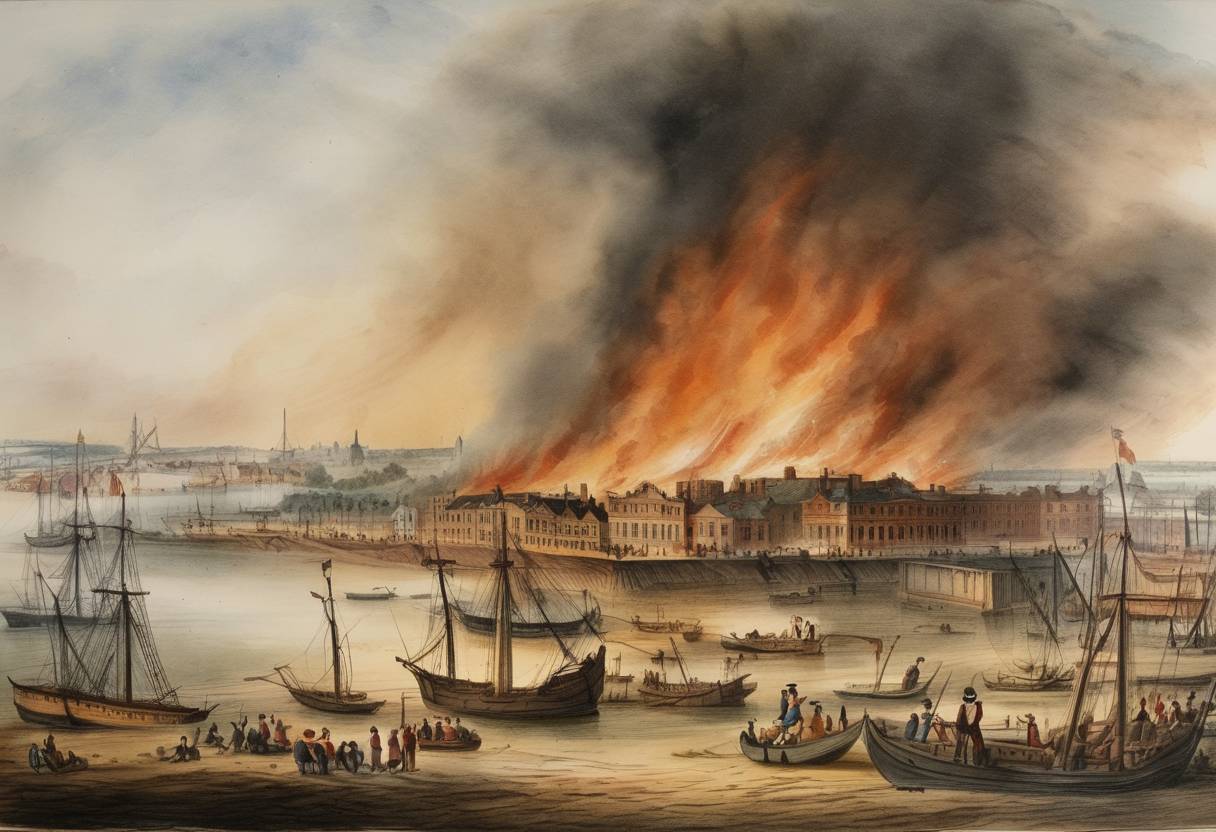
The Great Fire of Mobile, Alabama, began on September 4, 1839, marking one of the most destructive events in the city’s early history. This colossal blaze swept through the heart of Mobile, resulting in widespread devastation and reshaping the city both physically and economically.
Mobile, during the early 19th century, was a burgeoning port city, benefiting extensively from its strategic location on the Gulf Coast. The city’s economy was heavily reliant on the cotton trade, and its urban landscape reflected the rapid growth and commercial prosperity of the period. Buildings, primarily constructed from wood due to its abundance and low cost, were packed closely together, forming dense areas that were highly vulnerable to fire.
On the evening of September 4, 1839, a fire ignited in the heart of the city. Historical accounts suggest that the fire began in a commercial establishment, although the exact cause remains undocumented. Fueled by strong Gulf winds and the tightly packed wooden structures, the fire quickly spread, engulfing significant portions of the city.
Major areas of Mobile, including residential districts, businesses, and critical infrastructure, were consumed by the flames. Efforts to contain and extinguish the blaze were hindered by inadequate firefighting resources and the rapidity of the fire’s spread.
The Great Fire resulted in the destruction of hundreds of structures, leaving a considerable portion of the population homeless and numerous businesses in ruins. The economic impact was severe, as many merchants lost their goods and properties, leading to financial ruin for some and a significant setback for the local economy.
In the aftermath, the city embarked on a rebuilding process that prompted changes in building regulations and urban planning. The devastation highlighted the need for more fire-resistant construction materials, influencing future architectural styles and practices in Mobile. Additionally, the fire underscored the necessity of improved fire services, leading to the eventual establishment of more organized and effective firefighting units.
The Great Fire of Mobile stands as a critical event in the city’s history, illustrating the vulnerabilities of rapidly growing urban centers and the profound impact of disaster on community development. The fire is often cited as a turning point that prompted significant changes in building practices and municipal planning, ultimately shaping the future growth and resilience of Mobile.