Usain Bolt's World Record in the Men's 100 Meters - August 16, 2008
2008 · Beijing, China
Jamaican sprinter Usain Bolt set a new world record in the men's 100 meters at the Beijing Olympics, finishing in 9.69 seconds.
October 16, 1968
American athletes Tommie Smith and John Carlos raised their fists during the U.S. national anthem at the Mexico City Olympics as a protest for human rights.
Mexico City, Mexico | International Olympic Committee
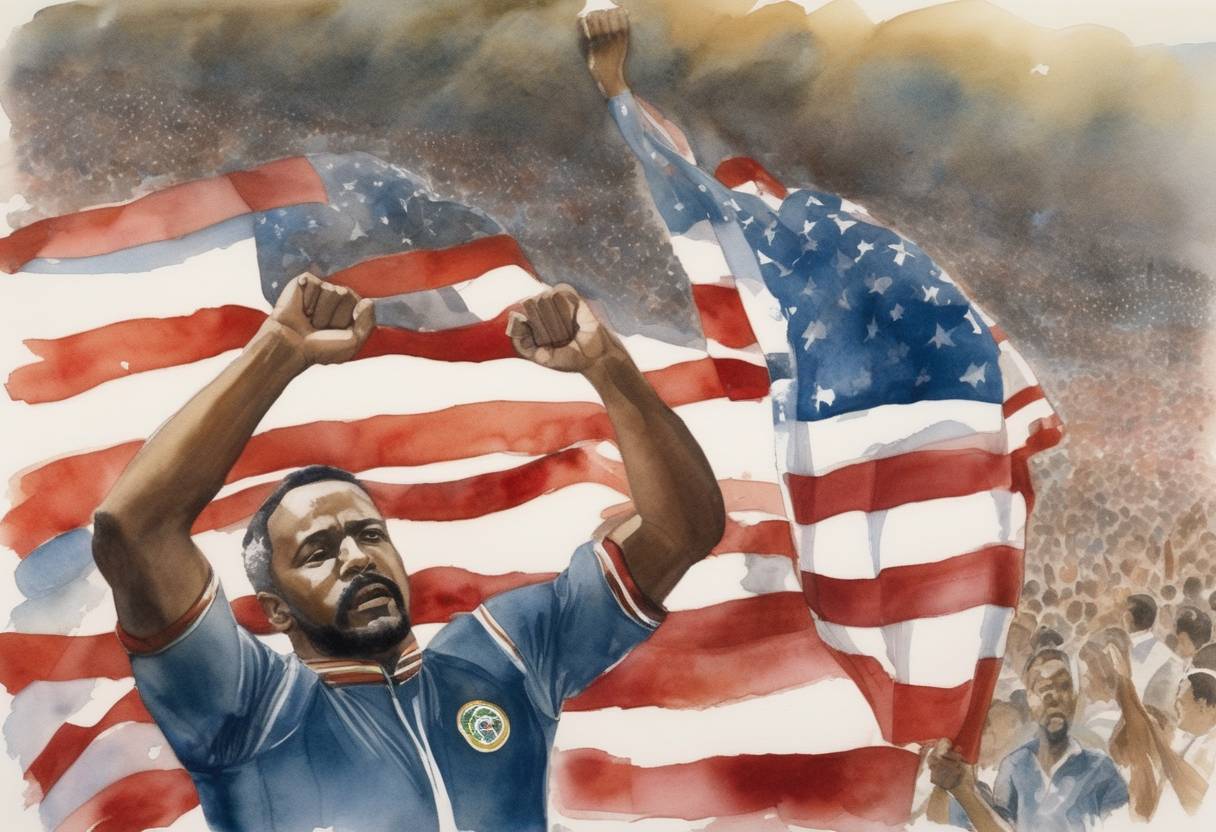
On October 16, 1968, during the medal ceremony for the men’s 200 meters track event at the Summer Olympics in Mexico City, American athletes Tommie Smith and John Carlos took a stand that would become one of the most iconic moments in sports and civil rights history. After winning gold and bronze medals respectively, the two athletes used their platform to raise awareness about racial inequality and human rights issues.
As the American national anthem played, Smith and Carlos each raised a black-gloved fist in a silent gesture widely recognized as the Black Power salute. This powerful image symbolized their solidarity with the Civil Rights Movement and a call for racial equality and social justice in America and beyond. Additionally, Smith wore a black scarf to represent black pride, while Carlos left his tracksuit partially unzipped to show solidarity with all blue-collar workers. Both athletes wore black socks without shoes to symbolize African American poverty.
The silver medalist, Australian Peter Norman, also supported their protest by wearing a badge from the Olympic Project for Human Rights (OPHR), an organization dedicated to combating racism in sports.
The protest sparked immediate controversy. The International Olympic Committee (IOC), led by President Avery Brundage, deemed the act a political statement unfit for the apolitical Olympic Games. In response, Smith and Carlos were expelled from the Games and sent home. They faced significant backlash and received death threats upon returning to the United States.
This event epitomized the intersection of sports and politics. It highlighted the struggles for civil rights and tested the limits of athlete activism. Despite the initial backlash, the salute became a symbol of resistance and empowerment, influencing future generations of athletes to use their platforms for social change.
Smith and Carlos’s courageous act is now celebrated for its bravery and impact, and they have been honored by various institutions and recognized for their role in advancing human rights. Their protest in Mexico City is remembered as a pivotal moment in both Olympic and civil rights history.
Source: en.wikipedia.org