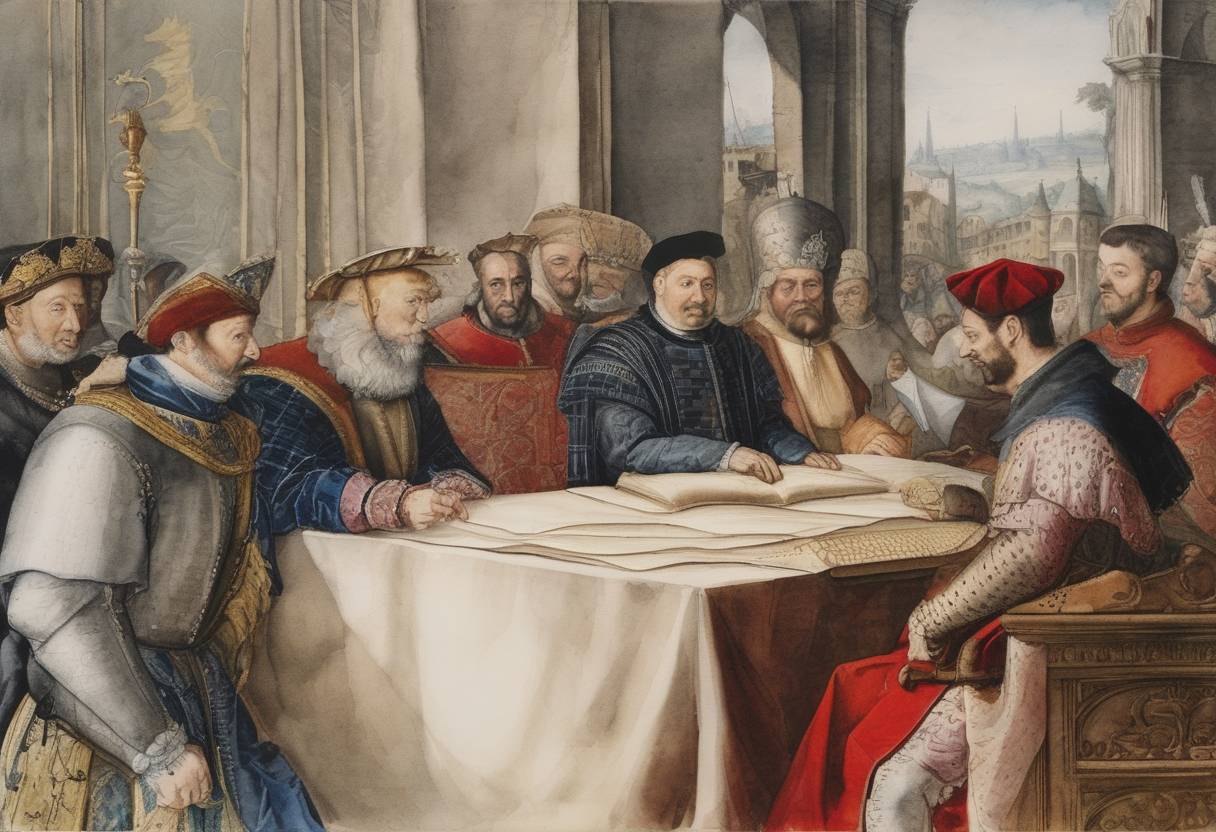
The Treaty of Crépy: End of Hostilities in the Italian Wars
On September 18, 1544, the Treaty of Crépy was signed between Charles V, Holy Roman Emperor, and Francis I of France, temporarily bringing an end to the hostilities in the longstanding series of conflicts known as the Italian Wars. This agreement marked a significant, albeit temporary, pause in the power struggle over the Italian Peninsula between the French Crown and the Habsburg Empire.
Context and Preceding Events
The Italian Wars, which began in 1494, were a protracted series of conflicts characterized by alliances and enmities among European powers vying for control over territories in Italy. By the early 16th century, these conflicts had expanded to involve not only Italy but also larger European strategic interests.
Francis I of France sought to assert French influence in regions that were key to his ambitions, particularly in Northern Italy and along the Western borders. Charles V, wielding authority as both King of Spain and Holy Roman Emperor, aimed to secure and maintain Habsburg dominance in the contested regions.
The Negotiations and Terms
After years of exhausting battles, both rulers found themselves with diminishing resources and rising internal pressures to seek peace. The Treaty of Crépy was negotiated to establish a temporary armistice.
Key terms of the treaty included:
- Territorial Adjustments: Both powers agreed to return any conquests made during the recent campaigns to their original owners, restoring much of the prior status quo.
- Marriage Alliances: Although no fruitful marriages resulted from this, initially, the treaty suggested matrimonial alliances to fortify future peace between the two dynasties.
- Renunciation of Claims: Francis I agreed to renounce his claims suiting the Emperor’s favor, particularly toward any imperial ambitions in Italy.
Consequences and Aftermath
The Treaty of Crépy did not result in a permanent peace. Instead, it offered a temporary reprieve from warfare, allowing both sides a period of strategic respite. However, due to remaining unresolved tensions and competing interests, the Italian Wars resumed in subsequent years.
Despite its temporary nature, the treaty was a significant diplomatic maneuver. It demonstrated the use of marriage alliances and diplomatic negotiation as tools alongside military engagements in the broader context of Renaissance-era conflicts. It paved the way, nonetheless, for later treaties and alignments reshaping Europe’s political landscape during the Reformation and beyond.
While the peace was short-lived, the Treaty of Crépy highlights how fragile truces often were in the volatile climate of 16th-century Europe, where shifting alliances and territorial ambitions fueled ongoing rivalries among the continent’s leading powers.