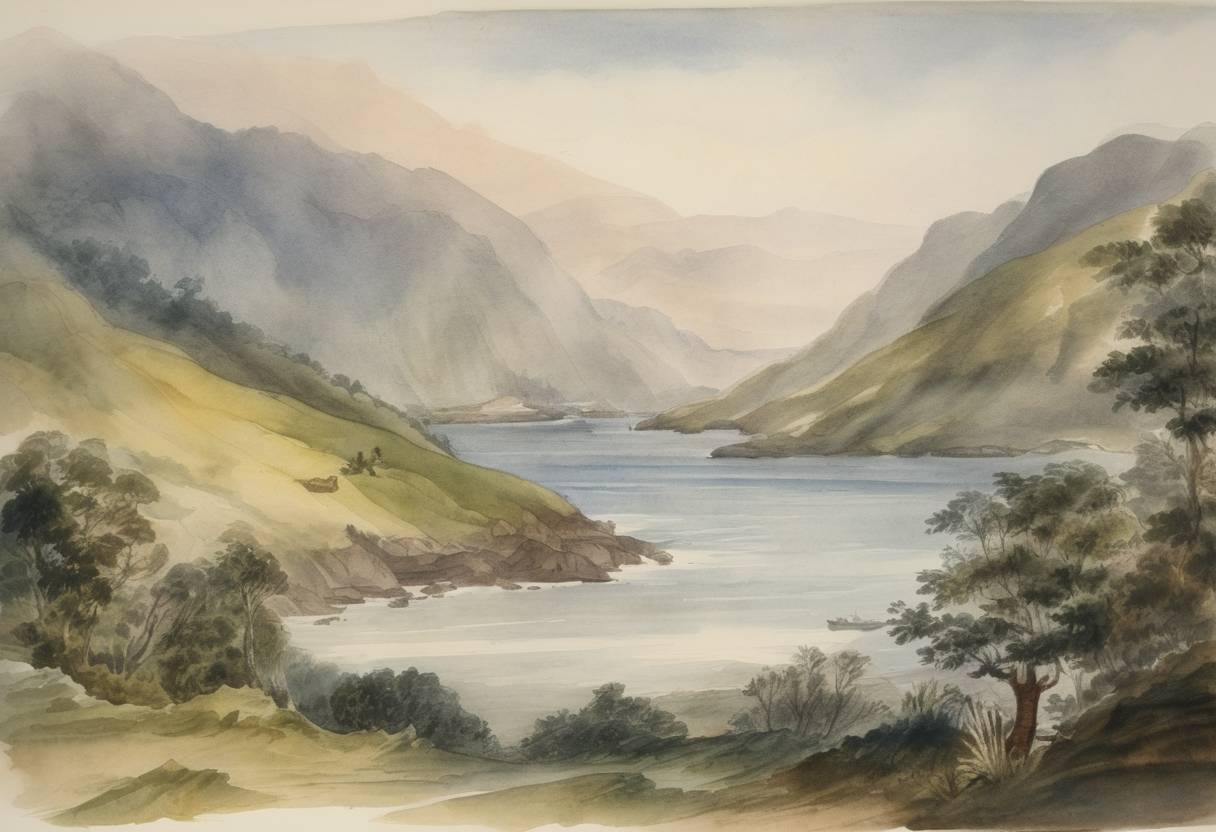
Captain James Cook Sights New Zealand - October 8, 1769
On October 8, 1769, during his first voyage of exploration aboard the HMS Endeavour, Captain James Cook became the first European to sight New Zealand. This historic moment marked a significant milestone in European exploration and the burgeoning scientific and geographic endeavors of the late 18th century.
Background
Captain James Cook, a British explorer, navigator, and cartographer, embarked on this voyage under the auspices of the Royal Society and commissioned by the British Admiralty. The primary objectives of the journey included observing the 1769 Transit of Venus across the Sun and exploring the as-yet-undiscovered southern continent, Terra Australis Incognita, which European geographers speculated about at the time.
The Journey to New Zealand
The HMS Endeavour set sail from England in August 1768. After successfully observing the transit in Tahiti, Cook ventured westward. His instructions also mandated the exploration of the Southern Hemisphere as far south as feasible to verify or debunk the existence of the mysterious southern continent.
Before reaching New Zealand, Cook’s expedition traversed the Pacific Ocean, charting many of the Society Islands and revisiting previously mapped lands.
Discovery of New Zealand
On October 8, 1769, Cook and his crew sighted the land that would be later identified as the eastern coast of the North Island of New Zealand. This sighting took place near the modern settlement of Gisborne, located on the eastern side of New Zealand’s northern island.
Significance
Cook’s sighting of New Zealand represented the first known encounter between Europeans and the islands since the Dutch explorer Abel Tasman charted parts of the coastline in 1642. Unlike Tasman, who never set foot on the islands due to hostile encounters, Cook made landfall and went on to extensively map the coastlines of both the North and South Islands.
Cook’s detailed charts and notes significantly contributed to Western knowledge of the Pacific and to the eventual colonial interests in the region. The voyage also enhanced scientific understanding through the collection and classification of botanical specimens and engagement with indigenous Maori communities, although it also set the stage for future European colonization and its subsequent impact on Maori society and culture.
Conclusion
This first sighting of New Zealand by James Cook on October 8, 1769, not only showcased Cook’s adept seafaring and navigational skills but also laid foundational geographical, cultural, and scientific knowledge that would have far-reaching consequences in global history.