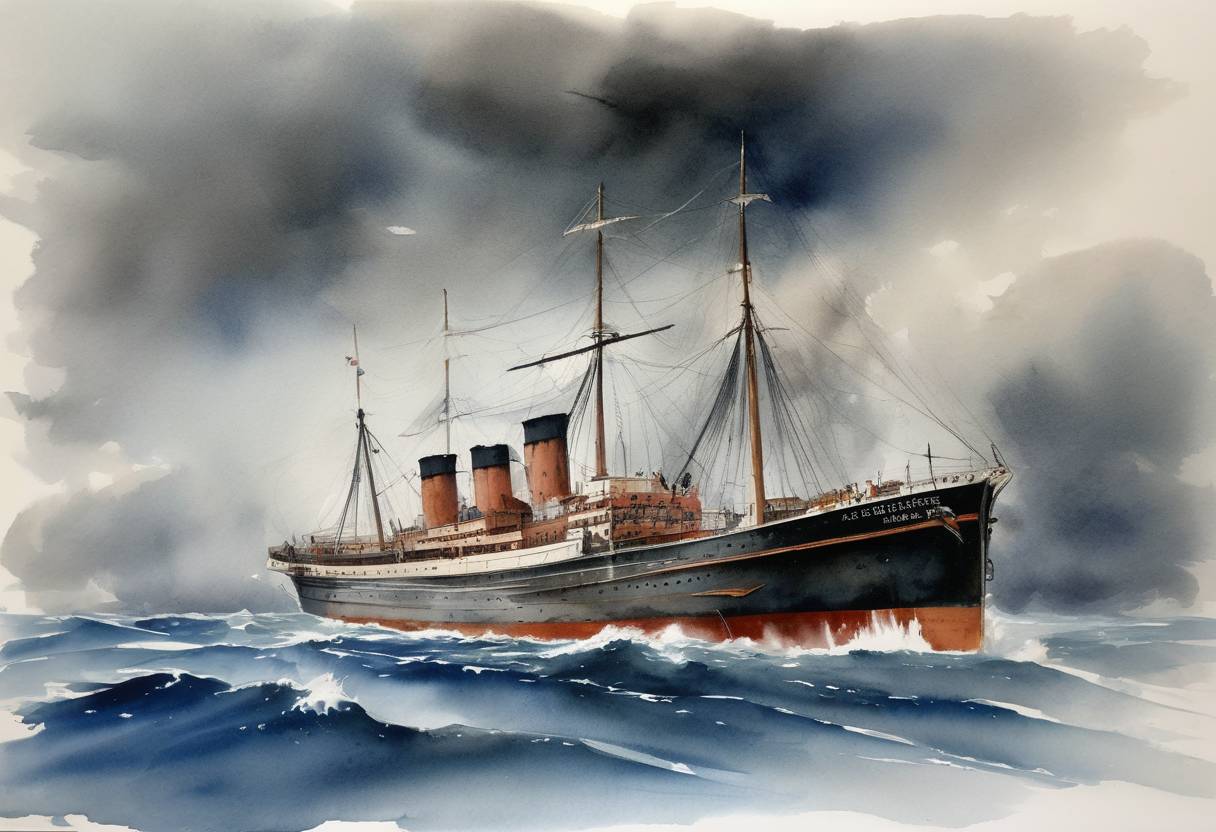
The Sinking of SS Heraklion - December 8, 1966
On December 8, 1966, the Greek steamship SS Heraklion tragically sank in the Aegean Sea, resulting in the loss of nearly 217 lives. This maritime disaster is one of the deadliest in Greek history and had significant repercussions on maritime safety regulations.
Background
SS Heraklion was a passenger and vehicle ferry built in 1949 by Fairfield Shipbuilding and Engineering Company in Scotland. Originally serving routes in Scotland, the vessel was later sold to the Typaldos Lines to operate in Greek waters. At the time of its sinking, the ship was en route from the island of Crete to Piraeus, near Athens, carrying passengers and vehicles.
The Disaster
On the night of December 7, 1966, SS Heraklion departed from Souda Bay, Crete, heading to Piraeus despite warnings of severe weather. The ship encountered a violent storm in the Aegean Sea, with winds reaching gale force. Rough seas and strong winds severely affected the vessel’s stability.
The disaster unfolded when a refrigerator truck, improperly secured on the car deck, shifted, causing one of the loading doors to remain open. Water from the storm poured into the hull, effectively sealing the ship’s fate. The captain attempted to maintain course, but the flooding quickly overwhelmed the engine room and other critical areas.
The Sinking
In the early hours of December 8, 1966, the SS Heraklion capsized and sank off the island of Falkonera. The ship was approximately 20 nautical miles southeast of the Greek mainland. Distress signals were sent out, prompting nearby ships and Greek authorities to initiate a rescue operation.
Aftermath
Rescues were challenging due to the adverse weather conditions, and many passengers and crew were unable to reach lifeboats. Of the approximately 300 people on board, only 46 survived, with nearly 217 lives lost.
The sinking of SS Heraklion led to a public outcry in Greece, highlighting deficiencies in maritime safety regulations and practices. The disaster prompted significant changes, including stricter enforcement of ship safety standards, improved training for crews in emergency procedures, and better maintenance and inspection of vessels.
The tragedy remains a somber reminder of the importance of maritime safety and the potential consequences of neglecting proper procedures and warnings.