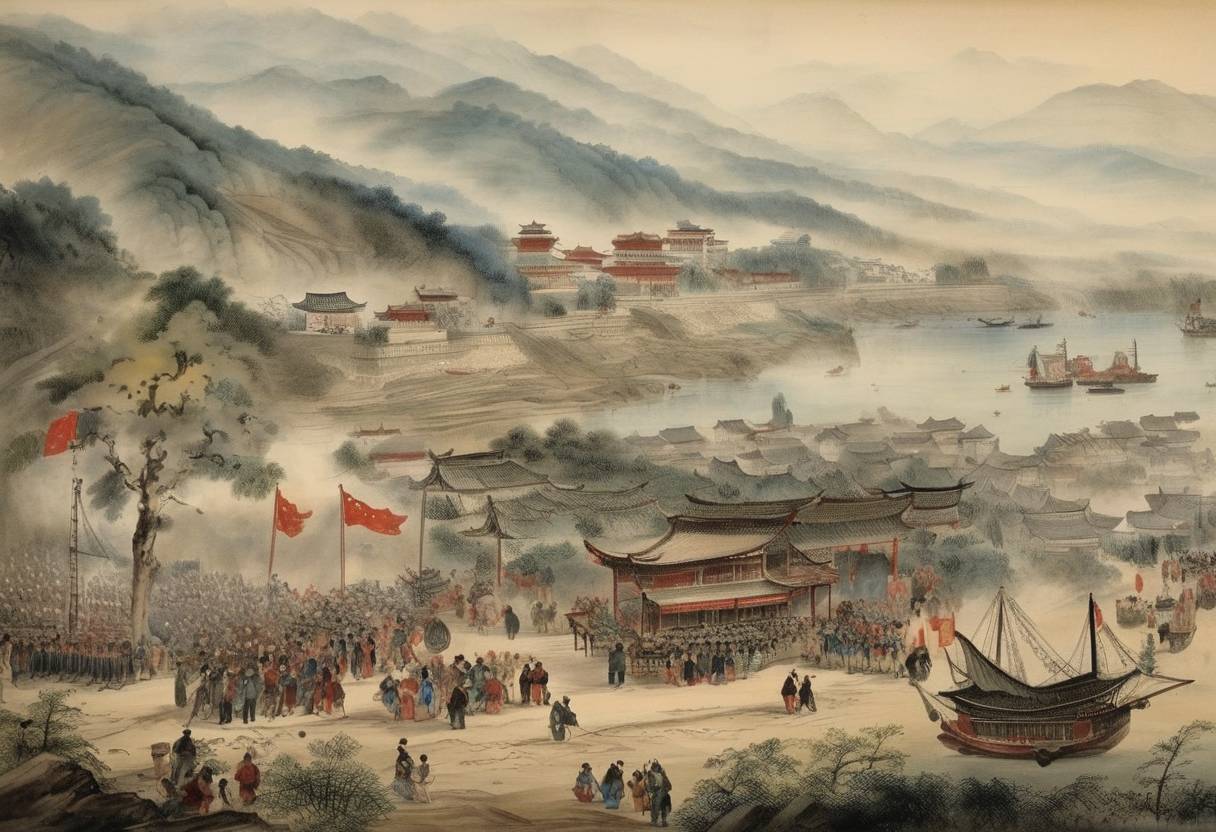
The Treaty of Nanking: August 29, 1842
The Treaty of Nanking, signed on August 29, 1842, marked the culmination of the First Opium War (1839-1842) between the United Kingdom and the Qing Dynasty of China. This landmark agreement significantly altered the political and economic landscape of China in the 19th century and laid the groundwork for expanded Western influence in the region.
Background
First Opium War (1839-1842): The conflict originated from disputes over trade and diplomatic relations between China and Britain. The British were exporting substantial amounts of opium into China, leading to widespread addiction and social unrest. The Qing government’s attempts to suppress this trade by confiscating and destroying opium stocks incited military retaliation from Britain.
Economic Motivation: British interests were heavily focused on improving trade terms with China, especially to counteract the trade deficit created by the purchase of Chinese tea, silk, and porcelain.
Key Provisions of the Treaty
Cession of Hong Kong: Under the treaty, the island of Hong Kong was ceded to the British Crown in perpetuity. This marked the beginning of Hong Kong’s transformation into a major international commercial center.
Opening of Ports: Besides the existing open port of Canton, the treaty stipulated the opening of four additional ports to British merchants: Xiamen (Amoy), Fuzhou, Ningbo, and Shanghai. This expansion facilitated significant increases in trade and foreign influence.
Extraterritoriality and Tariff Control: British nationals in the newly opened ports were granted the right of extraterritoriality, meaning they were not subject to Chinese laws but instead to British laws. Additionally, the treaty established a fixed tariff on trade, countering the previous arbitrary levies enforced by local Chinese authorities.
Compensation: China agreed to pay an indemnity to Britain totaling 21 million silver dollars, covering the cost of the confiscated opium, war expenses, and debts to British merchants.
Consequences and Significance
Impact on Qing Dynasty: The treaty was a blow to Qing sovereignty and highlighted its inability to regulate foreign influence and control its own ports. It set a precedent for subsequent “unequal treaties” with other Western powers.
Colonial Expansion and Imperialism: The acquisition of Hong Kong and other ports notably increased British geopolitical leverage in Asia and exemplified the era’s trend of Western imperialism.
Long-term Effects: Over time, the opening of treaty ports facilitated the penetration of foreign cultural, political, and technological influences into China, contributing to far-reaching social and economic changes.
The Treaty of Nanking was a pivotal moment in Chinese history, symbolizing the advent of a period of foreign domination and internal struggle, which would heavily influence the modern history of China and its interactions with the world.