Assassination of King Henry III of France
1589 · Saint-Cloud, France
During the Wars of Religion in France, King Henry III of France is assassinated by a monk named Jacques Clément.
December 23, 1588
Henry III of France issues the Edict of Union, affirming his Catholic faith and recognizing the Catholic League in France, which was a significant event in the French Wars of Religion.
Blois, France | French Monarchy
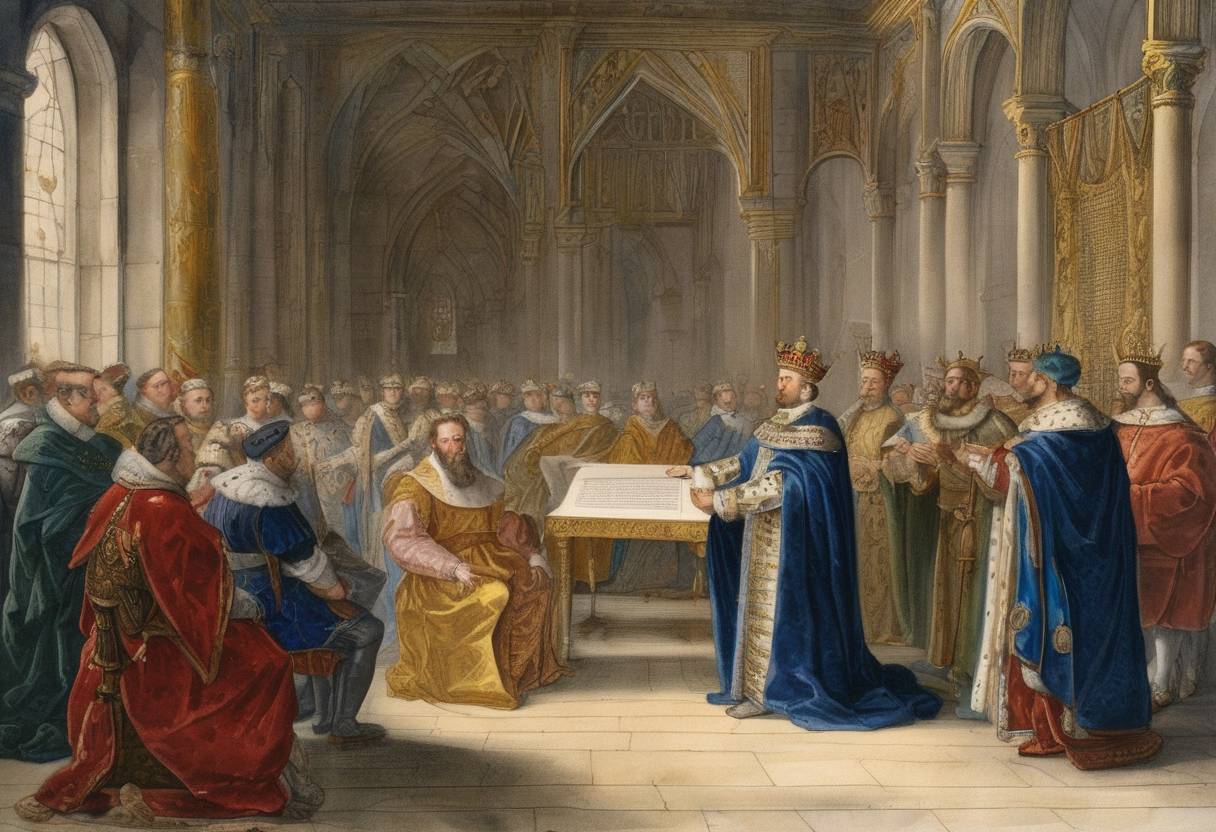
On December 23, 1588, amidst the turbulent period of the French Wars of Religion, King Henry III of France issued the Edict of Union. This significant decree was a pivotal moment in the ongoing conflict between Catholics and Huguenots (French Protestants) that had engulfed France since the mid-16th century.
The French Wars of Religion were marked by periods of intense sectarian violence between the Catholic majority and the Protestant Huguenots. By the late 1580s, tensions had reached critical levels, exacerbated by political ambitions and the troubled succession of the French crown.
The Catholic League, led by Henry, Duke of Guise, sought to maintain Catholic dominance in France and prevent the Protestant-friendly policies of King Henry III. The League had significant popular support and considerable influence in northern France, particularly in Paris.
The Edict of Union was issued in response to the Day of the Barricades on May 12, 1588, when Paris erupted in riot against King Henry III, precipitated by the Duke of Guise’s call to arms. The event forced the king to flee the city, highlighting his waning authority and the strength of the League.
Meeting at the Estates-General of Blois in December 1588, under immense pressure, Henry III capitulated to the demands of the League. He signed the Edict of Union, formally recognizing the Catholic League as a legitimate authority and renewing his commitment to the Catholic faith, repudiating any policies favorable to Protestants.
Despite his acquiescence, Henry III’s authority continued to crumble. The assassination of the Duke of Guise on December 23, 1588, ordered by Henry himself, created further instability. This act alienated the king from the Catholic League and led to increased hostilities.
The Edict of Union stands as a crucial point in the Wars of Religion, demonstrating the king’s struggle to navigate the political landscape shaped by religious factions. Ultimately, the conflicts continued, leading to the ascension of Henry of Navarre (as Henry IV) and his eventual conversion to Catholicism, symbolized by the famous Edict of Nantes in 1598, which provided a temporary reprieve to the religious strife in France.
This event underscores the complex intersection of religion and politics in early modern France, as well as the intricate power dynamics that characterized the era.
Source: en.wikipedia.org