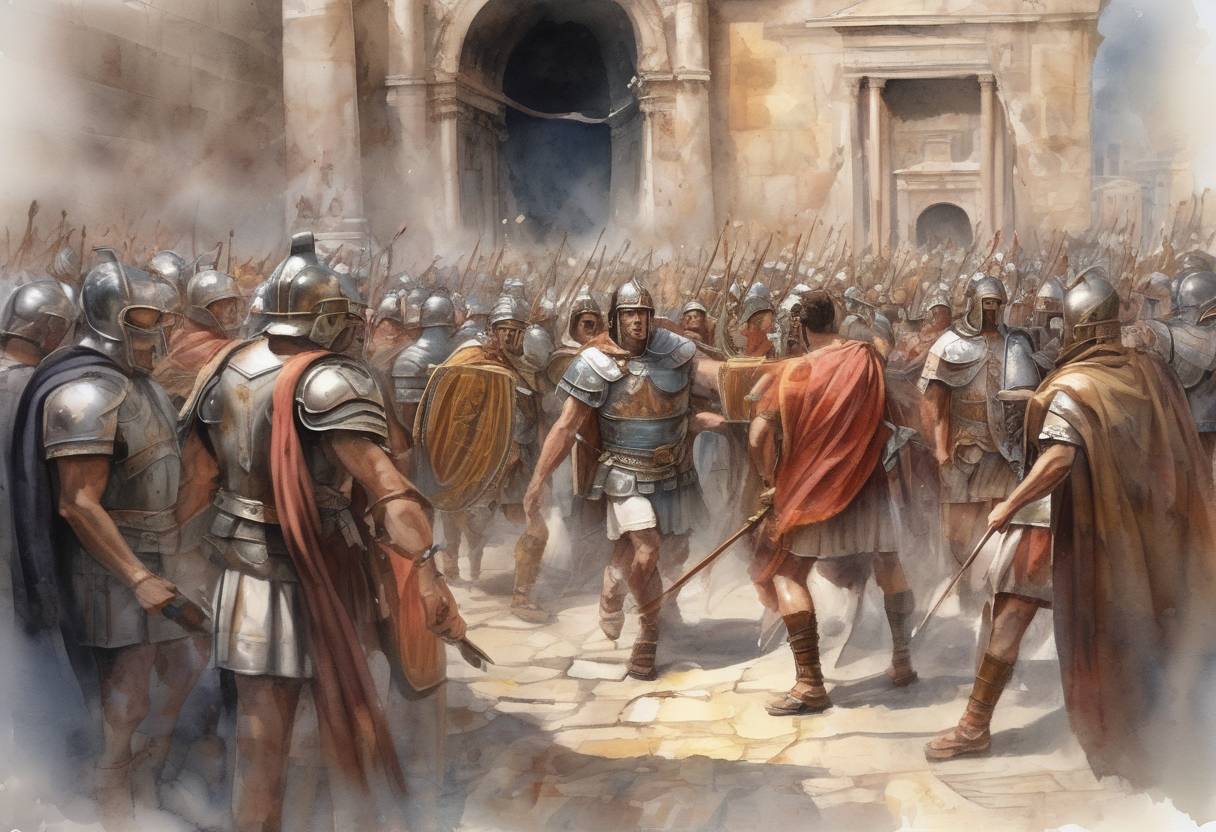
The Sack of Rome by the Vandals on June 2, 455
On June 2, 455, the city of Rome experienced one of its most significant sackings, led by the Vandal King Genseric. This event is a pivotal moment in the history of the Western Roman Empire, illustrating the empire’s declining power and the shifting dynamics of the late ancient world.
Context Leading Up to the Sack
The Western Roman Empire in the mid-5th century was a shadow of its former self, plagued by internal strife, economic troubles, and external pressures from various barbarian groups. The Vandals, originally from the region that is now Poland, had migrated through Europe and established a powerful kingdom in North Africa after crossing into Roman territories.
Key Events Leading to the Sack:
Rise of the Vandals: Under the leadership of Genseric, the Vandals had crossed into North Africa in 429 and by 439 had captured Carthage, establishing a strong base from which they could launch naval expeditions across the Mediterranean.
Political Instability in Rome: The Western Roman Empire was experiencing significant political instability. In 455, Emperor Valentinian III was assassinated, leading to a power vacuum and the brief reign of Petronius Maximus, who was unable to consolidate power or effectively defend the empire.
Broken Alliances: Genseric had previously been allied with Valentinian III through a marriage alliance, which was disrupted by Valentinian’s assassination. This breach of alliance provided Genseric with a pretext to invade Italy.
The Sack of Rome
On June 2, 455, Genseric and his Vandal forces entered Rome with little resistance. The lack of opposition was partly due to the chaotic political situation and the inability of the Roman military to mount an effective defense.
Key Aspects of the Sack:
Negotiated Entry: Unlike the earlier sack by the Visigoths in 410, the Vandals entered Rome through negotiation. Pope Leo I reportedly met with Genseric and persuaded him to spare the city from destruction and the inhabitants from slaughter.
Extent of the Plundering: Despite the agreement to avoid wholesale destruction, the Vandals looted the city for two weeks. They took valuable treasures, including the spoils from the Temple of Jerusalem, which had been brought to Rome by Titus in 70 AD.
Impact on Rome: The sack further weakened the already fragile Western Roman Empire. Although the Vandals did not destroy Rome’s infrastructure, the psychological and economic impact was significant, contributing to the empire’s decline.
Aftermath and Historical Significance
The sack of Rome by the Vandals marked a critical point in the decline of the Western Roman Empire. It underscored the empire’s vulnerability and the shifting power dynamics in the Mediterranean world.
Consequences:
Vandal Dominance: The Vandals solidified their control over the Western Mediterranean, becoming a major maritime power.
Roman Decline: The sack accelerated the decline of Roman authority in the West, leading to further incursions by other barbarian groups.
Cultural Memory: The term “vandalism” originates from this event, reflecting the lasting impression of the Vandals’ actions on European cultural memory.
In summary, the sack of Rome by the Vandals on June 2, 455, was a significant event that highlighted the vulnerabilities of the Western Roman Empire and marked a turning point in the history of late antiquity.