The Battle of Barnet: April 14, 1471
1471 · Barnet, England
The Battle of Barnet took place during the Wars of the Roses, where Edward IV defeated the Lancastrian forces led by the Earl of Warwick, solidifying his claim to the English throne.
June 16, 1487
The Battle of Stoke Field took place, marking the end of the Wars of the Roses in England. The battle was fought between the forces of Henry VII and the Yorkist supporters of Lambert Simnel, a pretender to the throne.
East Stoke, England | Kingdom of England
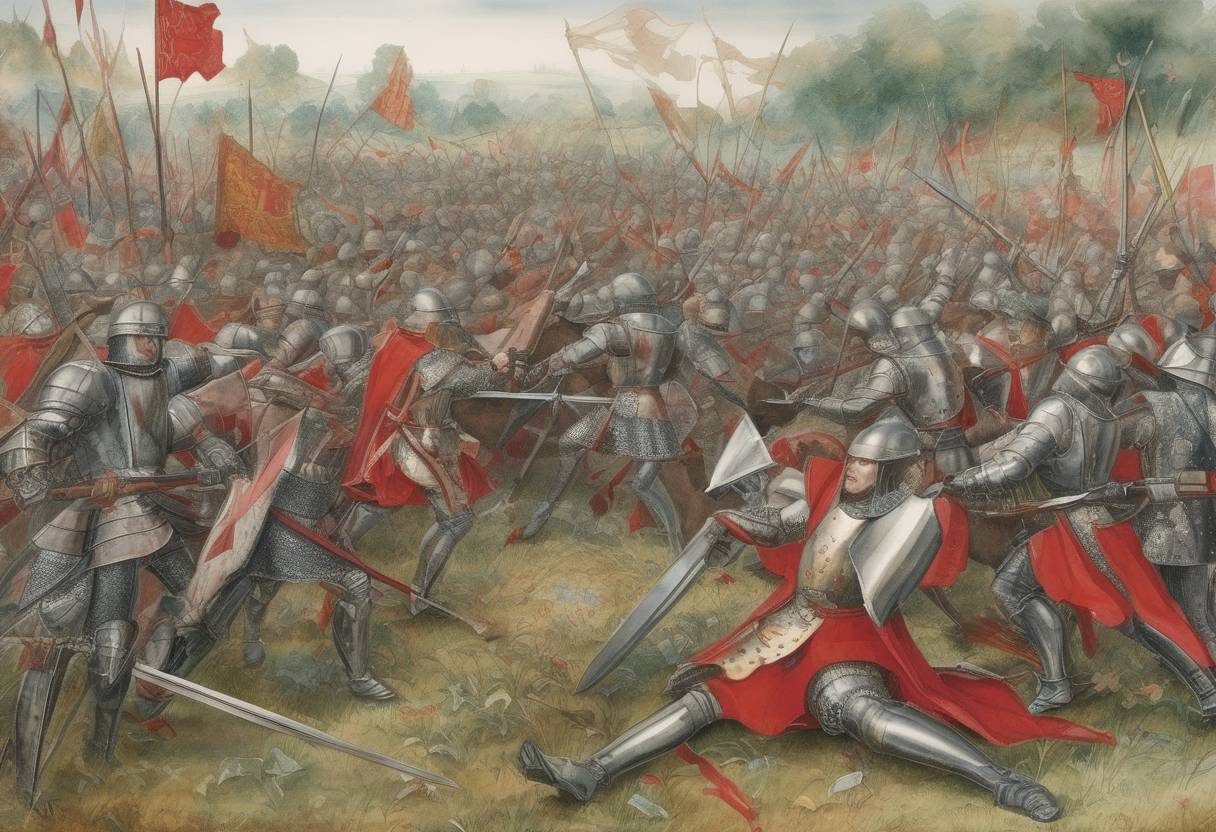
The Battle of Stoke Field, fought on June 16, 1487, is often regarded as the final engagement of the Wars of the Roses, a series of dynastic conflicts that plagued England in the latter half of the 15th century. This battle marked the end of significant Yorkist resistance to the Tudor dynasty, which had been established by Henry VII following his victory at the Battle of Bosworth Field in 1485.
The Wars of the Roses were primarily a struggle for the English throne between the rival houses of Lancaster and York. Henry Tudor, a Lancastrian, had claimed the throne by defeating Richard III, the last Yorkist king, at Bosworth. However, his hold on power was not entirely secure, as Yorkist factions continued to challenge his legitimacy.
In 1487, a new threat emerged in the form of Lambert Simnel, a young boy who was claimed by Yorkist supporters to be Edward, Earl of Warwick, the nephew of Richard III and a legitimate Yorkist heir. In reality, the real Earl of Warwick was imprisoned in the Tower of London, but Simnel’s backers, including John de la Pole, Earl of Lincoln, saw an opportunity to rally Yorkist support.
Simnel’s forces, bolstered by mercenaries from Ireland and support from Margaret of Burgundy, landed in England and marched through the country, gathering support. Henry VII, aware of the threat, mustered his forces to confront the rebels.
The two armies met near the village of East Stoke, in Nottinghamshire. The battle was fiercely contested, with the Yorkist forces initially holding their ground. However, the larger and better-equipped royal army eventually overwhelmed them. The Yorkist leaders, including the Earl of Lincoln, were killed in the fighting, and the rebellion was decisively crushed.
The defeat at Stoke Field effectively ended organized Yorkist resistance to Henry VII’s rule. Lambert Simnel was captured but, in a gesture of clemency, was pardoned by Henry and given a position in the royal kitchens, a move that demonstrated the king’s confidence in his newly secured position.
The battle’s outcome solidified the Tudor dynasty’s hold on the English throne and marked the end of the Wars of the Roses. It also underscored the importance of legitimacy and the dangers posed by pretenders and claimants to the throne, themes that would continue to influence English politics in the years to come.
Stoke Field is sometimes overshadowed by the more famous Battle of Bosworth, but its significance lies in its role as the concluding chapter of a turbulent period in English history, paving the way for the relative stability of the Tudor era.
Source: en.wikipedia.org