The Battle of Lugdunum: February 8, 216
216 · Lugdunum, Roman Empire
The Battle of Lugdunum took place, where Roman Emperor Caracalla defeated his brother Geta's supporters, consolidating his power over the Roman Empire.
February 28, 0202
The Roman Emperor Septimius Severus defeats the usurper Clodius Albinus at the Battle of Lugdunum, securing his control over the Roman Empire.
Lugdunum, Roman Empire | Roman Empire
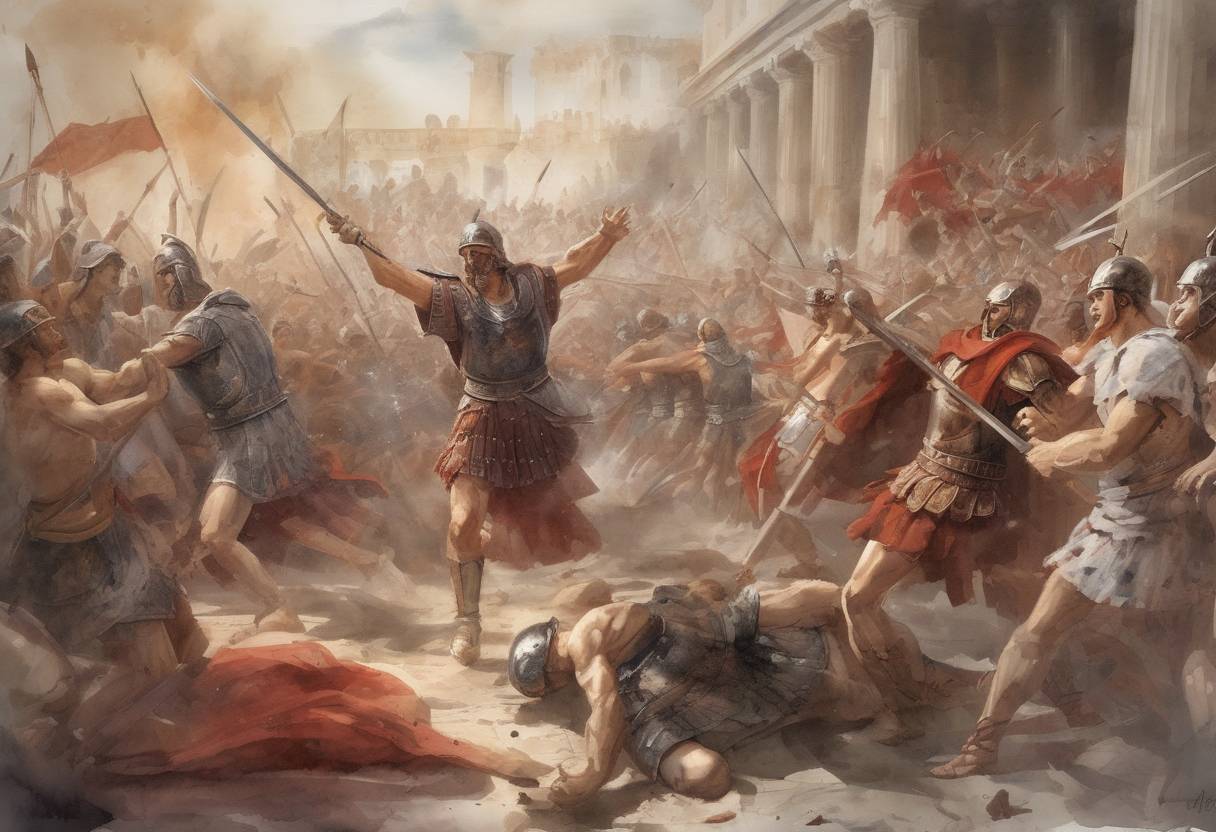
On February 28, 202 AD, a pivotal battle took place that would secure the Roman Empire’s future under Emperor Septimius Severus. This confrontation, known as the Battle of Lugdunum, saw Severus defeat the usurper Clodius Albinus, solidifying his control over the Roman Empire.
The Roman Empire in the late 2nd century was marked by political instability and civil strife. Following the assassination of Emperor Commodus in 192 AD, a power vacuum led to the Year of the Five Emperors, where several claimants vied for the throne. Among them were Septimius Severus, a seasoned military commander, and Clodius Albinus, the governor of Britannia.
Initially, Severus and Albinus formed an uneasy alliance, with Severus recognizing Albinus as Caesar (a junior co-emperor) to secure his support against other rivals. However, once Severus consolidated power in Rome, tensions between the two escalated. Severus declared his son Caracalla as his successor, effectively sidelining Albinus and prompting him to rebel.
The confrontation culminated at Lugdunum (modern-day Lyon, France), one of the largest battles in Roman history. Both sides amassed significant forces, with estimates suggesting that each commanded around 150,000 troops, including legions, auxiliary units, and cavalry.
The battle was fiercely contested, with both armies suffering heavy casualties. The turning point came when Severus’s forces, utilizing superior tactics and perhaps benefiting from internal dissent within Albinus’s ranks, managed to break through the enemy lines. Albinus’s forces were eventually overwhelmed, leading to his defeat.
Following the battle, Clodius Albinus attempted to flee but was captured and executed. Severus displayed Albinus’s head in Rome as a warning to other potential usurpers. This victory allowed Severus to consolidate his rule and implement reforms that would strengthen the empire.
Severus’s reign marked the beginning of the Severan Dynasty, which would rule the Roman Empire for several decades. His military campaigns and administrative reforms helped stabilize the empire, though his reliance on the military set a precedent for future emperors.
The Battle of Lugdunum was significant not only for its scale but also for its impact on the Roman Empire’s political landscape. It marked the end of a period of civil war and established Severus as a powerful and effective ruler. His victory and subsequent policies laid the groundwork for a more centralized and militarized imperial administration, influencing the empire’s trajectory in the centuries to come.
Source: en.wikipedia.org