Apollo 15 and the First Lunar Rover Ride
1971 · Moon, Space
Apollo 15 astronauts David Scott and James Irwin become the first to ride in a lunar rover on the Moon.
February 6, 1971
Alan Shepard became the first American to hit a golf ball on the Moon during the Apollo 14 mission.
Moon, N/A | NASA
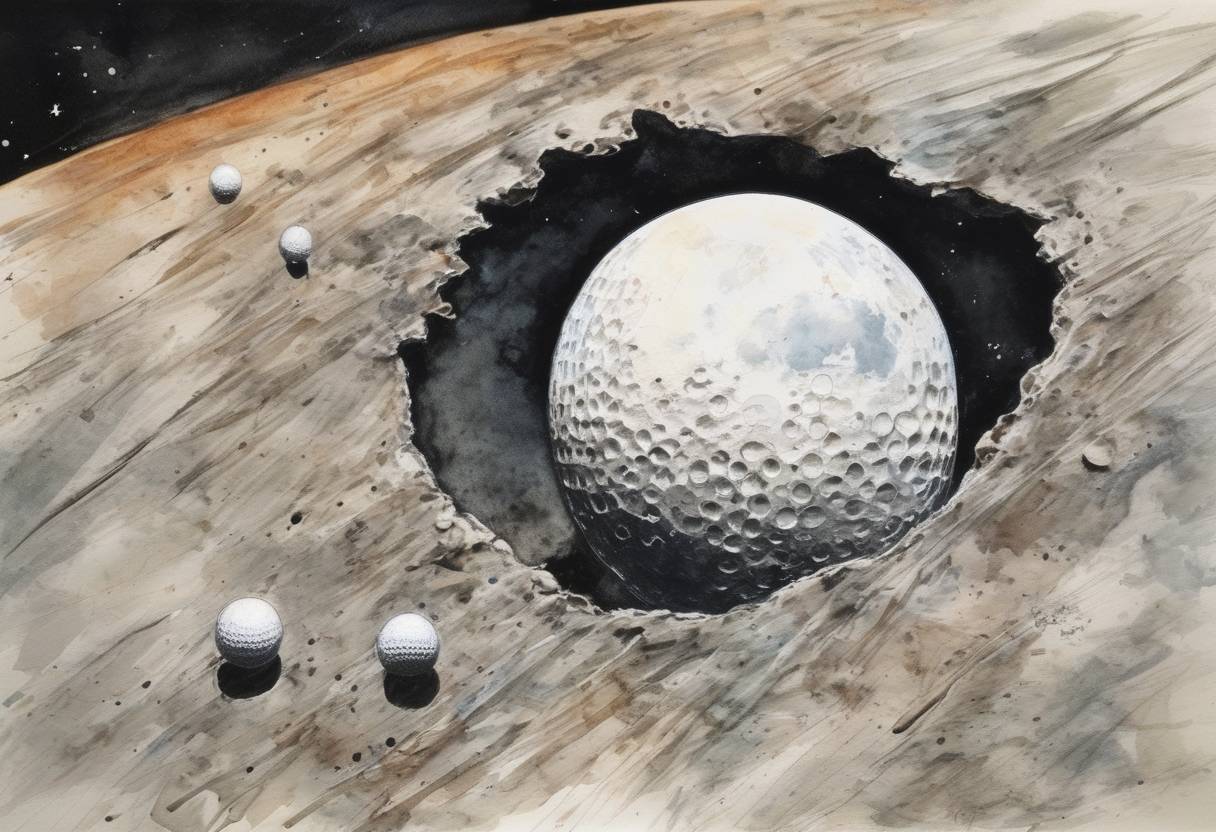
On February 6, 1971, during the Apollo 14 mission, astronaut Alan Shepard made history by becoming the first American to hit a golf ball on the Moon. This event is not only a memorable moment in the annals of space exploration but also a testament to human ingenuity and the lighter side of scientific endeavors.
The Apollo 14 mission was the third successful manned mission to the Moon, following the near-disastrous Apollo 13 mission. Launched on January 31, 1971, Apollo 14’s primary objectives were to explore the Fra Mauro region of the Moon, conduct scientific experiments, and collect lunar samples. The mission was commanded by Alan Shepard, with Stuart Roosa as the Command Module Pilot and Edgar Mitchell as the Lunar Module Pilot.
Alan Shepard was no stranger to making history. He was the first American in space, having flown the Freedom 7 mission in 1961. His participation in Apollo 14 marked his return to space after a decade.
During the second extravehicular activity (EVA) on the Moon, Shepard surprised the world by pulling out a makeshift six-iron club. The club was actually a modified sample collection tool to which he had attached a golf club head. Shepard had smuggled the club head and two golf balls aboard the spacecraft, a testament to his playful spirit and love for golf.
Wearing his bulky space suit, Shepard took a swing at the golf ball. Despite the limitations imposed by the suit and the reduced gravity of the Moon, he managed to hit the ball, famously describing it as traveling for “miles and miles and miles” in the low lunar gravity. In reality, the ball traveled a few hundred yards, but the moment captured the imagination of millions watching back on Earth.
Shepard’s lunar golf shot was a symbolic gesture that highlighted the human aspect of space exploration. It demonstrated that even in the midst of serious scientific work, there was room for humor and humanity. The event also underscored the unique conditions of the Moon, where reduced gravity and lack of atmosphere allowed for such an unusual feat.
The Apollo 14 mission itself was a success, achieving its scientific goals and furthering our understanding of the Moon’s geology. The samples and data collected contributed to the broader objectives of the Apollo program, which aimed to establish a human presence on the Moon and pave the way for future exploration.
In the years following the mission, Shepard’s golf shot has remained an iconic moment in space history, illustrating the blend of exploration, science, and human spirit that characterized the Apollo missions.
Alan Shepard’s golf shot on the Moon during the Apollo 14 mission is a reminder of the creativity and courage that define human exploration. It stands as a testament to the achievements of the Apollo program and continues to inspire future generations to reach for the stars, combining scientific pursuit with the joy of discovery.
Source: www.britannica.com