Theresa May Becomes Prime Minister of the United Kingdom
2016 · London, United Kingdom
Theresa May became the Prime Minister of the United Kingdom, succeeding David Cameron following the Brexit referendum.
June 27, 2007
Tony Blair resigns as Prime Minister of the United Kingdom after serving for a decade, and Gordon Brown succeeds him.
London, United Kingdom | UK Government
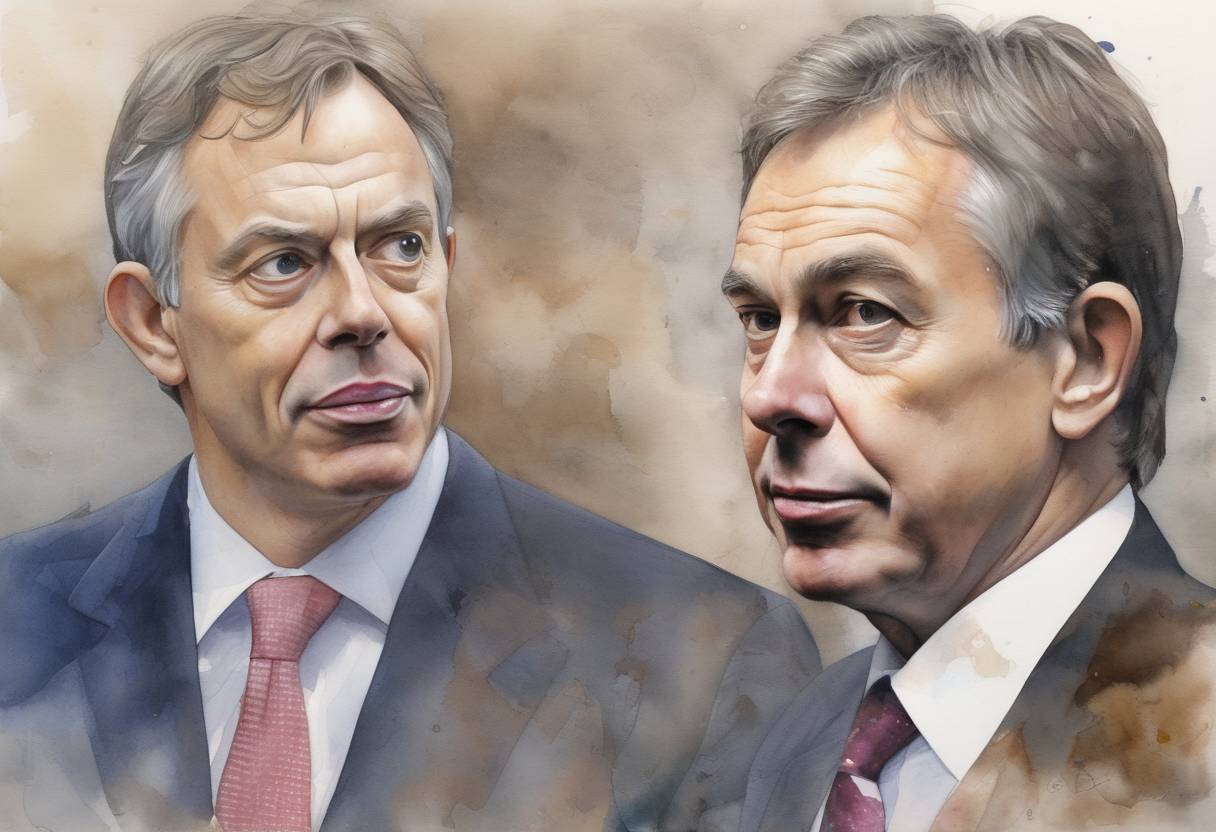
On June 27, 2007, Tony Blair officially resigned as the Prime Minister of the United Kingdom, marking the end of a decade-long tenure. His resignation paved the way for Gordon Brown, his long-time Chancellor of the Exchequer, to succeed him as the leader of the Labour Party and the country’s Prime Minister.
Tony Blair’s Premiership: Tony Blair became the Prime Minister on May 2, 1997, after leading the Labour Party to a landslide victory, ending 18 years of Conservative rule. His leadership was characterized by the modernization of the Labour Party, often referred to as “New Labour,” which sought to combine traditional Labour values with more centrist policies.
Key Achievements: Blair’s government implemented significant reforms, including the introduction of the minimum wage, devolution for Scotland and Wales, and substantial investments in public services like health and education. His tenure also saw the signing of the Good Friday Agreement in 1998, which was a pivotal step in the Northern Ireland peace process.
Controversies: Blair’s decision to support the United States in the 2003 invasion of Iraq became one of the most controversial aspects of his leadership, leading to widespread protests and criticism. This decision significantly affected his popularity and legacy.
Gordon Brown’s Role: Gordon Brown served as Chancellor of the Exchequer throughout Blair’s premiership, playing a crucial role in managing the UK economy. He was a key architect of the economic policies that contributed to a period of growth and stability in the UK during the late 1990s and early 2000s.
Leadership Transition: The transition from Blair to Brown was anticipated for several years, as Brown was seen as the natural successor. Blair announced his intention to resign in May 2007, allowing for a smooth transition of power within the Labour Party.
Brown’s Premiership: Gordon Brown officially became Prime Minister on June 27, 2007. His leadership faced immediate challenges, including the global financial crisis of 2008, which required decisive economic interventions to stabilize the UK economy.
Blair’s Legacy: Tony Blair’s decade in power left a mixed legacy. While he is credited with modernizing the Labour Party and achieving significant domestic reforms, his foreign policy decisions, particularly regarding Iraq, remain contentious.
Brown’s Challenges: Gordon Brown’s premiership was marked by efforts to navigate the UK through the global financial crisis, which had profound impacts on the country’s economy and political landscape.
The transition from Blair to Brown marked a significant moment in UK politics, reflecting both continuity and change within the Labour Party and the broader political environment.
Source: www.bbc.com