1447 · Rome, Papal States
Nicholas V is elected as the new pope, succeeding Pope Eugene IV.
April 24, 0858
Pope Nicholas I is elected as the 105th pope of the Catholic Church.
Rome, Italy | Catholic Church
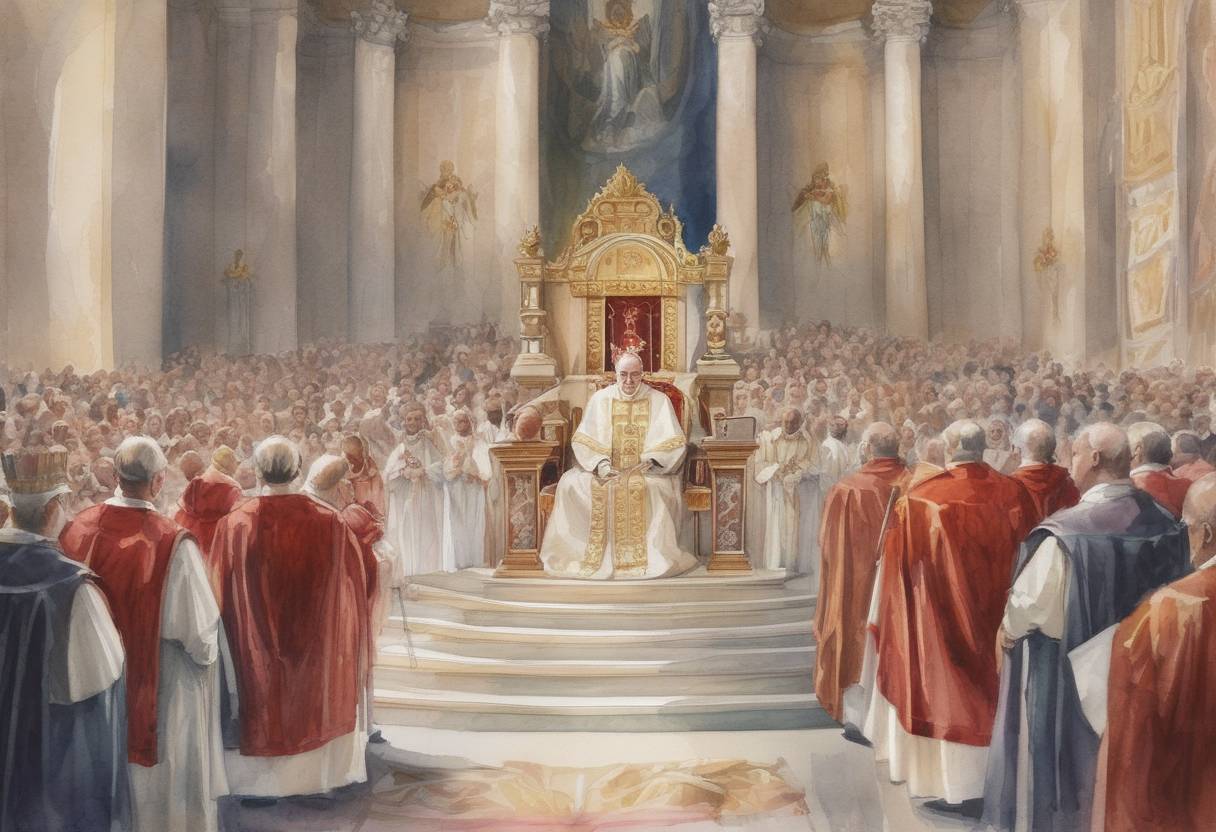
On April 24, 858, Nicholas I was elected as the 105th pope of the Catholic Church, marking the beginning of a significant papacy that would last until his death in 867. His election came during a period of considerable political and ecclesiastical turmoil, and his leadership would prove to be influential in shaping the role of the papacy in medieval Europe.
Political Climate: The mid-9th century was a time of fragmentation and power struggles within the Carolingian Empire, which had been divided among the heirs of Charlemagne. This division often led to conflicts that affected the Church’s stability and its relations with secular rulers.
Church Challenges: The Church faced internal challenges, including disputes over ecclesiastical authority and the enforcement of canonical laws. The papacy was also striving to assert its influence over the broader Christian world, often clashing with regional bishops and secular leaders.
Assertion of Papal Authority: Nicholas I is renowned for his strong stance on papal supremacy. He emphasized the pope’s authority over secular rulers and other bishops, reinforcing the idea that the pope was the ultimate arbiter in ecclesiastical matters.
Conflict with Lothair II: One of the most notable conflicts during his papacy was with King Lothair II of Lotharingia. Nicholas I opposed Lothair’s attempt to divorce his wife, Theutberga, and marry his mistress, Waldrada. The pope’s refusal to annul the marriage underscored his commitment to upholding Church laws and moral standards.
Relations with the Eastern Church: Nicholas I also engaged in significant interactions with the Eastern Orthodox Church, particularly concerning the Photian Schism. His efforts to assert Roman primacy over the Eastern Church were met with resistance, highlighting the growing tensions between the Western and Eastern branches of Christianity.
Legacy of Reform: Nicholas I’s papacy is often seen as a precursor to the later Gregorian Reforms. His actions laid the groundwork for the increased centralization of Church authority and the strengthening of papal influence over secular matters.
Impact on Papal Authority: By asserting the pope’s role as a moral and spiritual leader above secular rulers, Nicholas I helped to shape the medieval conception of the papacy as a powerful and independent institution.
Influence on Canon Law: His decisions and writings contributed to the development of canon law, influencing the legal and doctrinal framework of the Church for centuries to come.
Pope Nicholas I’s tenure as pope was marked by his unwavering commitment to the principles of papal authority and ecclesiastical discipline, leaving a lasting impact on the Catholic Church and its role in medieval society.
Source: en.wikipedia.org