The Act of Abjuration: Historical Misalignment
1579 · The Hague, Netherlands
The Act of Abjuration, declaring the independence of the northern Netherlands from Spain, was ratified.
May 23, 1568
The Netherlands declared independence from Spain, starting the Eighty Years' War.
Dordrecht, Netherlands | Dutch States-General
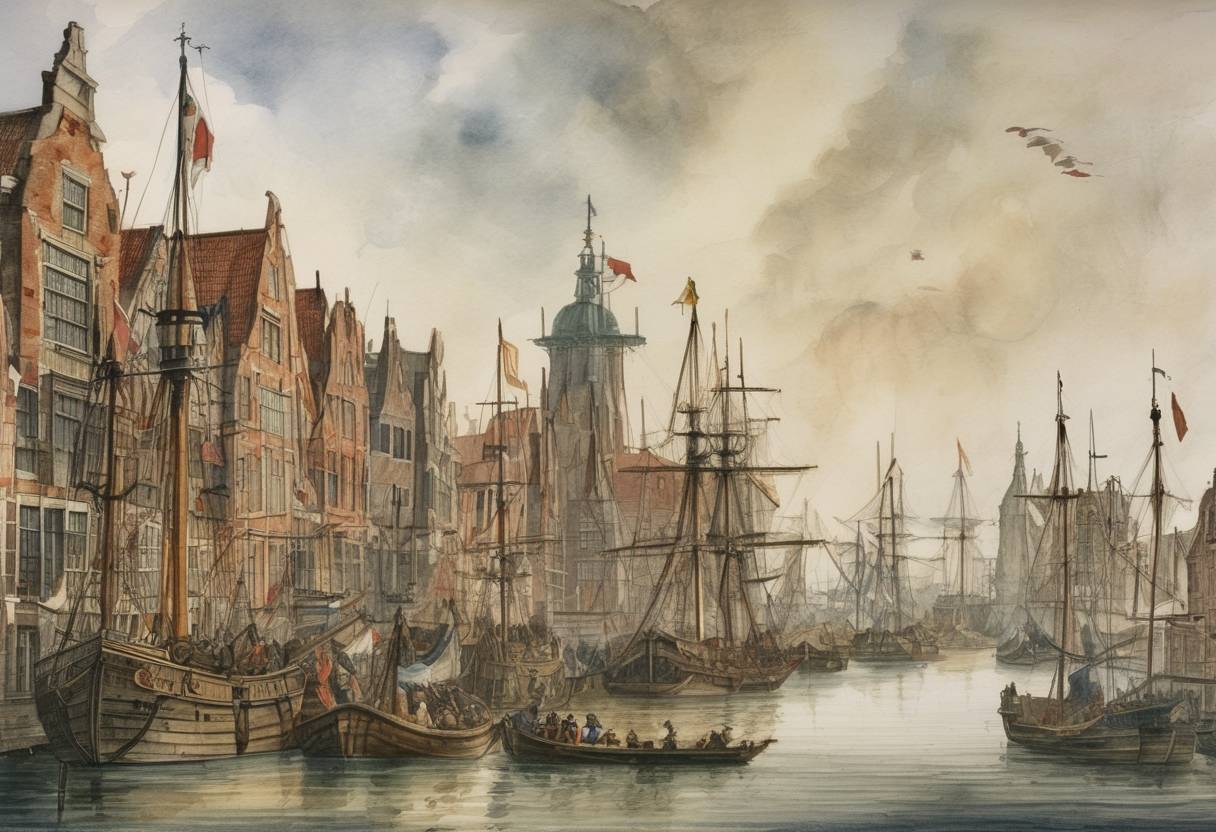
On May 23, 1568, a pivotal moment in European history unfolded as the Netherlands declared its independence from Spanish rule, marking the commencement of the Eighty Years’ War. This conflict, which spanned from 1568 to 1648, was a protracted struggle that ultimately led to the recognition of the Dutch Republic’s independence.
The roots of the Eighty Years’ War can be traced back to the complex political, religious, and economic tensions in the 16th century. The Habsburgs, under King Philip II of Spain, ruled the Netherlands, which was then a collection of seventeen provinces. The imposition of strict Catholic orthodoxy and heavy taxation by Philip II fueled widespread discontent among the largely Protestant population and the local nobility.
Religious Tensions: The Protestant Reformation had gained significant traction in the Netherlands, leading to friction with the Catholic Spanish rulers. Philip II’s efforts to enforce Catholicism through the Inquisition and the persecution of Protestants exacerbated these tensions.
Economic Strain: The Spanish crown’s financial demands, including high taxes and the centralization of power, placed a heavy burden on the prosperous and economically vibrant provinces of the Netherlands.
Political Unrest: The local nobility and merchant class, who valued their traditional rights and autonomy, were increasingly alienated by Spanish centralization efforts. This unrest culminated in the formation of the Compromise of Nobles in 1566, a petition demanding the relaxation of religious persecution.
The declaration of independence on May 23, 1568, was a formal assertion of the Dutch provinces’ desire to break away from Spanish control. It was spearheaded by William of Orange, also known as William the Silent, who emerged as a key leader in the revolt against Spanish rule.
The initial phase of the conflict saw a series of military engagements, with the Battle of Heiligerlee in 1568 marking the first significant clash. Although the early years of the war were marked by setbacks for the Dutch rebels, the conflict gradually evolved into a broader struggle for independence.
Prolonged Conflict: The Eighty Years’ War was characterized by intermittent fighting, shifting alliances, and periods of truce. It involved not only the Dutch and Spanish but also drew in other European powers, including England and France.
Treaty of Westphalia: The war concluded with the Treaty of Westphalia in 1648, which recognized the independence of the Dutch Republic. This treaty also marked the end of the Thirty Years’ War, reshaping the political landscape of Europe.
Impact on Europe: The successful Dutch revolt had far-reaching consequences, contributing to the decline of Spanish dominance in Europe and the rise of the Dutch Republic as a major economic and maritime power.
The Eighty Years’ War was a defining chapter in the history of the Netherlands, symbolizing the struggle for religious freedom, political autonomy, and national identity. It laid the foundation for the modern Dutch state and had a lasting impact on the balance of power in Europe.
Source: en.wikipedia.org