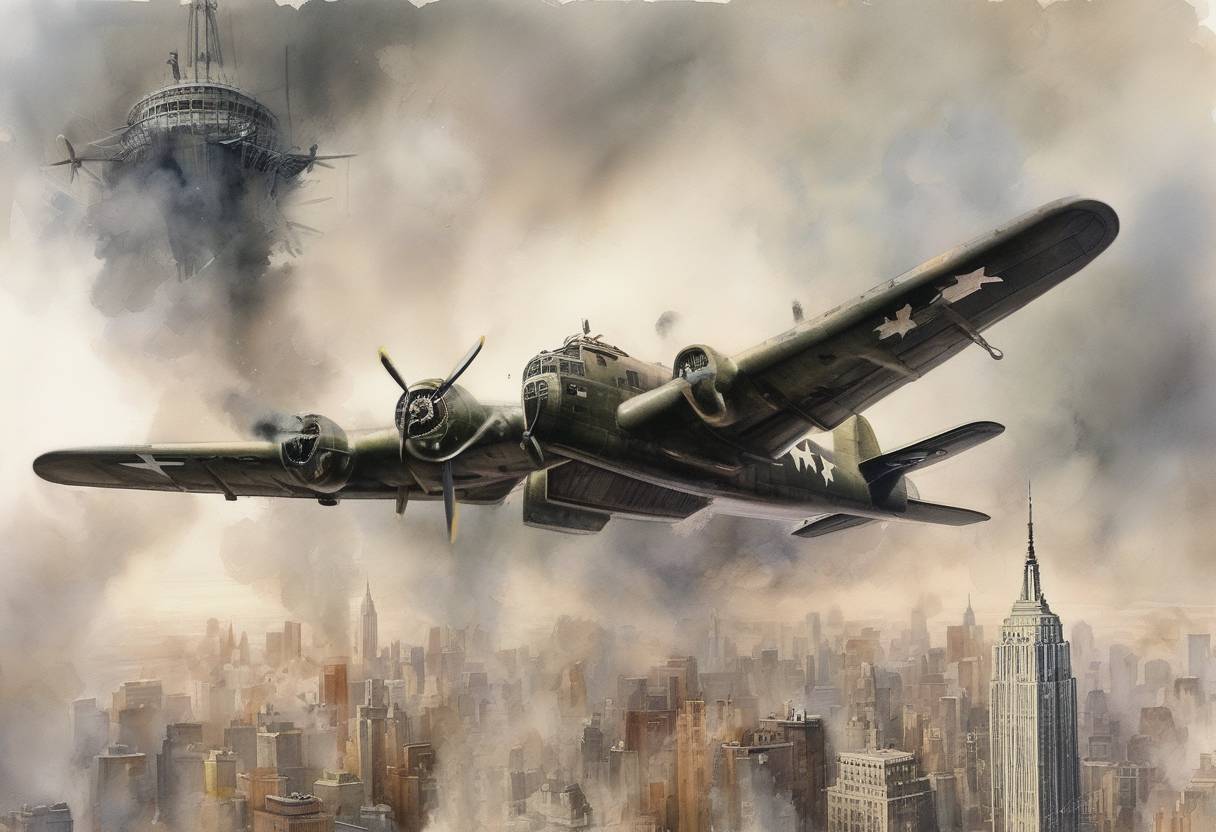
B-25 Bomber Crash into the Empire State Building - July 28, 1945
On July 28, 1945, a tragic accident occurred when a B-25 Mitchell bomber crashed into the Empire State Building in New York City. This incident was a result of poor visibility due to heavy fog, leading to the deaths of 14 people and causing significant damage to the iconic skyscraper.
Background
- Aircraft: The B-25 Mitchell was a twin-engine medium bomber used extensively during World War II by the United States and its allies.
- Pilot: The aircraft was piloted by Lieutenant Colonel William F. Smith Jr., an experienced pilot and veteran of the war.
- Flight Path: The bomber was on a routine transport mission from Bedford Army Air Field in Massachusetts to Newark Metropolitan Airport in New Jersey.
The Crash
- Date and Time: The crash occurred on the morning of July 28, 1945, around 9:40 AM.
- Weather Conditions: New York City was enveloped in dense fog, severely limiting visibility.
- Impact: The B-25 struck the north side of the Empire State Building between the 78th and 80th floors, primarily impacting the 79th floor.
- Casualties: The crash resulted in the deaths of all three crew members aboard the bomber and 11 civilians within the building. Several others were injured.
- Fire and Damage: The impact caused a massive explosion and fire, which was contained within 40 minutes by the New York City Fire Department. The crash created a hole approximately 18 feet wide and caused significant structural damage.
- Rescue Efforts: Emergency responders quickly arrived at the scene, and the building’s robust construction helped prevent further collapse.
Broader Impact
- Building Resilience: The Empire State Building’s structural integrity was largely maintained, showcasing the strength of its design. Repairs were completed swiftly, and the building reopened for business just two days later.
- Safety Regulations: The incident highlighted the need for improved air traffic control and safety measures in urban areas, leading to changes in flight regulations to prevent similar occurrences in the future.
Historical Significance
This event remains a significant moment in New York City’s history, illustrating both the vulnerabilities and resilience of urban infrastructure. It also served as a sobering reminder of the potential dangers of aviation in densely populated areas, prompting advancements in aviation safety protocols.
The crash of the B-25 into the Empire State Building is a poignant example of how unforeseen circumstances can lead to tragedy, yet also drive improvements in safety and emergency response practices.