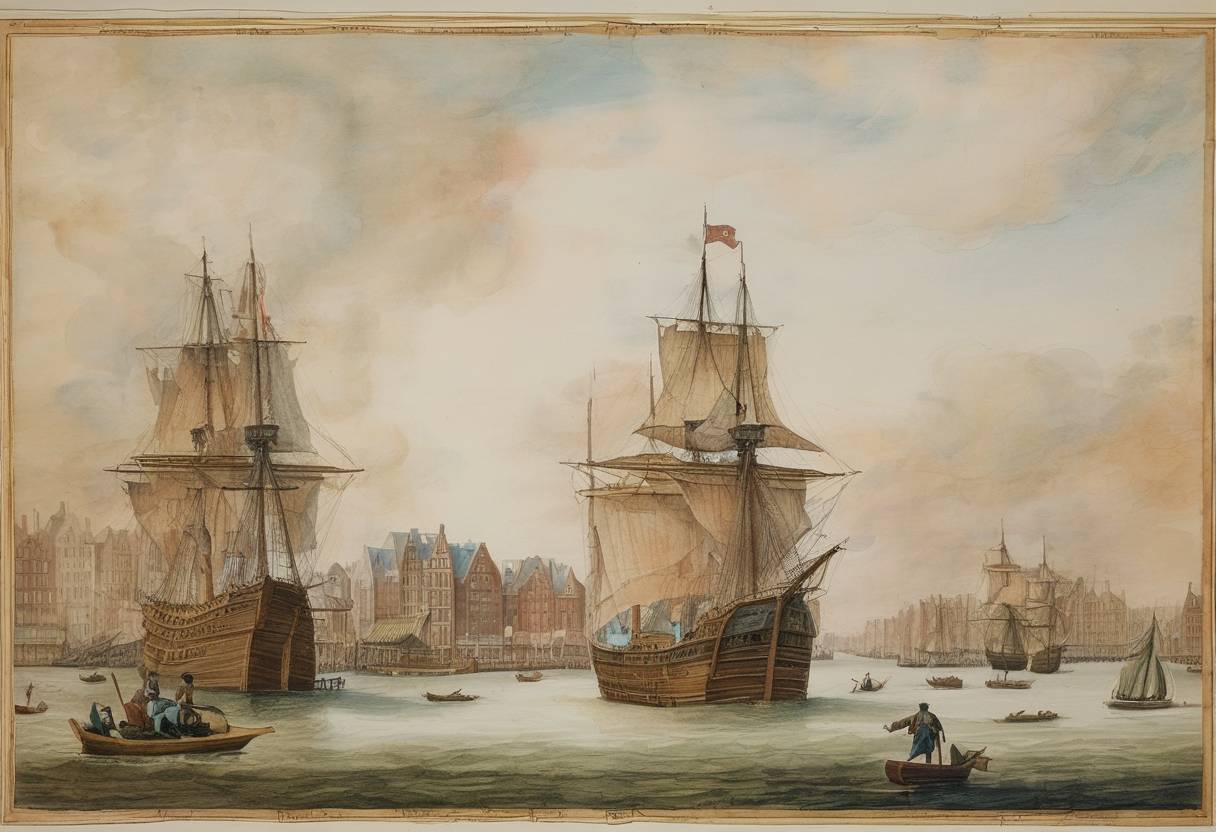
Incorporation of New Amsterdam: February 2, 1653
On February 2, 1653, New Amsterdam, which would later become New York City, was officially incorporated. This event marked a significant moment in the history of what would grow to be one of the most influential cities in the world.
Historical Context
Dutch Colonization
- Dutch West India Company: New Amsterdam was established by the Dutch West India Company as a part of the colony of New Netherland. The company was chartered in 1621 to carry out economic activities in the Americas and West Africa.
- Strategic Location: Situated at the southern tip of Manhattan Island, New Amsterdam was strategically located to control trade routes and access to the interior via the Hudson River.
Early Settlement
- Founding: The settlement began in 1624, primarily as a fur trading post. It attracted a diverse population due to its trade opportunities and relatively tolerant policies.
- Diverse Population: By the mid-17th century, New Amsterdam was home to a mix of Dutch, English, French, Scandinavian, German, and African settlers, among others.
Incorporation as a City
- Municipal Government: The incorporation of New Amsterdam in 1653 was a formal recognition of its growth and importance. It allowed for the establishment of a municipal government, which included a mayor and a council, to manage local affairs.
- Defense and Infrastructure: The incorporation also aimed to improve the settlement’s defenses and infrastructure, as tensions with neighboring English colonies and Native American tribes were ongoing concerns.
Aftermath and Consequences
Transition to British Rule
- English Conquest: In 1664, New Amsterdam was captured by the English fleet without significant resistance. It was renamed New York in honor of the Duke of York, who later became King James II of England.
- Cultural Legacy: Despite the change in control, the Dutch influence remained evident in the city’s culture, architecture, and legal traditions.
Growth and Development
- Economic Hub: Over the centuries, New York City grew into a major economic and cultural hub, driven by its strategic location and diverse population.
- Global Influence: Today, New York City is recognized as a global center for finance, culture, and diplomacy, with its roots tracing back to its days as New Amsterdam.
Broader Historical Significance
The incorporation of New Amsterdam is a pivotal moment in the history of urban development in North America. It set the stage for the transformation of a small colonial outpost into a bustling metropolis that would play a crucial role in the history of the United States and the world.
This event highlights the early colonial dynamics in North America, the competition between European powers, and the foundational moments that shaped the development of modern cities.