Star Wars: Episode III – Revenge of the Sith Release
2005 · Los Angeles, United States
Star Wars: Episode III – Revenge of the Sith was released in theaters worldwide, concluding the prequel trilogy of the Star Wars saga.
June 6, 1933
The first drive-in theater opened in Camden, New Jersey, USA.
Camden, United States | Park-In Theaters, Inc.
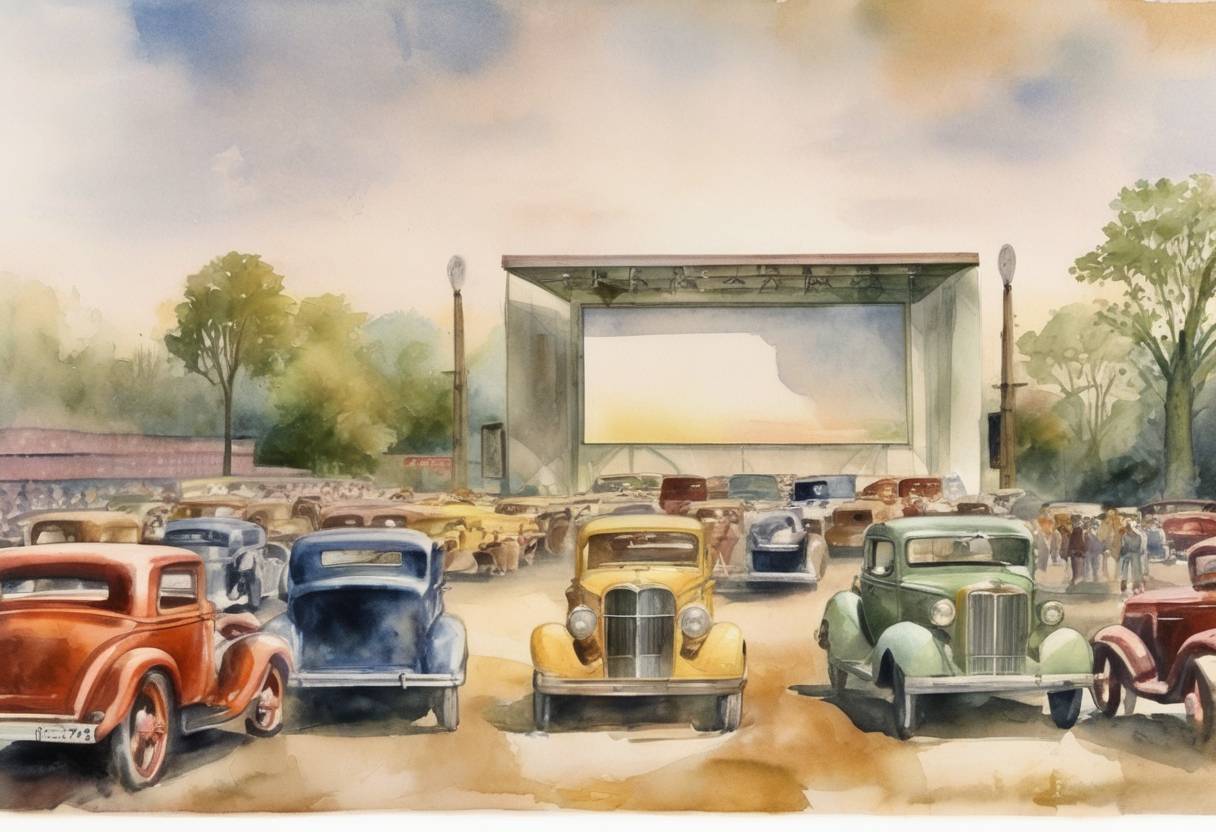
On June 6, 1933, the first drive-in theater opened in Camden, New Jersey, marking a significant innovation in the entertainment industry. This novel concept was the brainchild of Richard Hollingshead, a sales manager at his father’s auto parts company. Hollingshead’s vision was to create a space where people could enjoy movies from the comfort of their automobiles, combining the allure of cinema with the convenience of personal space.
The idea for the drive-in theater emerged during the early 1930s, a period marked by the Great Depression. During this time, entertainment was a valuable escape for many Americans, but traditional theaters posed challenges for families, particularly those with small children. Hollingshead sought to address these issues by offering an alternative that allowed families to enjoy films without leaving their cars.
To test his concept, Hollingshead conducted experiments in his driveway, mounting a projector on the hood of his car and nailing a screen to trees in his yard. He also devised a method to ensure that all cars had an unobstructed view by arranging them on a slight incline. After refining his idea, Hollingshead patented the concept in May 1933.
The first drive-in theater, known as “Park-In Theaters,” opened on a 10-acre site on Crescent Boulevard in Camden. It featured a 40 by 50-foot screen and could accommodate up to 400 cars. The inaugural film shown was “Wives Beware,” a British comedy released in the United States under the title “Two White Arms.”
Admission was 25 cents per car and an additional 25 cents per person, making it an affordable entertainment option for families. The drive-in theater quickly gained popularity, offering a unique social experience that combined the appeal of movies with the novelty of outdoor viewing.
The success of the Camden drive-in theater sparked a nationwide trend. By the late 1950s, drive-in theaters had become a staple of American culture, with over 4,000 locations across the country. They became iconic symbols of mid-20th-century Americana, often associated with the post-war boom, car culture, and the rise of suburban living.
Drive-ins provided a venue for social gatherings, date nights, and family outings, offering a sense of community and leisure. However, by the 1970s and 1980s, the popularity of drive-ins began to decline due to various factors, including the rise of multiplex theaters, the advent of home video technology, and increasing real estate values.
Despite this decline, drive-in theaters have experienced a resurgence in recent years, particularly during the COVID-19 pandemic, as they offer a socially distanced entertainment option. Today, they remain a cherished part of cultural history, celebrated for their nostalgic charm and unique contribution to the cinematic experience.
The opening of the first drive-in theater in Camden, New Jersey, on June 6, 1933, was a pioneering moment in entertainment history. Richard Hollingshead’s innovative concept not only transformed the way people watched movies but also left a lasting impact on American culture, symbolizing the intersection of technology, leisure, and community.
Source: en.wikipedia.org